Best Roll-Down Shutters: Real Customer Stories & Performance for Coastal Homeowners
Roll-down shutters are exterior window and door systems—either motorized or manual—that roll into a cassette above the opening. When closed they deliver tested storm protection, everyday security, measurable energy savings, and strong UV blocking.
This article reviews customer experiences alongside technical performance so coastal homeowners can decide whether roll-down shutters are the best hurricane-protection choice for their property.
You’ll read how shutters hold up in storms, what homeowners in Wilmington, Myrtle Beach, and Oak Island report about durability and service, the everyday trade-offs between manual and motorized systems, and the installation and maintenance expectations that affect long-term value.
The guide breaks down benefits (energy, noise, security), highlights regional issues like saltwater corrosion and local code requirements, and explains the cost drivers that determine ROI. It finishes with practical service and warranty considerations and shows where to request a free estimate and a site-specific Design Pressure Analysis if you’re ready to move forward.
Why Coastal Homeowners Choose Roll-Down Shutters for Hurricane Protection
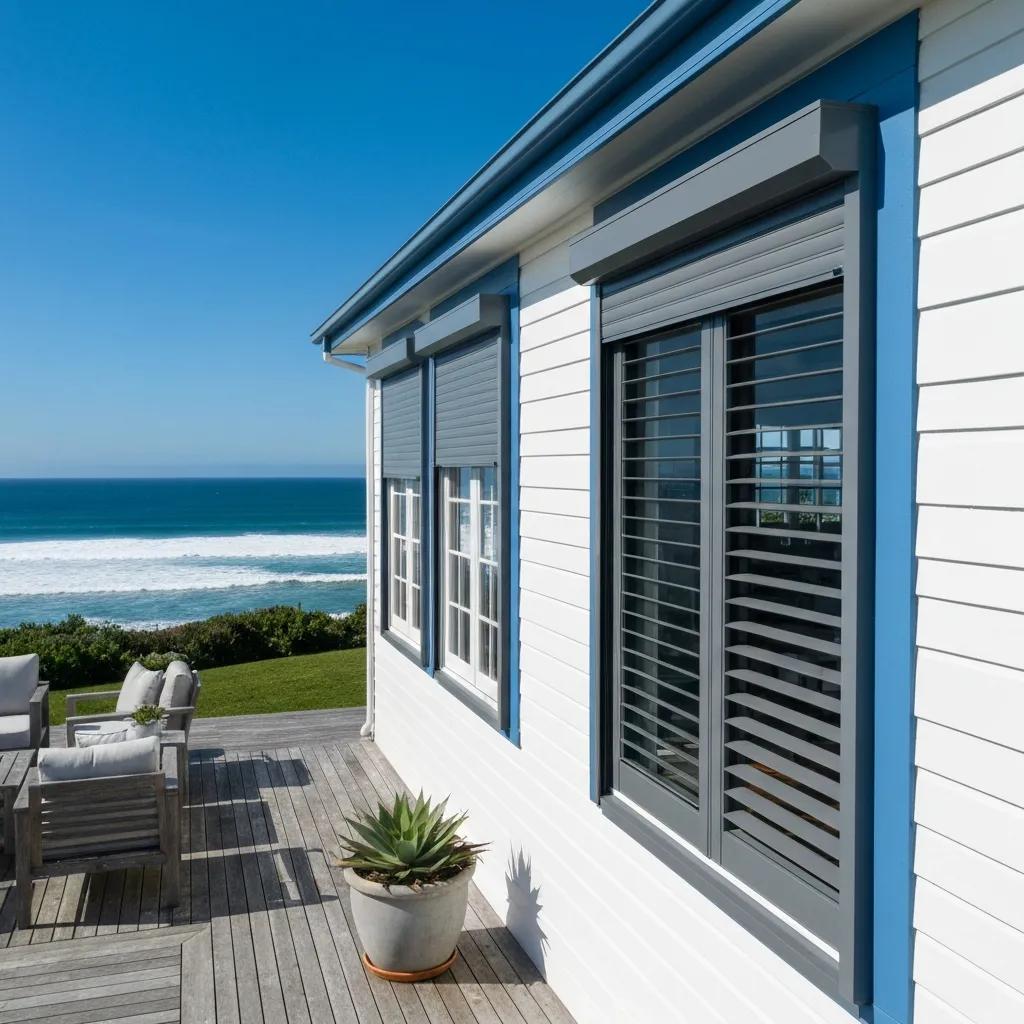
Coastal homeowners choose roll-down shutters because they combine proven impact resistance, rated wind-load capacity, and a permanent, on-site barrier that temporary options can’t match. Interlocking aluminum slats stored in a roller cassette form a rigid, rated shield when closed—reducing the chance of window breach and limiting interior water intrusion during hurricanes. Near saltwater, homeowners prioritize corrosion-resistant materials and certified installation, and many appreciate the speed of motorized controls for quick deployment. Those practical advantages explain why permanent roll-down systems are often preferred over removable panels that require storage and labor.
Customers repeatedly point to a few core technical and practical features:
- Marine-grade materials and corrosion-resistant fasteners built for coastal environments.
- Wind-load and impact ratings that meet local building-code requirements.
- Quick, reliable deployment—especially with motorized systems.
- Continuous security and weather protection without temporary setup or removal.
Those practical priorities lead into the specific performance details homeowners look for when comparing models.
Which Storm-Defense and Impact-Resistance Features Matter Most?
Storm defense focuses on slat profile strength, end-retention systems, and verified wind/impact ratings that predict real-world behavior. Homeowners commonly ask for numeric wind-load capacities and third-party impact testing because these numbers indicate how shutters will perform against hurricane-force winds and flying debris. Reinforced aluminum slats, full-height guides, and robust end-locks reduce deflection under load; heavy-duty roller housings and secure anchors prevent blow-out. For coastal use, assemblies built from 6063-T6 marine-grade aluminum and 18-8 stainless steel fasteners are preferred because they resist corrosion and preserve structural integrity over repeated storm exposure.
These performance features also connect directly to security and daily-use expectations—factors homeowners weigh next when choosing a system.
How Roll-Down Shutters Add Security and Peace of Mind
Beyond hurricanes, roll-down shutters serve as permanent security barriers that deter break-ins and protect interiors year-round. Interlocking slats and integrated locks are more resistant to forced entry than removable panels or thin screens, and closed shutters remove sightlines that invite opportunistic theft. Because protection stays in place, homeowners can lock up and leave properties for extended periods without dismantling covers before vacation or seasonal absences. For many coastal residents, that combination of storm readiness plus everyday security is decisive when selecting roll-down shutters.
This security benefit pairs with the energy and UV-protection advantages covered below, which homeowners frequently cite in reviews and measured outcomes.
What Customers Say: Reviews & Testimonials for Roll-Down Shutters
Customer feedback emphasizes storm reliability, installer responsiveness, and material durability as the top drivers of satisfaction. Reviews show homeowners praise systems that deploy smoothly, resist corrosion, and meet advertised wind-load ratings. Common complaints focus on upfront cost and occasional motor service needs. In coastal towns, certified installation and strong warranty coverage reduce buyer anxiety, and many customers say local support and emergency service availability heavily influence overall satisfaction.
Typical themes that appear across reviews include:
- Installation quality and timeliness: prompt, code-aware installations matter.
- Storm performance: shutters often prevented glass breakage and stopped interior water damage.
- Long-term durability questions: salt-spray resistance and fastener corrosion come up repeatedly.
Those review themes lead into region-specific experiences that show how local storms and environments shape perceptions of value and performance.
What Homeowners Report in Wilmington, Myrtle Beach, and Oak Island
Homeowners in Wilmington, Myrtle Beach, and Oak Island commonly report that professionally installed roll-down shutters performed as intended during severe coastal storms—frequently noting reduced glass damage and fewer interior repairs. Local conditions such as beachfront exposure and salt spray influence material choices and anchoring methods; deeper sill pockets and reinforced anchoring are often requested in high-exposure properties. Service speed and access to emergency technicians matter in these towns, where fast pre-storm deployment and post-storm inspections can prevent costly secondary damage. These local patterns show how microclimates and house styles inform product selection and installation planning.
Those local observations lead into concise case-study outcomes that demonstrate measurable effectiveness during storms.
How Case Studies Show Roll-Down Shutters Working in Coastal Storms
Typical case studies follow a simple problem → solution → result structure: a home at risk from high winds and flying debris had shutters specified to the required wind-load, the installer used corrosion-resistant components and proper anchoring, and after the storm the property showed no window breach and minimal interior exposure. Quantified outcomes often include avoided glazing replacement and reduced water intrusion. Follow-up service and warranty responses—like documented maintenance or fastener replacements in high-salt areas—underscore how materials choice and professional installation affect long-term effectiveness.
Understanding these practical results helps homeowners weigh benefits against cost and maintenance expectations, covered next.
Key Benefits of Roll-Down Shutters for Homeowners
Roll-down shutters deliver stacked benefits—storm protection, energy savings, noise reduction, UV blocking, and added security—that together improve comfort, reduce risk, and support property value. The system forms a physical storm barrier, adds insulation that lowers heat transfer, and shades interiors to prevent UV fading. Many homeowners report better comfort and lower peak cooling loads after installation, especially on sun-exposed coastal facades. These combined benefits produce tangible utility and lifestyle improvements and may unlock insurance incentives for certified mitigation.
To compare benefits by operation type and common use cases, the table below summarizes attributes homeowners care about.
How Roll-Down Shutters Improve Energy Efficiency and Cut Noise
Shutters add a physical thermal barrier that reduces direct solar heat gain and limits convective flows through glass. In hot coastal climates, closing shutters during peak sun can lower indoor temperatures and reduce air-conditioning runtime, producing measurable energy savings. For noise, the extra mass and sealed guide channels dampen exterior sounds—traffic and neighbor noise are noticeably reduced with shutters closed. Homeowners report better indoor comfort and less reliance on mechanical cooling when shutters are used strategically, benefits that are especially valuable in sun-exposed, humid coastal homes.
These efficiency and comfort improvements naturally complement interior UV protection and security benefits that many owners prioritize.
Security and UV-Protection Benefits Customers Notice
Roll-down shutters block direct sunlight and UV that fade fabrics, flooring, and furnishings—extending interior material life and lowering replacement costs. Closed shutters also obscure sightlines and add a mechanical obstacle that deters break-ins and vandalism. Aluminum slats paired with corrosion-resistant fasteners retain their protective properties longer in coastal environments and resist UV degradation better than some polymer options. Those combined protections reduce maintenance, preserve finishes, and give homeowners year-round peace of mind.
The EAV table below links benefit attributes to expected homeowner value over time.
Manual vs. Motorized: How Customers Experience Operation
Customer experience differs clearly between manual and motorized roll-down shutters in convenience, reliability, and maintenance. Motorized systems deliver one-touch deployment, smart-home integration, and scheduling—features many homeowners find essential for fast storm response. Manual systems offer mechanical simplicity, lower initial cost, and predictable reliability without dependence on electricity. Preferences usually come down to lifestyle: homeowners who value automation choose motorized units; those who prefer minimal electronics or lower upfront expense often pick manual units.
Ease of Use and Reliability: Manual vs. Motorized
Manual shutters use crank or strap mechanisms and shine when power is unavailable—offering straightforward operation and minimal technical maintenance. Motorized shutters bring speed and convenience, which helps elderly homeowners and properties needing quick closure, but they require periodic motor checks, electrical service, and battery-backup planning for outages. Homeowners often balance these trade-offs: manual systems score high for low-maintenance longevity, while motorized systems score high for convenience and integration with weather sensors or remote control. Checking local installer support and service response times helps you choose the right balance.
This comparison naturally leads to smart-home integration and automation considerations for coastal properties.
How Smart-Home Integration Enhances Motorized Shutters
Smart integrations let motorized shutters be controlled remotely, scheduled, or linked to sensors so they close automatically when wind or weather triggers occur. Automation reduces human error in storm prep and is typically paired with power-fail strategies—manual override or battery backup—to protect functionality during outages. Homeowners who use smart setups report less stress in severe-weather windows because shutters can respond automatically to preset thresholds. Reliable integration does require professional setup, cybersecurity attention, and coordination with certified installers to avoid misconfigurations that might hinder emergency operation.
The EAV table below clarifies trade-offs across operation types for common homeowner attributes.
Installation and Professional Service: What Homeowners Should Know
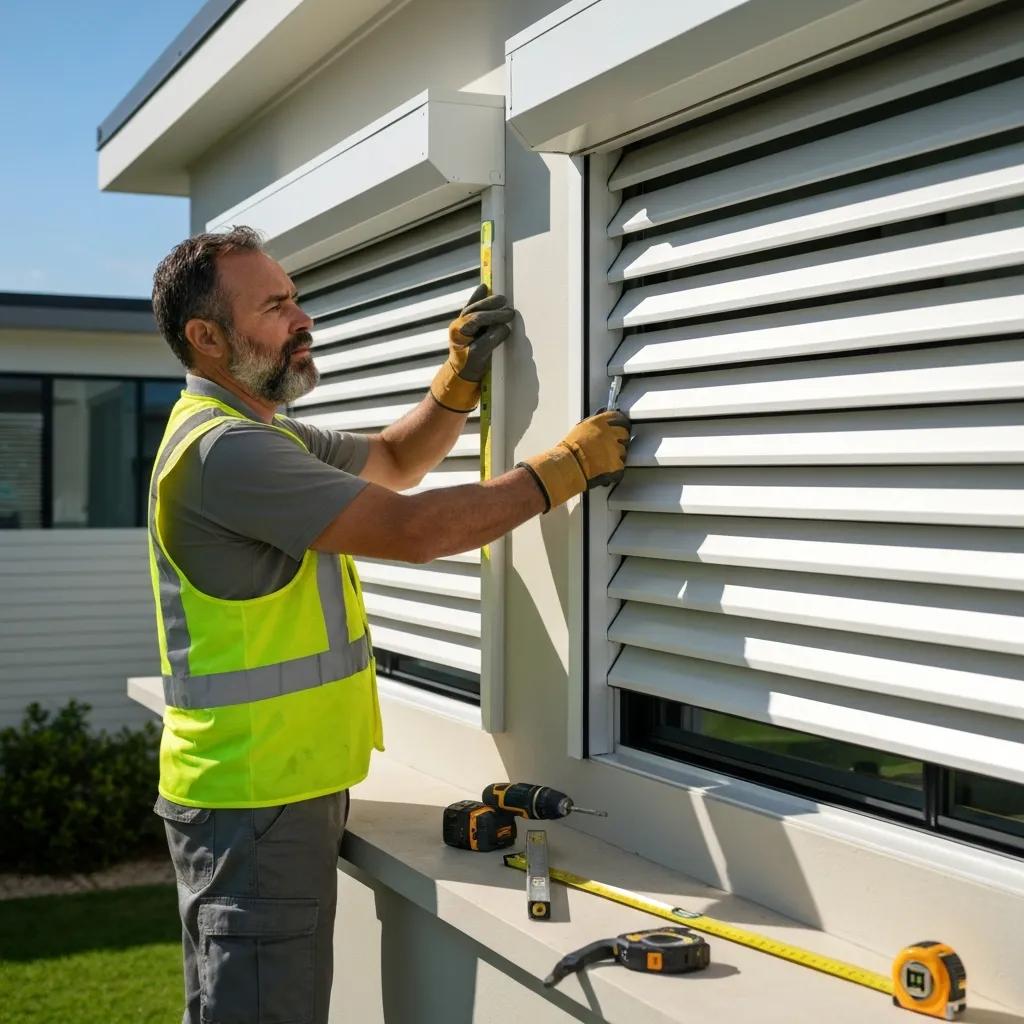
Correct installation is essential to achieve rated performance and long-term durability. A site-specific evaluation makes sure shutters meet local code and wind-load requirements. Key installer checks include locating suitable anchoring substrates, confirming header and jamb strength, and aligning guide channels to prevent binding and water entry. Expect a clear permitting plan, a documented Design Pressure Analysis when required, and post-install testing under real conditions. Knowing which professional standards matter helps avoid underperforming systems and clarifies warranty and service expectations.
Use the checklist below when evaluating installers and planning a project.
- Confirm the installer performs a site-specific Design Pressure Analysis and verifies IBC/local ordinance compliance.
- Verify technician certifications and safety training for elevated work and installations.
- Request a clear post-installation test and maintenance plan, plus documented warranty terms.
How Professional Installation Ensures Code Compliance and Durability
Professional installation aligns shutter capacity with local wind-loads through a site-specific Design Pressure Analysis. Installers ensure anchors, fasteners, and framing connections meet or exceed code. Certified technicians follow set procedures for header reinforcement, guide alignment, and sealed housings to reduce water ingress and wind-driven debris paths. Using corrosion-resistant materials—like 6063-T6 marine-grade aluminum and 18-8 stainless steel fasteners—along with proper drainage and correct fastener torque extends service life in coastal settings. These quality-control steps lower the chance of in-service failures and support warranty claims that protect your investment.
Homeowners should also know when to call professionals rather than attempt DIY fixes.
When to Handle Maintenance Yourself and When to Call a Pro
Routine homeowner tasks include cleaning guide channels, light lubrication of moving parts, and visual checks for corrosion or loose fasteners—these keep operation smooth and are safe to perform. Call a professional for motor diagnostics, major fastener replacements, structural anchor repairs, or any work involving the roller housing or electrical drive units; those require specialized tools and safety procedures. Red flags that warrant professional service include unusual operating noise, visible deflection under normal use, motor overheating, or water inside the cassette. Respecting these boundaries keeps systems safe and preserves warranty coverage.
Professional service should come from technicians with formal safety and elevated-work training and a documented process for Design Pressure Analysis and code compliance; that gives homeowners confidence that installations will meet local ordinances and work reliably.
Cost and Long-Term Value of Roll-Down Shutters
The Roll-down shutter cost varies with material grade, slat profile, operation type (manual vs. motorized), square footage, custom openings, and any required engineering or permitting. Coastal-grade assemblies using marine-grade aluminum and stainless fasteners cost more upfront but lower long-term maintenance and replacement risk in saltwater areas. Motorization and smart controls add to initial price but can deliver operational and insurance benefits. To evaluate long-term value, weigh avoided storm damage, potential insurance credits for certified mitigation, extended interior life from UV protection, and stronger resale appeal.
The table below outlines common cost drivers to help with homeowner budgeting.
Pricing Factors and Warranty Considerations
Primary pricing variables include material choice, automation, unit size, and the engineering needed to meet local wind-loads. Warranty coverage varies by manufacturer and installer; longer, local warranties typically offer more protection against premature failure, and extended warranties often require scheduled professional maintenance. Coastal installs may call for premium fasteners and coatings that raise initial cost but lower lifecycle expense. Ask for clear warranty language covering structural failure, motors, and corrosion, and confirm whether warranty terms require documented maintenance.
Research shows many coastal homeowners take few structural mitigation steps, which underscores the importance of clear information and incentives for upgrading protection.
Coastal Homeowners and Climate Change: Risk Reduction and Mitigation Strategies
As climate changes, coastal homeowners are potentially crucial actors in reducing the risks to property and human life from rising seas and increased hurricane activity. Absent strict, enforceable regulations mandating retrofitting of existing homes or major changes in homeowner insurance requirements, coastal resilience in a changing climate will largely reflect private, voluntary decisions of millions of individuals. However, research is scarce on the extent of structural vulnerabilities among US coastal homes and the mitigation measures that homeowners are taking or plan to take. Research devoted to disaster preparedness routinely neglects the specific actions of homeowners as consumers of structural mitigation products, despite the fact that such mitigation is the most cost-effective means to reduce losses. We attempt to fill this important gap with a new Coastal Homeowner Survey and indices designed to measure structural vulnerabilities and homeowner actions and intentions to address vulnerabilities. We conducted a pilot study of 662 respondents in one of the most frequently exposed US coastal communities, New Hanover County, North Carolina. We find that, on average, homes are minimally protected, with homeowners taking few actions to address structural vulnerabilities and not considering taking further action. We also find that the perceived cost of mitigation cannot sufficiently explain the lack of action, implying that other factors are at play. Subsequent research will use the remaining pilot survey data to analyze correlates of these indices to inform private and public sector stakeholders on how to incentivize risk reduction through structural mitigations.
Coastal homeowners in a changing climate, D Javeline, 2019
Do Insurance Discounts and Home Value Affect the Investment?
Insurance discounts for recognized mitigation can reduce net cost over time when insurers accept rated shutters and certified installations; homeowners should document their installation and provide code-compliance proof to carriers. Durable storm protection can also be a marketable feature that supports property value in hurricane-prone areas. The overall investment calculation combines upfront cost, expected maintenance, probable insurance savings, and avoided post-storm repairs. Homeowners who prioritize long-term protection and fast emergency response often find the investment favorable when local service and warranty support are available.
For trusted local installation and service, American Hurricane Shutters (AHS Carolinas) offers regional expertise using 6063-T6 marine-grade aluminum, 18-8 stainless steel fasteners, and technicians trained in OSHA 30 and aerial lift safety. We provide site-specific Design Pressure Analysis, a local-leading 7-Year Warranty, free estimates, and emergency service to support coastal homeowners’ needs.
- To evaluate options, request a free estimate and a site-specific Design Pressure Analysis to verify required wind-load ratings.
- When comparing suppliers, prioritize installers who document material specs, provide clear warranty terms, and offer emergency response in coastal towns.
- Keep a record of installations and any service to present to insurers for mitigation credits and to preserve warranty eligibility.
Frequently Asked Questions
What maintenance is required for roll-down shutters?
Routine maintenance includes cleaning guide channels, lightly lubricating moving parts, and inspecting fasteners and surfaces for corrosion. Homeowners can do these tasks safely to keep shutters running smoothly. For motor diagnostics, major fastener replacement, roller-housing repairs, or electrical work, call a certified technician to protect performance and warranty coverage.
How do roll-down shutters affect home insurance premiums?
Roll-down shutters can lower homeowners insurance premiums when carriers recognize rated products and certified installation. Document your installation and provide code-compliance paperwork to your insurer to pursue mitigation credits. Contact your insurance agent to confirm specific requirements and any paperwork they require for discounts.
What are the differences in energy savings between manual and motorized shutters?
Bo
