
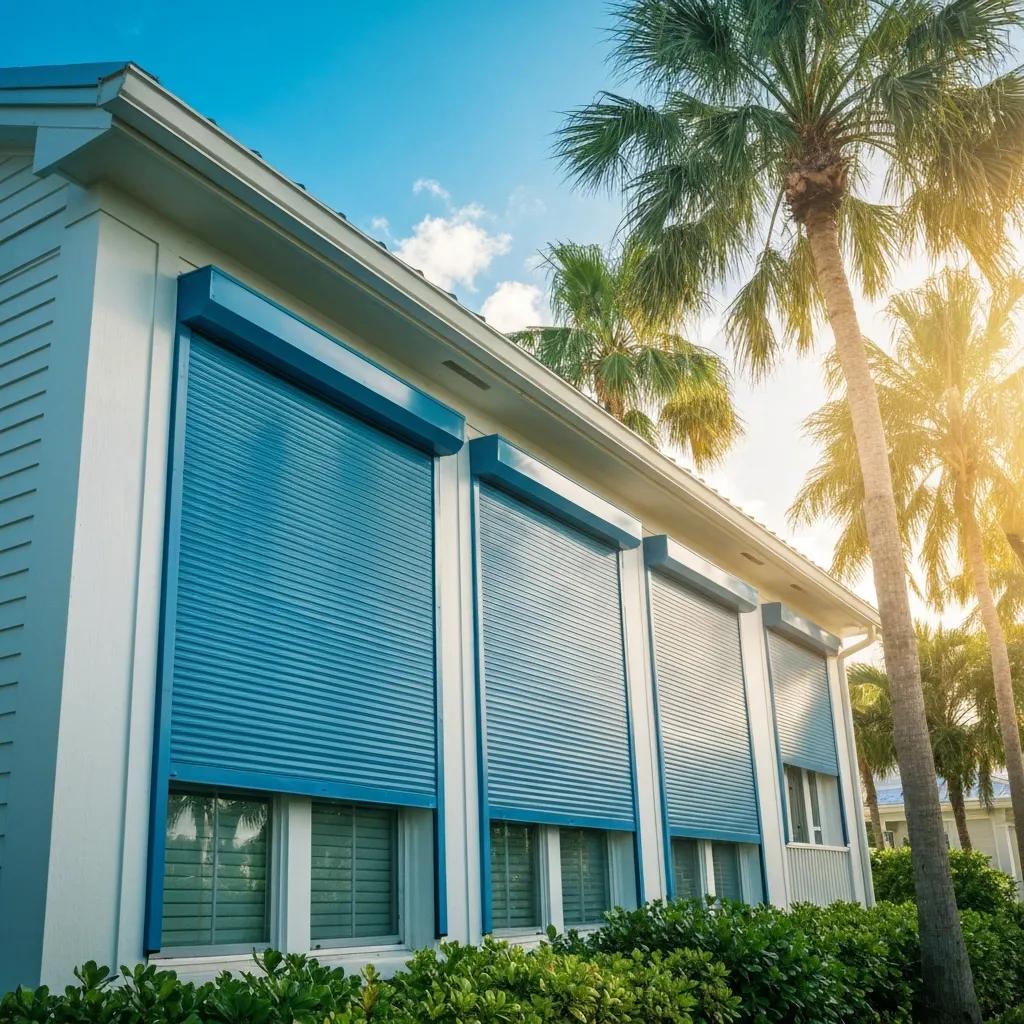
Why Roll Down Hurricane Shutters Protect Your Home — Security, Energy Savings, and Added Value
Roll down hurricane shutters are retractable, impact-rated window coverings built from interlocking aluminum slats that roll along side tracks to shield openings from wind, water, and flying debris. This guide walks homeowners through how these shutters work, the protection mechanics behind them, and the real benefits for coastal properties — from improved security and lower cooling costs to strengthened resale value. If you live where storms are seasonal or exposure is year‑round, you’ll learn how shutters lower damage risk, boost comfort, and affect insurance and marketability. We cover impact resistance and burglary deterrence, thermal performance and UV blocking, value and insurance considerations, operation choices (manual, crank, motorized), professional installation and maintenance, and the main cost drivers to help you judge affordability. Practical lists, comparison tables, and clear takeaways translate technical details into homeowner decisions and next steps.
What Are the Key Security Benefits of Roll Down Hurricane Shutters?
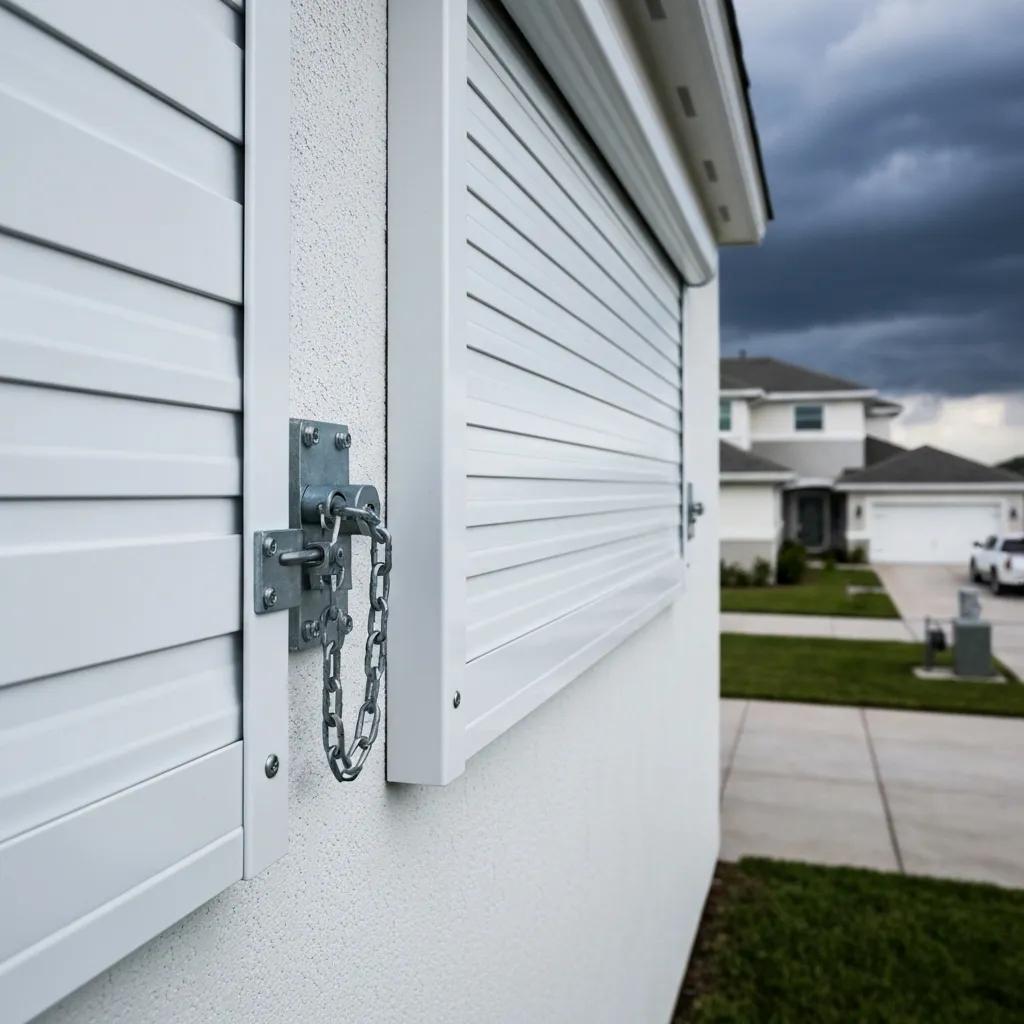
Roll down shutters create a continuous, hard barrier that resists impact and slows forced entry by combining strong aluminum slats with reinforced tracks and secure locks. The curtain — interlocked slats guided in heavy-duty tracks and secured with mechanical or motorized locks — spreads and absorbs energy from wind‑borne debris so the glass behind it isn’t directly struck. Outside of storms, shutters also act as a visible deterrent to opportunistic burglars by blocking access to windows and other openings. The sections below break down impact mechanics and burglary deterrence to show how design and code‑compliant installation affect real-world performance.
These systems deliver three clear security advantages:
- Impact resistance: Interlocking slats and sturdy tracks prevent penetration by flying debris.
- Continuous barrier: Full coverage eliminates exposed gaps around glazing.
- Delayed entry: Secure locks and reinforced guides increase the time required to force access.
Together these features protect both people and property; the next section explains how slats and tracks absorb and redirect impact forces.
How Do Roll Down Shutters Provide Impact Resistance Against Storm Debris?
Roll down shutters resist impacts by using aluminum slats with stiffening ribs and guided tracks that spread and absorb kinetic energy before it reaches the window. When debris strikes the closed curtain, the slats flex and transfer force into the mounts and jambs while reinforced guides resist deformation so the curtain can’t slip past the frame. Many professional systems are built to meet or exceed regional code tests for impact and wind loads, which gives a reliable benchmark for performance. That load path — from slat to track to anchor — also explains why correct anchoring and installation are as critical as material quality.
Those structural details lead naturally to the shutters’ secondary role as a theft deterrent, covered next.
Can Roll Down Shutters Deter Burglary and Enhance Home Security?
Yes. Shutters make a property a less attractive target by creating a visible, physical barrier that forces intruders to work harder and make more noise — increasing the chance of detection. Motorized units add electronic control and can integrate with alarm systems for remote verification or automated responses. Even manual shutters are a strong obstacle: removing them is noisy and time‑consuming, which deters casual break‑ins. For homeowners seeking layered protection, shutters pair well with reinforced glass and monitored security systems to form an integrated defense.
These security benefits connect directly to comfort and energy advantages, which also influence long‚Äëterm ROI.
How Do Roll Down Hurricane Shutters Improve Energy Efficiency and Comfort?
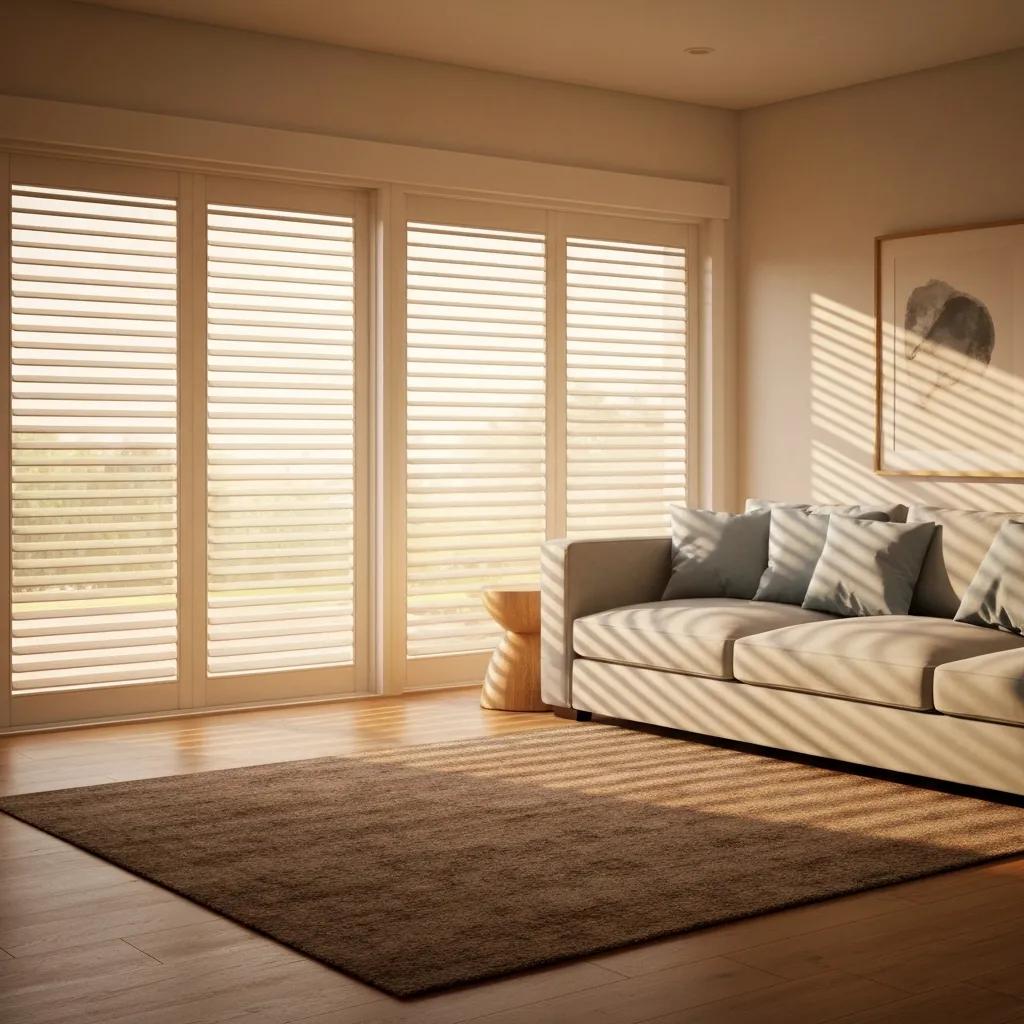
Roll down shutters boost energy efficiency and comfort by shading windows, creating a sheltered air gap, and blocking solar radiation that drives cooling loads in coastal climates. Closed shutters cut direct solar gain and slow heat transfer through the window, which lowers peak indoor temperatures and reduces HVAC run time. They also block ultraviolet light and help reduce outside noise, protecting interiors and making homes more comfortable. The following subsections quantify the insulation effect and explain UV and acoustic performance to help homeowners weigh comfort upgrades.
Homes in warm, sunny coastal areas tend to see the biggest gains from shading and the insulated buffer shutters create; the next subsection explains typical thermal behavior and savings.
What Insulation Benefits Do Roll Down Shutters Offer for Coastal Homes?
A closed roll down shutter forms a shaded buffer zone that cuts solar heat gain and limits radiative and convective transfer through the glass. That air gap reduces peak cooling loads, shortens compressor cycles, and helps keep indoor temperatures steadier on hot, sunny days common along the Carolina coast. Exact savings depend on window orientation, glass type, and local weather, but shutters reliably lower cooling demand by blocking direct sunlight and reducing heat flux. When estimating ROI, homeowners should compare their local cooling patterns and window exposures.
Those thermal gains also protect interior finishes and improve acoustic comfort, which we cover next.
How Do Roll Down Shutters Block UV Rays and Reduce Noise Pollution?
By stopping direct sunlight at the window plane, roll down shutters prevent much of the UV that fades fabrics, flooring, and finishes. A solid curtain also adds mass and an air gap that helps dampen airborne noise — from coastal traffic to rain and wind. Acoustic performance depends on material, seal quality, and how tightly the edges compress, but a well‑fitted system can noticeably reduce perceived noise. Together, UV protection and sound reduction preserve interiors and raise everyday comfort alongside the thermal benefits.
After energy and comfort, many homeowners want to know how shutters affect property value and insurance — topics we address next.
In What Ways Do Roll Down Shutters Increase Home Value and Provide ROI?
Roll down shutters can raise a home’s value and deliver ROI by lowering storm damage risk, qualifying owners for possible insurance discounts, and improving buyer confidence in hurricane‑prone markets. The financial case combines avoided repair bills after storms, ongoing energy savings, and greater marketability to buyers who prioritize resilience. Proper documentation of code compliance and professional installation strengthens the case for insurance credits or resale negotiation. The subsections below walk through insurance savings and how shutters fit with curb appeal and resale goals.
To clarify financial impact, the next subsection shows practical steps homeowners can take to pursue insurance premium reductions tied to certified protection.
How Can Roll Down Shutters Lower Home Insurance Premiums?
Insurers may offer discounts when homeowners install certified hurricane protection and keep the paperwork to prove it — because certified systems reduce expected wind and debris claims. To pursue savings, retain installer invoices, inspection reports, and product compliance certificates to present during a policy review. Discounts vary by carrier and region, so check with your insurer about required documentation and potential savings. Good recordkeeping also smooths claims after a storm, making professional installation and inspection an important financial step.
Understanding insurance effects also informs choices about finishes and visibility; the next subsection looks at curb appeal and resale value.
Do Roll Down Shutters Enhance Curb Appeal and Resale Value?
When chosen to complement a home’s style, roll down shutters can enhance curb appeal as well as protection. Powder‑coat colors, profiles, and integration with trim lines let shutters blend in whether stowed or deployed. In coastal markets where resilience matters, certified shutters can be marketed as a desirable upgrade that reassures buyers about long‑term maintenance and storm readiness. Matching function with good design maximizes both protection and marketability.
Next we compare operation modes and highlight convenience, automation, and everyday integration.
What Are the Convenience and Operation Advantages of Roll Down Hurricane Shutters?
Roll down shutters offer fast deployment, simple manual options, and advanced motorized systems that automate closure with minimal effort. The main benefit is reliable protection you can apply quickly before a storm or anytime you want privacy and shading. Manual systems are cost‚Äëeffective for occasional use; motorized systems give one‚Äëtouch control and can link to home automation for scheduled or sensor‚Äëdriven activation. The sections that follow compare manual and motorized choices and explore smart‚Äëhome integration.
To help homeowners choose, the next subsection gives a side‚Äëby‚Äëside look at manual versus motorized operation.
What Are the Differences Between Manual and Motorized Roll Down Shutters?
Manual roll down shutters use a pull‑down or hand‑crank mechanism that keeps upfront cost and maintenance simple; motorized shutters use electric drives for remote and automated control. Manual systems are durable and avoid electrical maintenance but can be slower and more physically demanding for large openings. Motorized units speed deployment, add convenience, and can be backed up with batteries or generators, though they raise the initial investment and may need occasional motor service. The right choice depends on your household’s needs, how often you’ll deploy shutters, and your budget.
If you want automation, the next subsection explains common smart‚Äëhome integration options and practical scenarios.
How Can Motorized Shutters Integrate with Smart Home Systems?
Motorized roll down shutters connect to smart‚Äëhome systems using Wi‚ÄëFi, Z‚ÄëWave, or hardwired control panels, enabling centralized automation, voice commands, and scheduled operation. Typical setups include storm‚Äëmode closures tied to weather sensors, sun‚Äëbased shading schedules, and remote checks via phone apps. Professional integration ensures reliable communication with existing security or automation platforms and can include fail‚Äësafe modes for power outages. For safety and consistent performance, have experienced technicians handle integration and code compliance.
A compact table below summarizes operation types and tradeoffs to help with selection.
Different operation types present tradeoffs in convenience, cost, and maintenance.
This comparison clarifies how operation choice affects daily use and long‚Äëterm ownership responsibilities.
Next we cover professional installation and routine maintenance to keep systems working when you need them most.
How Is the Professional Installation and Maintenance of Roll Down Shutters Managed?
Professional installation starts with a site survey, precise measurements, and product selection matched to each opening and local code requirements so anchors, tracks, and clearances are correct. Installers check framing strength, plan guide placement, and choose motor or manual hardware to fit homeowner needs and the structure. After mounting, technicians commission the system — testing deployment, locks, and controls — and provide documentation often needed for insurance credits. The maintenance section below lists routine tasks to preserve performance and avoid costly repairs.
To support upkeep, the next subsection provides a concise maintenance checklist and schedule homeowners can follow.
What Does the Professional Installation Process Involve?
Professional installation follows a clear process: an on‚Äësite assessment and measurement, selection of the proper shutter profile and operation type, mounting of guides and the header, and connection of motors or cranks followed by system testing. Installers verify anchor capacity and add seals or flashings to prevent water intrusion. The final inspection documents operation, trains the homeowner on use and safety, and supplies paperwork useful for insurance and code records. Proper installation ensures shutters meet performance expectations and applicable standards.
What Maintenance Tips Ensure Longevity of Roll Down Shutters?
Routine maintenance includes cleaning tracks and slats to remove salt and debris, lubricating moving parts per the manufacturer’s recommendations, exercising motorized units to confirm smooth operation, and inspecting seals and fasteners for corrosion or wear. Run a controlled deployment periodically to catch issues early and address noisy tracks or sluggish drives before they worsen. Annual professional inspections can spot alignment, motor, or control problems before storm season; keeping maintenance records supports warranties and insurance claims. These simple steps preserve reliability and extend service life.
A short checklist below summarizes routine maintenance actions for homeowner reference.
Routine upkeep preserves functionality and reduces long‚Äëterm costs.
- Clean tracks and slats monthly to remove salt and debris in coastal locations.
- Lubricate moving parts biannually following manufacturer guidance for hinges, bearings, and seals.
- Test motorized operations quarterly and confirm backup power or manual override works.
What Are the Cost Factors and Investment Benefits of Roll Down Hurricane Shutters?
Price is driven by the number and size of windows, the chosen operation (manual vs motorized), material grade and finish, and installation complexity like retrofits, arches, or structural reinforcement. Long‚Äëterm benefits include avoided storm repair costs, possible insurance discounts for certified systems, and energy savings that add up over time. Financing and payment plans can make upgrades manageable; use cost calculators and free estimates to model payback and ROI. The sections below outline the principal cost drivers and how to evaluate long‚Äëterm affordability.
To compare cost drivers systematically, the EAV table below maps common variables to their attributes and financial impact.
Cost drivers vary and determine overall system pricing and ROI.
Which Factors Influence the Cost of Roll Down Shutters?
The main cost items are the number and size of openings, operation choice, material grade and finish, and installation difficulty tied to existing framing or architectural features. Permits, code compliance, and any required structural reinforcement add to the budget in some retrofit scenarios. Custom colors or specialty profiles increase material costs, and irregular openings often need extra engineering and labor. Knowing these variables helps homeowners prioritize upgrades and compare quotes on an equal scope.
How Do Long-Term Savings and Financing Options Make Shutters Affordable?
Long‑term savings come from avoided storm repairs, lower energy bills, and potential insurance discounts when systems are certified and documented — all of which can shorten payback time. Typical financing choices include home improvement loans, lines of credit, or dealer financing that spread payments while you gain immediate protection. Use a cost calculator to compare upfront investment with expected annual energy savings and probabilistic avoided damage costs based on local storm exposure. Requesting a free professional estimate and using interactive tools produces a personalized payback timeline for confident decision‑making.
To assist selection, homeowners should compare scenarios using available calculators and seek estimates from reputable installers.
American Hurricane Shutters offers roll down products and professional installation to help homeowners evaluate protection and ROI. We encourage homeowners to use cost calculators and request free estimates to model local savings and financing options. Our product range includes manual, pull‑down, and motorized drives finished in coastal‑grade coatings, and our installations follow best practices for code compliance and insurance documentation. For residents in our service areas — Wilmington, NC; Morehead City, NC; and Myrtle Beach, SC — requesting a free quote and a personalized estimate helps turn these technical benefits into a clear project plan.
For homeowners ready to move from evaluation to action, the next paragraphs explain how to get an estimate and use interactive tools to calculate potential savings.
American Hurricane Shutters invites homeowners to request a free estimate and to use the cost calculator to create a rough project estimate and ROI projection tailored to their property. Our roll down shutter options — available in manual and motorized drives and finished with coastal‑grade coatings — can be specified to meet regional building codes and performance needs. Requesting a professional site assessment provides accurate measurements, product recommendations, and the documentation insurers often require. Taking those steps turns the protection, energy savings, and value benefits outlined here into a practical installation plan for coastal homeowners.
Frequently Asked Questions
What are the different types of roll down hurricane shutters available?
Roll down shutters are available in three main operation styles: manual, motorized, and hybrid. Manual units use a hand‑crank or pull‑down action and are a cost‑effective choice for occasional deployment. Motorized shutters operate with electric drives for remote control and automation. Hybrid systems pair a motor with a manual override so you have automation plus a fail‑safe. Each type has advantages depending on your budget, how often you’ll use them, and whether you want automation.
How do roll down shutters affect home insurance claims after a storm?
Having roll down shutters can improve your insurance position after a storm. Insurers often view certified hurricane protection as a risk‚Äëmitigating measure, which can translate to lower premiums and smoother claims handling. Keeping installation records and compliance documents strengthens claims and may reduce the extent of damage you report. As always, check with your carrier to confirm how they value certified protection.
What is the lifespan of roll down hurricane shutters?
Lifespan depends on material quality, maintenance, and the environment. High‚Äëquality aluminum shutters can last 20 years or more with proper care. Regular cleaning, lubrication, and timely repairs extend life, while coastal salt and humidity can speed corrosion if not addressed. Investing in durable finishes and following maintenance guidelines helps ensure shutters remain effective and attractive for many years.
Can roll down shutters be customized for different window sizes and styles?
Yes. Roll down shutters are typically made to order for various window sizes and architectural styles. Manufacturers offer different profiles, colors, and finishes so shutters can blend with a home’s exterior while providing full functionality. Professional installers take precise measurements to ensure a tight fit, even for unusual shapes or large openings.
Are roll down hurricane shutters suitable for all climates?
While designed primarily for coastal and hurricane‚Äëexposed regions, roll down shutters offer benefits in many climates. They reduce cooling loads in hot, sunny areas and provide insulation and noise reduction in urban settings. In regions with minimal storm risk, other window treatments may be more cost‚Äëeffective. Evaluate local weather patterns and household needs before deciding.
What are the common mistakes to avoid when installing roll down shutters?
Common errors include inaccurate measurements, insufficient anchoring, and overlooking local building codes. Gaps or weak anchors can compromise performance during storms. Hire experienced professionals who know local code requirements, perform proper anchoring, and provide the documentation insurers may require. Regular post‚Äëinstallation checks are also important to maintain safety and functionality.
Conclusion
Roll down hurricane shutters give homeowners stronger security, improved energy performance, and potential boosts to property value — a practical protection strategy for coastal living. They reduce storm risk, help lower utility and insurance expenses over time, and increase buyer confidence when properly specified and documented. Choose the right shutter type for your needs, request a free estimate, and see how these systems can enhance your home’s protection and long‑term value.
