

Accordion vs. Traditional Hurricane Shutters: Which Offers Superior Protection and Effectiveness?
When hurricane season rolls around, Coastal Carolina homeowners face the same practical choice: install permanent accordion shutters or rely on traditional options like storm panels, colonial shutters, or Bahama shutters. This guide walks through how accordion shutters work, compares them to common traditional products, and evaluates protection, cost, ease of use, appearance, maintenance, and security so you can pick what fits your home. We focus on the details local homeowners care about—coastal weather patterns, code requirements, and long‑term value—and explain how engineered choices affect real outcomes. You’ll read about impact resistance and design‑pressure considerations, see typical price drivers, and get simple steps to estimate your project cost. By the end you’ll have a clear decision checklist and next steps to request a free estimate or run a cost calculation that matches protection to budget and lifestyle. We’ll also call out installer quality signals—like Design Pressure Analysis and corrosion‑resistant hardware—that matter along the North and South Carolina coast.
What Are Accordion Hurricane Shutters and Their Key Benefits?
Accordion shutters are permanently installed, folding metal panels that glide along vertical tracks to cover windows and doors. They’re built for quick, one‑person deployment and continuous protection when closed. The system depends on tracks, panels, and locking hardware, and is commonly made from impact‑resistant alloys and durable finishes to resist wind‑driven debris and coastal corrosion. Homeowners pick accordion shutters for large openings because they provide instant coverage with no off‑site storage, cut deployment time during short storm warnings, and rely on fixed mounting hardware for repeatable, reliable performance. Those operational advantages explain why many homeowners choose permanent systems despite higher upfront costs than seasonal options.
What Defines Accordion Shutters and Their Materials?
Most accordion shutters are made from rolled or extruded aluminum or steel with coastal‑grade finishes and anchor into vertical track systems attached to the structure. The panels interlock and slide sideways, while the track and mounting hardware—often upgraded to 18‑8 stainless steel fasteners on higher‑spec jobs—transfer the design pressures into the building. When an installation is paired with engineered work such as a Design Pressure Analysis, the mounted arrangement supports higher DP (design pressure) ratings. Those material and attachment choices directly influence corrosion resistance, impact performance, and compliance with local building codes.
What Are the Main Advantages of Accordion Shutters?

Accordion shutters deliver three practical benefits coastal homeowners value: fast deployment, permanent readiness, and added intrusion resistance. Fast deployment means one person can secure multiple openings in minutes—important when warnings arrive with little lead time. Permanent installation removes seasonal storage and handling, and the continuous coverage also acts as a security layer against break‑ins. Of course, these benefits come with tradeoffs—higher initial cost and a visible installed profile—which we compare next so you can weigh protection against appearance and budget.
What Types of Traditional Hurricane Shutters Are Available and How Do They Compare?
Traditional options include storm panels, colonial shutters, and Bahama shutters—each fits different priorities for cost, style, and deployment. Storm panels (aluminum or clear polycarbonate) are removable and budget‑friendly for occasional use but need storage and labor. Colonial shutters are permanent, side‑hinged panels with a classic look and moderate protection but may block light and require strong anchoring to meet higher DP ratings. Bahama shutters hinge at the top, offering shade plus quick cover, but protection varies by material and anchoring. Together these choices give homeowners flexibility to match budget, curb appeal, and how often they anticipate storms.
What Are Storm Panels and What Are Their Pros and Cons?
Storm panels are a cost‑effective, flexible option that protect openings when installed correctly—often chosen by budget‑minded homeowners willing to handle seasonal labor and storage. Pros: lower material cost and the ability to remove panels when the weather is calm, preserving the home’s look. Cons: you need storage space, seasonal installation labor (or repeated professional visits), and there’s a higher chance of improper DIY installation; tight coastal properties can struggle with panel storage. Choosing storm panels means weighing upfront savings against recurring effort and potential long‑term value.
Testing Corrugated Metal Storm Shutters for Impact Resistance
This study describes a test setup for storm shutter panels and reports impact results. Two impacts used a 2√ó4 at 35 mph and 50 mph, and the panels were also exposed to cyclic pressure loading to simulate storm conditions.
How Do Colonial and Bahama Shutters Differ in Benefits and Drawbacks?
Colonial shutters provide a symmetrical, traditional look as permanent side‑mounted panels that close for protection and sit flush with the facade when open—popular where style matters. Bahama shutters hinge at the top and double as sunshades and storm covers, lending a coastal aesthetic plus quick coverage. Both styles have limits: protection varies with material and anchoring, closed panels can block light, and HOA or historic restrictions may limit choices. Match these stylistic shutters to protection needs by confirming their hardware and installation meet the design pressure and impact requirements for your wind zone.
How Do Accordion and Traditional Shutters Compare in Protection, Cost, and Usability?
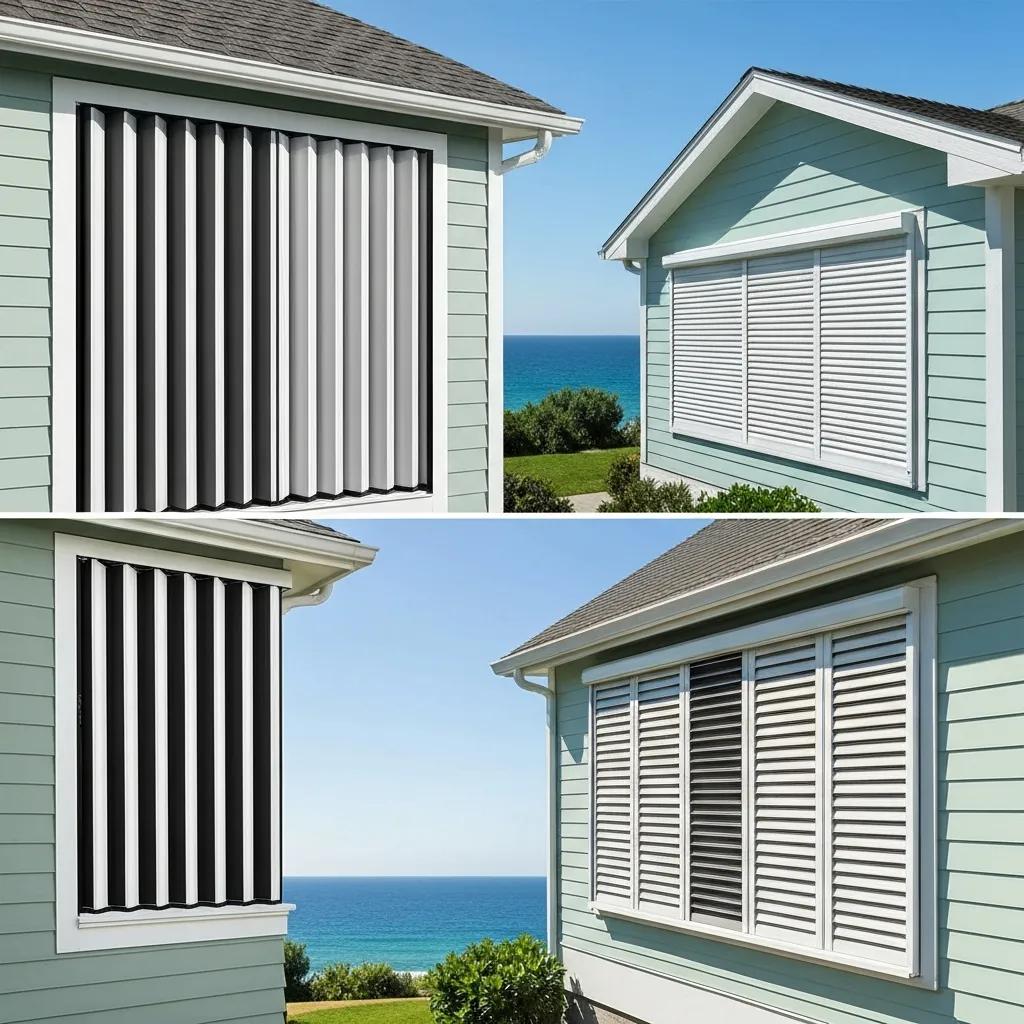
To compare accordion and traditional shutters, consider impact resistance, deployment effort, lifecycle cost, and how each option looks on your home. Properly engineered accordion shutters often deliver stronger, more consistent protection on large openings, while some traditional systems can be effective at a lower initial cost but require storage and repeated labor. Usability centers on permanent versus seasonal systems—accordion and motorized options let one person secure a house quickly. The table below summarizes typical protection levels, cost bands, deployment needs, storage, aesthetic impact, and maintenance expectations for common shutter types.
Different shutter systems show distinct tradeoffs in protection, cost, and operation:
Overall, permanent systems reduce storage and deployment risk but often come with higher upfront cost; the next sections dig into impact, usability, and value so you can judge tradeoffs clearly.
Which Shutter Type Offers Better Protection and Impact Resistance?
When engineered to local conditions with the right thickness, anchoring, and a Design Pressure Analysis, accordion shutters typically offer consistent protection on large openings—making them a solid choice for high‑wind coastal zones. Properly anchored storm panels can meet impact and DP requirements, but their real‑world performance depends on correct installation and material selection; they’re more vulnerable to human error. Reference recognized testing standards like ASTM E1886/E1996 and local permitting benchmarks when choosing impact‑resistant products. For large doors or continuous glass walls, permanent accordion or roll‑down systems usually give more consistent coverage with fewer weak points than segmented storm panels.
Hurricane Shutter Performance and Testing Standards
This reference reviews shutter performance under impacts from windborne debris, including roof tiles and a 2×4, and stresses the role of standardized tests—such as ASTM E1886/E1996—in evaluating systems for hurricane conditions.
How Do Accordion and Traditional Shutters Differ in Ease of Use and Deployment?
Ease of use typically favors accordion shutters and motorized systems because they’re permanently mounted and designed for fast, single‑person deployment—reducing time pressure during a storm. Traditional storm panels need manual installation or a crew, adding labor costs and increasing the chance of delays; access and storage of panels further slow deployment for many homeowners. Motorized or assisted permanent systems keep deployment fast even for large or hard‑to‑reach openings, improving safety and convenience. Consider household mobility, storage limits, and how quickly you must secure openings when deciding between manual panels and permanent systems.
Performance of Hurricane Shutters Under Impact
This testing program included steel panels in several thicknesses and aluminum panels in two thicknesses. Specimens were struck by roof tiles and a 2√ó4 at speeds from 30 to 60 mph and were subjected to cyclic pressure loading to simulate storm conditions.
What Are the Cost Differences and Long-Term Value of Each Shutter Type?
Upfront costs are generally lowest for storm panels and higher for permanent systems like accordion shutters, but lifecycle costs can shift the balance once you factor storage, seasonal labor, replacement frequency, and insurance discounts tied to certified installations. Accordion shutters remove seasonal reinstallation and storage costs and often deliver stronger long‚Äëterm value when storms are frequent or when large openings need dependable coverage. Insurance incentives sometimes apply to engineered installations that meet DP standards and certified testing, adding long‚Äëterm value. Use a cost calculator for planning, then request a free on‚Äësite estimate to compare initial and lifecycle costs for your specific openings.
How Do Aesthetics and Home Integration Vary Between Shutter Types?
Appearance differs by type: colonial and Bahama shutters are made to complement architectural styles, storm panels disappear when stored, and accordion shutters are visible but can be color‑matched and profiled to reduce visual bulk. How each option looks when retracted—or when closed—matters for neighborhoods with strict appearance rules and for owners focused on curb appeal. Options like custom colors, low‑profile hardware, and careful integration with trim help permanent systems blend in, while removable panels offer the cleanest look in the off‑season. Look at local examples to see how each option appears on typical Coastal Carolina homes.
What Are the Maintenance Requirements and Longevity Expectations?
Maintenance depends on materials and exposure. Aluminum with high‚Äëquality coatings and stainless hardware resists coastal corrosion best and usually needs only annual inspections; lower‚Äëcost materials and fasteners may demand more frequent attention. Common maintenance tasks: clean tracks, lubricate moving parts, check fastener torque (especially on permanent systems), and repair dents or finish damage quickly to preserve protection. Lifespan varies with exposure and upkeep; premium materials and engineered installations extend service life and lower replacement costs over time. Following an installation checklist and a maintenance schedule preserves performance and helps measure long‚Äëterm value.
How Do Accordion and Traditional Shutters Compare in Security Benefits?
Permanent shutters, including accordion systems, add a physical deterrent because their mounting hardware and continuous coverage reduce forced‑entry points—offering security benefits in addition to storm protection. Removable panels can deter break‑ins when installed, but they’re less effective if left stored nearby or not properly secured. Durable hardware—like 18‑8 stainless fasteners and bolted track attachments—improves intrusion resistance and can favorably influence insurance evaluations. Consider these security advantages when weighing overall return on investment.
This table shows how permanence and hardware quality translate into everyday security and protection outcomes.
Which Factors Should Coastal Carolina Homeowners Consider When Choosing Hurricane Shutters?
Coastal Carolina homeowners should weigh wind zone, storm frequency, opening sizes, budget, neighborhood appearance rules, and storage limitations when selecting shutters. Local building codes and insurance often depend on engineered documentation such as a Design Pressure Analysis and on corrosion‚Äëresistant hardware suitable for salt air. A clear decision framework balances short‚Äëterm cost against long‚Äëterm value, factoring deployment speed, maintenance needs, aesthetics, and security. Working through these factors helps homeowners match priorities to recommended shutter types and have productive conversations with qualified installers.
What Budget, Protection Level, and Aesthetic Preferences Affect Shutter Choice?
Different homeowner profiles point to different products: budget‚Äëfocused buyers often choose storm panels and accept seasonal labor and storage; homeowners who want continuous readiness favor accordion or other permanent shutters; and design‚Äëminded owners may prefer colonial or Bahama shutters for appearance. Budget affects material grade, attachment methods, and whether motorization or higher‚Äëgrade hardware is feasible. Protection needs determine whether a Design Pressure Analysis is warranted to size anchors and specify DP ratings. Use a short checklist to align priorities before requesting quotes and site assessments.
Key considerations to guide choice:
- Opening size and quantity determine per‚Äëopening cost and system suitability.
- Frequency of storms changes the lifecycle cost comparison between seasonal and permanent solutions.
- Aesthetic and HOA constraints influence whether visible permanent shutters are acceptable.
These decision points narrow options and prepare you for the next step: professional estimates and engineered assessments.
How Does American Hurricane Shutters’ Local Expertise Enhance Your Protection?
American Hurricane Shutters (AHS) brings on‑the‑ground knowledge of North and South Carolina coastal wind patterns and permitting expectations to every installation. We emphasize engineered approaches—like Design Pressure Analysis—and corrosion‑resistant hardware (for example, 18‑8 stainless fasteners) so systems are specified for local wind zones and attachment conditions. That regional expertise helps improve protection performance and simplifies permit approval. Homeowners get an engineered assessment tied to real coastal conditions and hardware choices that extend service life in salty environments.
Use this table to translate local conditions and personal preferences into practical shutter recommendations.
How Can You Get a Free Estimate and Calculate Hurricane Shutter Costs?
Ready to compare costs for your home? Follow a simple estimate flow: gather opening dimensions, pick preferred shutter types and options (motorization, finish, hardware grade), and request an on‚Äësite assessment to finalize engineered requirements. A cost calculator can give you an instant ballpark by combining opening sizes with per‚Äësquare‚Äëfoot estimates and chosen options, but a free on‚Äësite estimate is essential for final pricing because it accounts for attachment conditions, reinforcement needs, and local code compliance. These steps move you from broad comparison to an actionable quote and installation plan.
How Does the Hurricane Shutter Cost Calculator Work?
Our cost calculator asks for opening dimensions (width and height), shutter type, finish and hardware options, and whether you want motorization or premium features. It then outputs an estimated price range and a suggested next step. The calculator is a planning tool—not a contract—because on‑site measurement, structural assessment, and engineered documentation refine the final scope and cost.
Use the calculator for a solid starting point, then schedule a free on‚Äësite estimate to confirm scope and engineered requirements.
How to request a free estimate (simple 3‚Äëstep approach):
- Measure each opening or note approximate sizes to enter in the cost calculator.
- Select a preferred shutter type and options for a preliminary estimate.
- Schedule a free on‚Äësite estimate to receive an engineered quote and final pricing.
This workflow moves you from rough budgeting to a documented proposal that reflects local installation realities.
What Are Typical Price Ranges for Accordion vs. Traditional Shutters?
Price ranges depend on opening size, material grade, and options like motorization. Generally, removable storm panels cost the least up front, colonial and Bahama shutters sit in the middle, and accordion shutters fall in the moderate‑to‑high range because of permanent mounting and heavier hardware. Major cost drivers include complex openings, reinforcement needs, custom finishes, and whether a Design Pressure Analysis is required—items that can affect permitting and insurance. Because site specifics change pricing, use the cost calculator for planning and request a free estimate for a final, engineered price that reflects attachment details and local codes.
What Are Common Questions About Accordion vs. Traditional Hurricane Shutters?
Homeowners often ask whether accordion shutters are worth the investment, what their downsides are, and when professional installation is necessary. Short answers: accordion shutters are a strong choice for frequent storms or large openings because they combine convenience and reliable protection, but they cost more up front; storm panels are economical but need storage and seasonal labor; professional installation is recommended for permanent systems and for any installation that claims DP compliance. These quick Q&A items point readers to the right next steps: run a cost calculator and schedule a free estimate to verify fit and pricing.
Are Accordion Shutters Worth the Investment Compared to Traditional Options?
Yes—accordion shutters are often worth the investment when you need fast, reliable protection for large openings, want to avoid seasonal storage, or plan to stay in the home long enough to amortize the cost. Their permanence and readiness provide convenience and security benefits that often favor lifecycle value for frequent‑storm areas. If storms are rare and budget is the top concern, storm panels may be more cost‑effective in the short term. Comparing lifecycle costs, insurance implications, and your household’s ability to deploy protection clarifies whether accordion shutters deliver the ROI you expect.
What Are the Disadvantages of Accordion Shutters?
Accordion shutters have tradeoffs: higher initial cost, a visible installed profile that may not suit every architectural taste, and the need for periodic track maintenance to keep operation smooth in salty air. You can mitigate these issues by choosing corrosion‚Äëresistant finishes and 18‚Äë8 stainless hardware, color‚Äëmatching to trim, and following a simple annual maintenance routine. If curb appearance is a priority, colonial or Bahama shutters can offer a more traditional look while still providing protection. Understanding these tradeoffs helps you plan for mitigation and pick the right system for long‚Äëterm home care.
Common disadvantages and mitigation:
- Upfront cost: offset over time by lifecycle savings and possible insurance credits for certified systems.
- Visual impact: minimize with color matching and careful trim integration.
- Track maintenance: schedule annual inspections and replace hardware as needed.
These practical steps reduce downsides while preserving the benefits of accordion systems.
Frequently Asked Questions
What factors should I consider when choosing between accordion and traditional hurricane shutters?
Consider your local wind zone, how often you see high winds, the size and number of openings, your budget, and any HOA or neighborhood appearance rules. Also think about storage: traditional shutters usually require seasonal storage while accordion shutters are permanently mounted. Balancing these factors helps you pick a system that meets protection needs and fit
