Smart Coastal Home Protection — Clear, Local Choices
Choosing the right permanent hurricane barrier for a coastal home means balancing reliable protection, everyday convenience, and long-term value. For many homeowners along the North and South Carolina coast, that choice comes down to accordion shutters or storm-rated roll screens. Below we walk through how each system works, how they resist wind and windborne debris, and the performance and financial factors to weigh. You’ll see how accordion shutters deploy and anchor, how fabric and motorized roll screens behave in daily use and under storm loads, and what to expect for insurance and resale. We emphasize durability, correct installation, and year‑round usefulness so you can match the right solution to your windows, patio doors, and large glass walls. We also cover local code and storm-history considerations for coastal NC and SC and explain how a local installer provides the site-specific Design Pressure Analysis and documentation you’ll need. Read on for a clear, section-by-section guide to cost, convenience, appearance, and long-term savings—always with safety and code compliance first.
What Are Accordion Shutters and How Do They Protect Your Home?
Accordion shutters are permanently mounted, folding aluminum panels that stack beside an opening and latch across windows or doors to resist wind loads and impact. Their protective strength comes from continuous panel coverage, guided tracks, and heavy-duty anchors that transfer loads into the building’s structure—helping prevent window failure and dangerous interior pressurization. Because the panels remain attached year‑round, they’re ready as soon as you latch them and also add a layer of security against forced entry. That constant readiness and robust construction is why homeowners who want dependable, passive protection for frequently used openings often choose accordion systems.
These systems pair extruded aluminum panels with engineered tracks and fasteners that tie back to framing to meet required design pressures. Performance depends on a continuous load path from panels to anchors to structure, so correct installation and engineered attachment points are critical. Next, we’ll outline the specific features that affect durability and security.
What Features Make Accordion Shutters Durable and Secure?
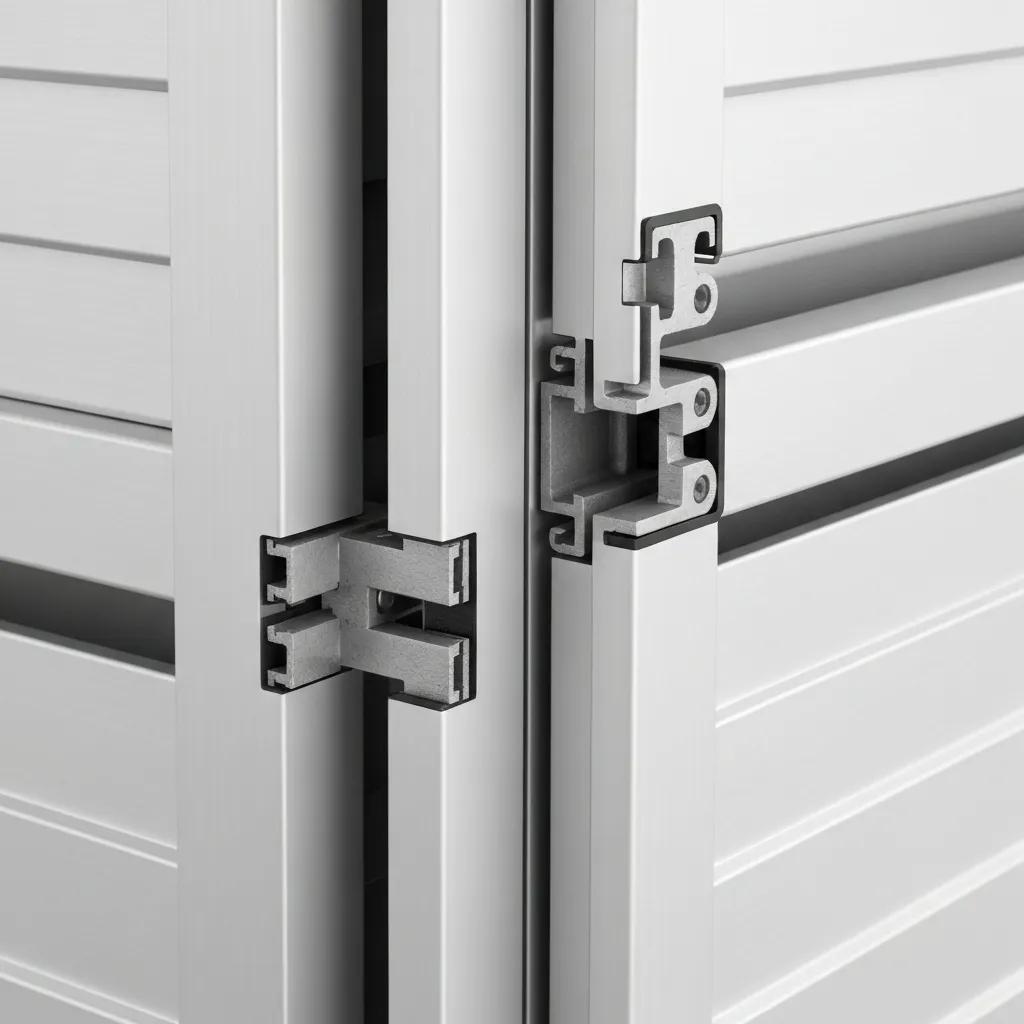
Accordion shutters depend on solid materials, continuous tracks, and reliable anchors to withstand repeated wind and debris impacts. Quality systems use corrosion‑resistant metals and track geometries that resist deformation under design pressures, keeping panels aligned and functional season after season. Anchoring hardware and fasteners are essential parts of the load path; when installers use high‑grade stainless‑steel anchors and follow verified attachment patterns, the system is far less likely to shift under extreme gusts. A site‑specific Design Pressure Analysis ties a product’s published ratings to your home’s actual exposure, giving confidence the shutters will perform when it matters.
Performance of Hurricane Shutters Under Impact
This test matrix compared steel panels of three thicknesses and aluminum panels of two thicknesses to evaluate shutter systems designed to protect windows from windborne debris. The program combined laboratory impact tests with field observations after storms to assess real‚Äëworld performance.
Performance of hurricane shutters under impact by roof tiles, KR Gurley, 2010
Hurricane Shutters and Impact-Resistant Glass for Residential Protection
Hurricane shutters and impact‚Äëresistant glass are both proven measures to reduce residential storm damage. Their effectiveness depends on proper product selection, testing, and correct installation for the specific hurricane scenario.
Damage characterization: Application to Florida public hurricane loss model, JP Pinelli, 2011
Durability also depends on finish, panel thickness, and resistance to galvanic corrosion in coastal environments where salt and humidity accelerate metal deterioration. A properly installed accordion system minimizes wear by reducing movement at high‑stress points, and because the panels stay attached year‑round there’s no risk of missing or improperly stored parts when a storm arrives. These construction and installation choices influence lifespan, security, and long‑term value—points we return to when discussing cost and installation below.
What Are the Typical Costs and Installation Process for Accordion Shutters?
Accordion shutter pricing varies with opening size, panel finish, and attachment complexity; linear footage and any required framing reinforcement are primary cost drivers. Installation typically begins with a site survey and precise measurements, followed by a Design Pressure Analysis to confirm required performance. Trained crews fabricate and install the panels, tracks, and anchors to engineered details. Lead times depend on fabrication schedules and custom finishes; investing in quality hardware and proper anchoring up front helps prevent fitment issues and reduces long‚Äëterm maintenance. For a location‚Äëspecific estimate, use our cost calculator or request a free quote to turn these factors into real numbers for your home.
Accordion Shelter Hardware Analysis and Solutions
This report examines hardware problems found during field tests of an expandable accordion shelter prototype, identifying trouble spots—jacks, leveling, and expansion systems—and proposing corrective solutions. The findings illustrate how detailed hardware design affects deployed performance.
Accordion Shelter Hardware Analysis, 1978
IBHS FORTIFIED Homes: Hurricane Protection Standards for Residential Construction
Many shutter systems can allow wind or water intrusion through gaps, and shutters themselves can sustain damage from debris. The IBHS FORTIFIED Home‚Ñ¢ standard addresses these issues with required construction and installation methods that improve window and opening performance.
IBHS FORTIFIED homes hurricane: Bronze, silver, and gold; an incremental holistic approach to reducing residential property losses in hurricane prone areas, 2013
To compare affordability and performance, focus on three main cost drivers: opening width and height, any framing reinforcement required, and cosmetic or motorization choices. Understanding these drivers sets realistic expectations for warranties, maintenance, and lifecycle cost—useful context when you compare accordion shutters with storm‑rated roll screens below.
How Do Storm-Rated Roll Screens Compare as Hurricane Protection?
Storm‚Äërated roll screens use woven or laminated technical fabrics that roll into a housing above an opening and unroll across windows or doors to meet rated wind and debris loads while often preserving outward visibility and daylight. Their protection relies on engineered fabric, continuous side guides, and secure anchors to form a barrier that resists specified wind pressures and impacts. Many roll screens are motorized for quick deployment, and their lower visual impact and year‚Äëround usefulness appeal to homeowners who want strong storm defense without permanent metal panels. Comparing these operational differences with accordion shutters clarifies the trade‚Äëoffs in durability, convenience, and curb appeal.
Roll‑screen performance depends on the fabric’s tensile and impact properties, the continuity of side guides, and the housing and drive quality for motorized units. Properly specified storm‑rated fabrics can deliver solid wind‑load resistance while allowing light transmission and airflow during calm weather. Maintenance usually involves fabric inspections and occasional motor servicing; because these systems are lighter than solid shutters, installation and anchoring strategies differ. Below we break down the core benefits, measurable attributes, and installation considerations for roll screens.
What Are the Key Benefits and Features of Storm-Rated Roll Screens?
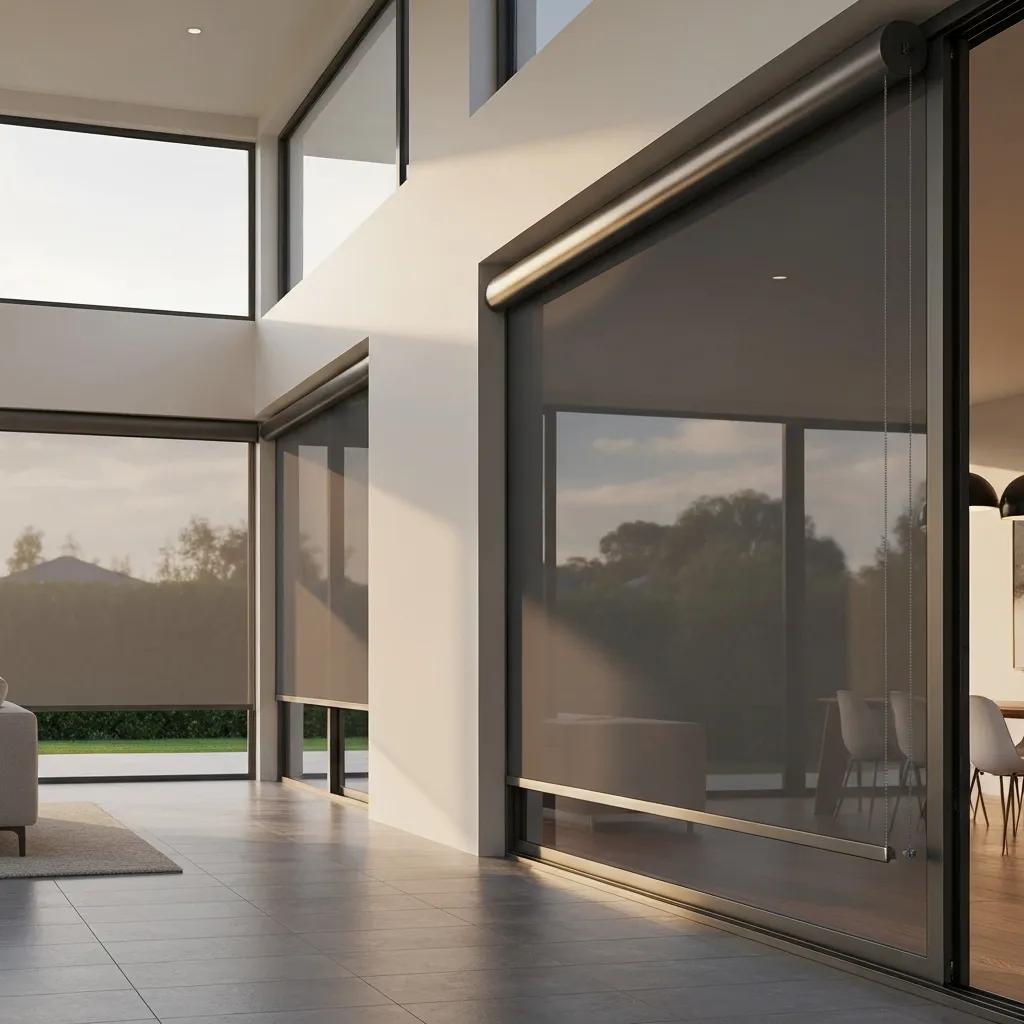
Storm‑rated roll screens offer several advantages: they preserve outward views and daylight, can reduce solar heat gain to improve comfort and energy performance, and adapt easily to motorized controls for hands‑free operation. Engineered fabrics in rated systems are designed to meet wind‑load criteria and can provide year‑round shading and privacy in addition to storm protection. Motorized units add convenience and speed—especially for large patio openings—while manual versions lower upfront cost and simplify maintenance. These attributes make roll screens attractive where aesthetic integration and everyday functionality are priorities.
Roll screens also have a smaller visual footprint than solid shutters, helping them blend with modern facades and glass‑heavy designs. Their performance is highest when side guides and bottom anchors are robust and when installation includes verification against expected design pressures. Next we’ll cover common cost drivers and the motorization premium to expect.
How Much Do Storm-Rated Roll Screens Cost and What Is the Installation Process?
Key cost drivers for roll screens include opening dimensions, manual versus motorized operation, and the specific storm‑rated fabric selected. Motorized systems add cost for the motor, controls, and any electrical work. Installation generally involves mounting the housing, aligning the guides, anchoring attachment points, programming motors where applicable, and testing deployment under load. Lead times reflect fabrication and any required electrical integration. Fabric systems usually require less heavy hardware maintenance than metal shutters—periodic cleaning, tension checks, and motor service are typically all that’s needed. For accurate pricing and to evaluate motorization, request a formal estimate that accounts for your opening geometry and local exposure.
Understanding these trade‑offs shows where roll screens excel—light, aesthetics, and automation—versus where heavier solid shutters may be the safer choice. Below is a side‑by‑side summary of key attributes.
Accordion Shutters vs. Storm-Rated Roll Screens: What Are the Main Differences?
This comparison covers cost, durability, security, convenience, maintenance, and aesthetics so you can match each product’s strengths to your openings and exposure. Accordion shutters provide solid‑panel, always‑attached protection focused on impact resistance and security. Storm‑rated roll screens preserve views and daylight while offering rated defense from wind and debris and the option of motorized convenience. In the highest‑exposure locations, a properly installed solid system usually offers greater long‑term durability; in moderate‑exposure or glass‑heavy designs, roll screens often win on daily livability. The table below summarizes the main trade‑offs for use cases like wide sliding doors versus smaller windows.
How Do Accordion Shutters and Roll Screens Compare on Cost, Durability, and Security?
Accordion shutters typically cost more up front per opening than manual roll screens, but their rigid build and continuous coverage reduce the chance of catastrophic glazing failure during extreme events. Durability for accordion systems depends on panel thickness, track design, and anchoring hardware—elements that create the load path and determine long‑term resilience. Solid panels also offer stronger passive security, while fabric systems can be vulnerable if anchors or guides are compromised. When comparing costs, consider local storm frequency, the importance of each opening, and desired security level along with expected lifecycle maintenance.
In practical terms: for a wide waterfront glass wall exposed to surf‚Äëdriven debris, the structural strength of accordion shutters often justifies the higher cost. For bedroom windows where daylight and airflow matter more, storm‚Äërated roll screens can deliver a sensible mix of protection and livability. These examples show how performance, cost, and security map to different architectural uses and exposure profiles.
Which Option Offers Better Convenience, Maintenance, and Aesthetics?
Roll screens generally win on day‚Äëto‚Äëday convenience and year‚Äëround use because they stay out of sight when retracted and keep views and light. Motorized options add speed and simplicity for large or frequently used openings. Maintenance for roll screens focuses on fabric care and motor servicing; accordion shutters require occasional track and hardware checks to ensure smooth folding and secure latching. Aesthetically, roll screens suit contemporary designs with a low visual profile, while accordion shutters present a more solid, traditional look that some homeowners find visually heavy outside storm season. Ultimately, the choice comes down to whether daily convenience and visual continuity matter more to you than maximum passive security.
- Accordion shutters are best for high‚Äëexposure openings that need constant, passive protection.
- Storm‚Äërated roll screens work well where preserving views, daylight, and shading matters.
- Motorized roll screens are recommended for large or frequently used openings to combine speed with convenience.
What Is the Return on Investment for Accordion Shutters and Roll Screens?
ROI for hurricane protection depends on installation cost, possible insurance premium reductions, property‑value uplift from certified protection, avoided repair costs after storms, and non‑financial benefits like safety and reduced downtime. Key drivers include expected system lifespan, local storm frequency, and your ability to document compliant installation for insurers or appraisers—each affects payback timing. Real calculations require project‑specific inputs—installation cost, estimated annual insurance savings, and avoided damage risk—to produce a realistic payback. The table below shows the financial inputs homeowners should collect when comparing quotes.
Gathering these inputs helps homeowners run a realistic ROI and make a confident choice between accordion shutters and roll screens. Next, we explain how shutters and screens can affect insurance and property value in NC and SC.
How Do Hurricane Shutters Impact Property Value and Insurance Premiums in NC and SC?
Hurricane shutters and certified protection systems can influence underwriting and appraisals when homeowners provide documentation showing code compliance and tested product ratings. Insurers and appraisers typically look for certified products and proof of proper installation before adjusting premiums or value. Because requirements and interpretations vary, ask your installer for written product specs, Design Pressure calculations, and installation verification to support requests for discounts or appraisal credit. Local market dynamics along the North and South Carolina coast also matter—buyers often value visible, certified protection on high‑exposure properties, which can boost marketability. For precise insurer or appraiser guidance, present the documentation gathered during your estimate and installation.
Homeowner Insurance for Hurricane Damage in North Carolina
This study analyzes survey data for North Carolina homeowners to understand decisions about wind and flood insurance. Using mixed logit models, the research finds that lower premiums and deductibles, recent hurricane experience, coastal or floodplain location, higher income, and younger age increase the likelihood of purchasing coverage. The paper also shows that insurance purchase and home retrofits tend to be complementary decisions and offers models to predict insurance penetration under different premium scenarios.
Homeowner purchase of insurance for hurricane-induced wind and flood damage, D Wang, 2017
Innovations in Coastal Home Construction: Shutter Systems and Impact-Resistant Glazing
The adoption of updated standards drives innovation in coastal residential construction. Various shutter systems and impact‚Äëresistant glazing options are being developed and implemented to improve resilience against hurricane‚Äëforce winds and flying debris.
Coastal Homes: Critical Design and Construction Issues, TP McAllister, 2002
Because exact premium reductions vary by insurer and location, plan conservatively: documented protection usually makes you eligible for savings but won’t guarantee a specific rate. The ability to verify code compliance and provide engineered performance data is the main pathway for shutters and screens to deliver financial benefits.
What Long-Term Savings and Peace of Mind Do These Storm Protection Solutions Provide?
Long‑term savings come from avoided repair and replacement costs after storms, reduced interruption to home use, and potential insurance or resale benefits tied to certified protection. The non‑financial returns—safety for occupants, less cleanup, and faster recovery—are often the deciding factors for homeowners. Recent storm history shows that proactive protection can significantly reduce damage to coastal properties, so the peace of mind from a tested, well‑installed system is a major part of the ROI. A conservative payback calculation that includes both financial and non‑financial benefits gives a balanced view of value.
That’s why it’s important to choose products and installers who provide thorough documentation, perform a Design Pressure Analysis, and give clear maintenance guidance to preserve performance over the product’s life.
How Do Local Building Codes and Storm History Affect Your Hurricane Protection Choice?
Local building codes, regional adoption of standards, and storm history all shape minimum performance expectations and practical product choices in coastal North and South Carolina. Many manufacturers reference Florida Building Code compliance, but you should confirm local code adoption, enforcement nuances, and whether Miami‑Dade or other approvals are required in your jurisdiction. Storm exposure—direct ocean fetch, barrier‑island conditions, or inland wind patterns—affects the recommended rating and anchoring strategy. Understanding these regulatory and environmental variables helps you select the right system and level of engineered attachment for real‑world demands.
Because codes and local interpretations change over time, the best next step is to request product certification documents and a site‑specific Design Pressure Analysis that matches a chosen system’s rating to your property’s exposure. The table below maps regional considerations across the AHS service area.
What Building Code Standards Do Accordion Shutters and Roll Screens Meet or Exceed?
Reputable manufacturers typically state that their products meet or exceed Florida Building Code requirements, and qualified installers can provide product performance certificates, test reports, and installation documentation to support those claims. Verifying code compliance matters for safety, insurance underwriting, and proving a system meets its rated design pressures. Ask installers for specific certification papers, laboratory test references, and any local approvals relevant to your property. Matching those documents to your DP Analysis is an essential step before purchase and installation.
Confirming both product and installation documentation helps ensure local authorities and insurers recognize the protection—an important factor for ROI and resale value.
How Does Coastal Storm History Influence the Best Protection for Your Home?
Patterns of wind intensity, storm surge, and debris paths guide recommendations for protection grade and attachment strategy because repeated high‚Äëexposure events increase the likelihood of extreme loads on openings. In areas with frequent high winds or documented surge, more robust, permanently attached solutions with higher design‚Äëpressure ratings are usually advised. In lower‚Äëexposure settings where daylight and views are a priority, storm‚Äërated roll screens may offer adequate defense with better daily livability. A site‚Äëspecific Design Pressure Analysis is the most reliable way to translate historical exposure into a recommended rating and attachment pattern.
Working with local providers who understand regional storm behavior helps ensure the chosen approach aligns with real‚Äëworld exposure and code expectations. The next section explains how American Hurricane Shutters can help with that process.
How Can American Hurricane Shutters Help You Choose and Install the Right Solution?
American Hurricane Shutters (AHS) provides engineered hurricane protection across coastal North and South Carolina, offering consultations, free estimates, and a cost calculator to help homeowners compare accordion shutters and roll screens. We prioritize installation quality—using 18‑8 stainless‑steel anchoring where appropriate—and perform Design Pressure Analysis so systems meet expected storm loads and local code requirements. Serving Wilmington, Myrtle Beach, Oak Island, Topsail, New Bern, and Pawleys Island, AHS is a local partner for product selection and the documentation insurers and appraisers expect. If you want site‑specific guidance, our consultative process turns performance needs into a clear installation plan and estimate.
What Is the Free Estimate and Consultation Process with American Hurricane Shutters?
Our process begins with a site visit or virtual intake to capture opening dimensions, exposure, and your priorities. We use a cost calculator to provide an initial estimate and follow up with a Design Pressure Analysis to finalize engineered attachment specifications. You’ll receive a formal, itemized quote showing product choices—accordion shutters or roll screens—scope of work, and recommended anchoring hardware. We emphasize documentation that supports local code compliance and insurance conversations, then coordinate fabrication and installation timelines. Requesting a free estimate and DP Analysis turns your evaluation into a documented, actionable plan.
This consultative flow links product selection, verified performance, and clear cost expectations so you can decide which protection strategy best balances budget and exposure for your home.
What Do Local Custo
