
Accordion Shutters vs. Storm Panels — Which Is Right for Your Home?
Deciding between accordion shutters and storm panels is one of the most important choices coastal homeowners make to protect property in North and South Carolina. This guide lays out what each system is, how they perform, and the real-world trade-offs you’ll weigh—impact resistance, installation effort, and long‑term value. Many owners favor accordion shutters for their permanence and fast deployment, while others prefer the lower upfront cost and flexibility of removable panels. We explain how materials like aluminum, steel, and polycarbonate affect strength and corrosion resistance, show what installation and maintenance look like, and point out insurance and building‑code considerations that matter locally. You’ll get cost and maintenance comparisons, a pros-and-cons summary, decision checklists for coastal homes, and answers to common homeowner questions so you can pick the protection that fits your needs.
What Are Accordion Shutters and How Do They Protect Your Home?

Accordion shutters are permanently mounted, folding panels that slide on tracks to cover windows and doors. Because they stay attached year‑round, they’re ready to close quickly and form a continuous barrier without storage or setup. The interlocking panels and anchored tracks transfer wind loads and impacts into the building structure, which helps protect glazing and framing during storms. Built-in locks and hardware speed deployment and add everyday security when the shutters aren’t in use. For coastal homes, choose corrosion-resistant materials and hardware—salt air accelerates wear, so the right finishes and fasteners make a big difference over time.
How Do Accordion Shutters Work for Hurricane Protection?
Accordion shutters open and close by sliding horizontally along fixed tracks and locking in place to create a rigid shield against wind pressure and flying debris. Their design moves forces from the shutter into the track and anchoring points on the structure, which reduces stress on windows and doors and lowers the chance of glazing failure. You’ll find manual models with low‑friction tracks and secure latches as well as motorized options for one‑touch convenience. Both types are available to meet required design pressures for coastal codes, and the predictable deployment sequence saves prep time—especially important when protecting many large openings before a storm.
Accordion Shutters vs. Rain Intrusion: Quantifying Protection Effectiveness
Shutter systems are widely used in hurricane-prone areas to reduce damage from wind-driven debris and water intrusion. This study measures how much wind-driven rain penetrates a window setup with and without an accordion shutter, using simulated hurricane conditions to quantify how shutters improve a building’s resistance to rain and wind intrusion.
Holistic testing to determine quantitative wind-driven rain intrusion for shuttered and impact resistant windows, KS Vutukuru, 2020
What Are the Key Features and Materials of Accordion Shutters?
Most accordion shutters use extruded aluminum panels with stainless or corrosion‑resistant fasteners and tracks to stand up to coastal conditions. Options include manual or motorized operation and keyed locks or internal latches. Look for continuous tracks, reinforced ribs for impact strength, and sealed seams to limit driving rain—warranties often reflect both material quality and installation. Routine upkeep includes cleaning tracks, lubricating moving parts, and inspecting fasteners; choosing stainless hardware and corrosion‑resistant finishes cuts maintenance needs and extends service life by years in salty air.
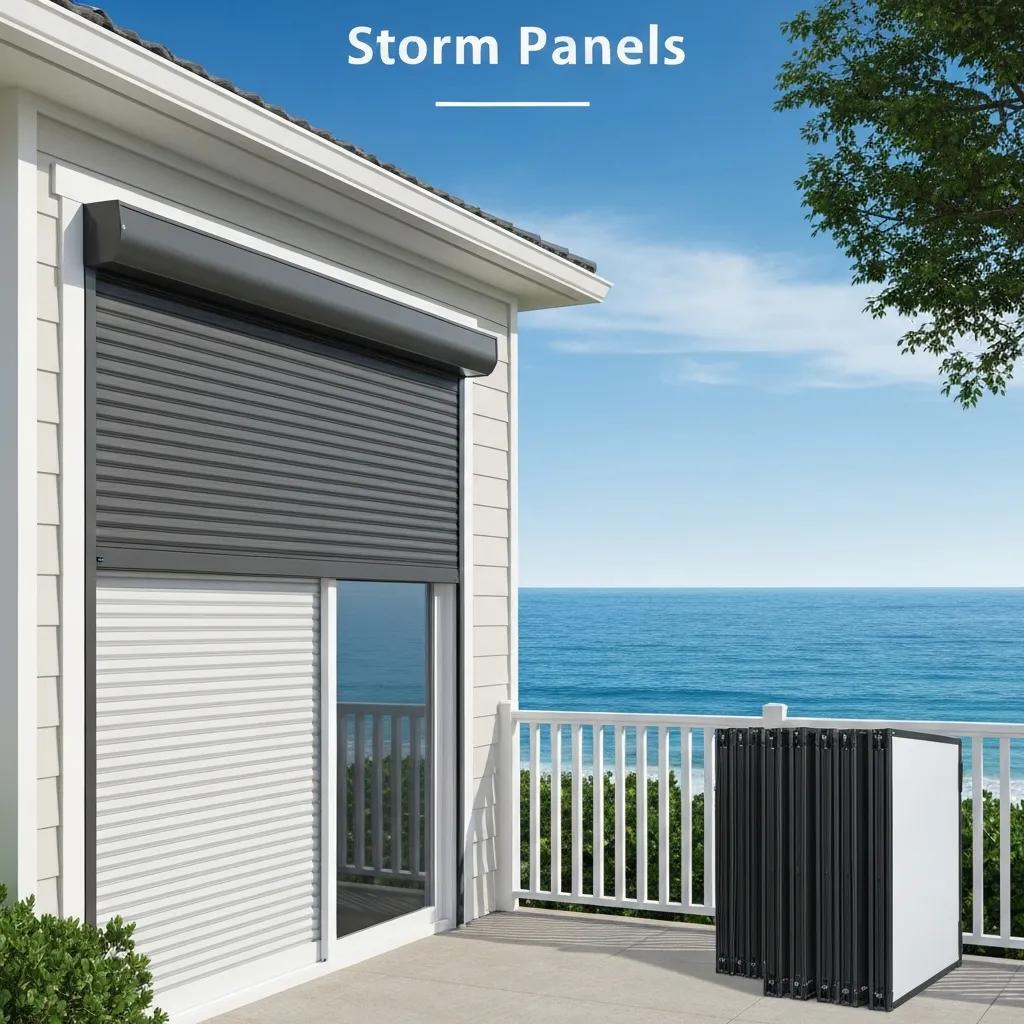
What Are Storm Panels and What Benefits Do They Offer for Homes?

Storm panels are removable sheets homeowners mount over openings when a storm approaches. They’re a lower‑cost, flexible approach—panels are stored when not in use, which keeps a home’s appearance unchanged and works well for seasonal or vacation properties. When secured to pre‑installed rails or directly to structural framing, properly anchored panels form a strong barrier against debris and wind pressure. The trade-offs are time and storage: mounting and removing panels require labor, and good storage practices are essential to keep panels ready for the next storm.
What Materials Are Used in Storm Panels and How Do They Perform?
Panels are commonly made from aluminum, clear polycarbonate, or steel—each balances strength, weight, and visibility differently. Aluminum is lightweight and corrosion‑resistant, making it easy to handle. Steel is heavier but offers greater rigidity and impact resistance. Clear polycarbonate preserves daylight and views while resisting impact, but choose UV‑stabilized options to prevent yellowing. Material choice affects handling, storage, and anchoring requirements; for coastal homes, opt for corrosion‑resistant finishes and plan storage to keep panels performing reliably over time.
How Do Storm Panels Provide Affordable and Effective Protection?
Storm panels are often the most budget‑friendly option because the materials and hardware cost less and don’t require permanent track installation on every opening. Savings come with labor trade‑offs: DIY‑friendly panels lower installation expense but increase homeowner time and the risk of errors if anchoring isn’t done correctly. Properly installed, code‑compliant panels will deliver reliable impact and wind protection, but lifetime value depends on careful storage, corrosion control, and replacement cycles. For many homeowners, panels are a practical mix of affordability, protection, and low visual impact when stored.
- Panels are chosen for cost savings, seasonal use, and minimal permanent visual impact.
- They’re a good fit for smaller or infrequently used openings where storage is feasible.
- Pre‚Äëdrilled mounting points and proper anchoring significantly improve performance.
These factors explain why panels remain popular for budget‚Äëminded or seasonal protection and set up a direct comparison with permanent systems like accordion shutters.
In short, material choice determines panel weight, storage needs, and suitability for specific openings and durability expectations.
What Are the Pros and Cons of Accordion Shutters Compared to Panels?
Accordion shutters combine permanent protection, fast deployment, and added security—traits that appeal to primary residences and homes with large openings. Their permanence reduces storm prep labor and lowers the chance of missed closures, but those benefits come with higher upfront cost and mechanical parts that need periodic maintenance. Storm panels cost less initially and leave the façade unchanged when stored, but they need storage space and pre‑storm labor that can be impractical with frequent storms. Compare storm frequency, opening size, aesthetics, and lifecycle costs to choose the right system for your property.
What Are the Advantages of Accordion Shutters Over Storm Panels?
Accordion shutters close quickly—one person can often secure multiple openings in minutes—cutting prep time and the risk of missed protection. Because they’re permanently installed, they also add daily security without cluttered storage. For homes with large glass expanses or high storm exposure, the tested wind‑load performance and durability of accordion systems often deliver better long‑term value despite higher upfront cost. Those practical benefits make accordion shutters a strong choice for primary coastal homes.
What Are the Disadvantages of Accordion Shutters Compared to Panels?
Main downsides are higher purchase and installation costs, visible bulk when closed on the exterior, and routine mechanical maintenance of tracks and locks. Motorized units add convenience but increase complexity and service needs; plan for occasional servicing in salty coastal air. Color matching and profile selection can reduce aesthetic concerns, but the permanent nature of the system is less flexible than removable panels for owners who prefer an uninterrupted façade. Balance these trade‑offs against speed and permanence when choosing a solution.
As a practical note, American Hurricane Shutters installs both accordion shutters and removable panels and offers consultations to determine which product best matches a home’s exposure and budget.
What Are the Pros and Cons of Storm Panels Compared to Accordion Shutters?
Storm panels shine for affordability and flexibility—good for second homes, tight budgets, or owners who only need seasonal protection. Because they’re removable, the house’s appearance stays the same when panels are stored. But storage, repetitive installation, and potential handling damage create ongoing costs and safety concerns. Panels are effective and code‑compliant when anchored and stored correctly, but corrosion, dents, and replacement cycles affect long‑term value. Consider storage space, physical ability to handle panels, and storm frequency when deciding.
What Benefits Do Storm Panels Offer That Accordion Shutters Don’t?
Panels usually cost less per opening, don’t require permanent exterior tracks, and can leave the façade uninterrupted—useful for historic homes or architectural preservation. They’re also a fit for vacation properties where protection is seasonal; lightweight aluminum or clear polycarbonate options make handling easier. DIY installation can lower upfront labor costs for capable homeowners, giving flexibility that permanent systems can’t match.
What Are the Drawbacks of Storm Panels Compared to Accordion Shutters?
Drawbacks include the need for dry, secure storage, repeated installation labor, and the risk of damage during handling that shortens service life. Improper anchoring or skipped steps increase the chance of failure during a storm, and manual installation puts the responsibility on the homeowner to deploy on time. For households with limited storage or mobility issues, panels may be impractical compared with the permanent convenience of accordion shutters. Include these operational costs when evaluating total lifecycle value.
Coastal Homeowner Resilience: Mitigating Risks from Hurricanes and Rising Seas
As climate patterns shift, coastal homeowners play a key role in reducing risk to property and life from stronger storms and sea‑level changes. This study surveys homeowner preparedness and structural mitigation actions in a vulnerable North Carolina county, finding low levels of retrofit activity despite exposure. The research highlights barriers—beyond cost—that limit adoption of resilience measures and underscores the need for targeted outreach and accessible solutions for coastal communities.
Coastal homeowners in a changing climate, D Javeline, 2019
Poverty and lack of information are major barriers to resilience; targeted outreach and affordable options help more homeowners protect their properties.
When you’re ready, American Hurricane Shutters can assess your property and recommend whether panels or accordion shutters best match your budget, aesthetics, and storm exposure.
How Do Accordion Shutters and Panels Compare on Cost, Installation, and Maintenance?
Cost, installation complexity, and maintenance are key differences between accordion shutters and storm panels. Material choice, opening size, and motorization drive those differences. Accordion systems cost more per square foot because of permanent tracks, reinforced mounts, and optional motors, but they reduce labor during storms and lower the chance of human error. Panels cost less up front but add recurring labor and storage costs; improper handling shortens their lifecycle. Understanding these drivers helps estimate true lifecycle cost and pick the option that fits your budget and protection needs.
What Is the Cost Difference Between Accordion Shutters and Storm Panels?
Installed costs vary by region and project specifics, but accordion shutters generally fall into a higher per‑square‑foot range than basic aluminum panels; motorization and oversized openings increase cost further. Important cost drivers include coastal‑grade materials, reinforced framing for large openings, and any required structural work to meet high design pressures. Long‑term value—lifespan, maintenance, possible insurance savings, and resale appeal—often narrows the gap between higher upfront costs and cumulative panel expenses. Use a local cost calculator or request a free estimate for a precise, site‑specific price.
Corrugated Metal Panels for Storm Shutters: Behavior Under Hurricane Conditions
This study evaluates corrugated metal panels under simulated hurricane loads to understand structural behavior and failure modes. Findings help inform design and certification of metal panel systems used as storm shutters, improving standards for performance under extreme wind and impact conditions.
Behavior of corrugated metal panels for use as storm shutters, 2009
Corrugated metal panel strength and attachment details are critical to performance under hurricane‚Äëlevel winds and debris impacts.
After reviewing cost drivers, take advantage of free estimates and cost calculators from local providers to turn generic ranges into an actionable budget and installation plan for your home.
How Difficult Is Installation and Maintenance for Each Option?
Accordion shutters usually require professional installation to ensure correct track alignment, secure anchoring, and code compliance. Maintenance focuses on cleaning tracks, lubricating moving parts, inspecting corrosion‑resistant fasteners, and servicing motors on powered units—regular checks extend life in coastal environments. Storm panels can be DIY for smaller openings with two or more people, though larger or steel panels benefit from professional rails and pre‑drilling. Lifecycle maintenance centers on corrosion prevention and safe storage. When uncertain, a professional assessment ensures proper anchoring and code compliance.
How to Choose Between Accordion Shutters and Panels for Your Coastal Home?
Pick the system that fits your budget, aesthetic goals, storm frequency, opening size, and local building codes. For primary residences with frequent storms and large glass areas, accordion shutters often offer better long‚Äëterm value through convenience and proven performance. For seasonal or budget‚Äëconstrained homes, panels can provide compliant protection at lower upfront cost. Factor in insurance implications and whether materials and hardware are specified for coastal corrosion resistance. A clear checklist that weighs these items against your preferences and site constraints will help you decide confidently.
What Factors Should Influence Your Choice: Budget, Aesthetics, and Building Codes?
Ask how often you’ll deploy protection, whether you have storage space for panels, and whether large sliding doors or continuous glazing demand rapid closure. Coastal building codes in North and South Carolina may require products to meet specific design pressures or impact standards—confirm product documentation and code compatibility before buying. Aesthetics matter: removable panels preserve the façade when stored, while accordion shutters permanently change the exterior profile but add daily convenience. Balancing budget, lifecycle costs, insurance implications, and code compliance leads to a defensible choice for your property.
Why Choose American Hurricane Shutters for Your Accordion or Panel Installation?
American Hurricane Shutters brings regional experience across coastal North and South Carolina and focuses on engineered, code‑compliant installations. We offer a Design Pressure Analysis to match product specification to local wind loads and use 18‑8 stainless steel hardware to limit corrosion in salt air. We also provide free estimates and a local cost calculator so you can compare lifecycle costs and installation approaches with confidence—and ensure your system meets code and performance expectations.
What Are Common Questions About Accordion Shutters vs Panels?
Homeowners commonly ask which option gives better protection, how much systems cost installed, whether they’re DIY friendly, and whether shutters or panels affect insurance and resale value. The short answers below help you gauge options quickly; for tailored pricing and code guidance, use local cost calculators or request a free on‑site estimate.
Are Accordion Shutters Better Than Storm Panels for Hurricane Protection?
There’s no one‑size‑fits‑all answer. Accordion shutters often win on deployment speed and continuous protection in high‑frequency storm areas, while properly installed storm panels can meet impact and wind‑load standards at lower initial cost. The right choice depends on budget, opening size, storm frequency, and whether you prefer a permanent or removable solution. For large glazing areas or when rapid, reliable deployment is critical, accordion shutters commonly offer superior operational reliability. For seasonal or seldom‑occupied properties, panels often make sense.
How Much Do Accordion Shutters and Panels Cost Installed?
Installed cost depends on material, opening size, motorization, and coastal‚Äëgrade hardware. Accordion shutters typically cost more per square foot than basic aluminum panels, and motorized systems add to the total. Major drivers include corrosion‚Äëresistant finishes, reinforced framing, and any electrical work for motors. Use the local cost calculator or request a free estimate to convert ranges into a precise quote that reflects regional labor, materials, and code‚Äëdriven design pressures.
Can I Install Accordion Shutters or Panels Myself?
Lightweight aluminum and clear polycarbonate panels can be DIY‑installed for small openings with the right tools and helpers, but accordion shutters typically need professional installation to ensure proper track alignment, anchoring, and code compliance. Motorized accordion systems require licensed electrical work and precise mounting—professionals are recommended for most installations. If you consider DIY, prioritize safety, secure anchoring, and adherence to local codes.
Do Accordion Shutters or Panels Increase Property Value and Lower Insurance?
Both systems can boost a home’s perceived resilience and may help lower insurance premiums or improve resale appeal, but results vary by insurer and local market. Insurers look for documentation of design pressure compliance, manufacturer certifications, and professional installation when giving discounts—keep records. Sellers can highlight storm protection as a value point in coastal markets, but consult insurers and local real‑estate pros to estimate financial benefits for your property.
- Documentation Matters: Save manufacturer specs and installation records to support insurance and resale claims.
- Local Codes Influence Value: Compliance with coastal codes and a verified Design Pressure Analysis add credibility.
- Lifecycle Thinking: Factor maintenance and material selection into long‚Äëterm value and insurance considerations.
These points show that protection systems can add value and savings when properly installed and documented.
Given current standards and local storm histories, balance protection, cost, and maintenance when choosing a system—and use free estimates and cost calculators to build a site‑specific comparison.
Frequently Asked Questions
What are the maintenance requirements for accordion shutters and storm panels?
Accordion shutters need periodic care: clean tracks, lubricate moving parts, and check fasteners for corrosion—especially in coastal areas. Storm panels should be inspected after each use, stored dry and flat where possible, and checked for dents or corrosion before reinstalling. Confirm anchoring hardware is functional each season so either system performs when needed.
How do insurance companies view accordion shutters versus storm panels?
Insurers generally view both systems positively because they reduce storm damage risk. Accordion shutters—being permanently installed and quickly deployed—often present a stronger case for discounts. To qualify for premium reductions, insurers typically require documentation of code compliance and manufacturer ratings. Talk to your agent to understand specific requirements and potential savings.
Can I customize the appearance of accordion shutters and storm panels?
Yes. Accordion shutters come in multiple colors and finishes to blend with your exterior, and clear polycarbonate panels preserve daylight and views while offering protection. Customization options vary by manufacturer, so ask about available colors, profiles, and finishes to ensure aesthetic and functional needs are met.
What is the typical lifespan of accordion shutters and storm panels?
With proper materials and maintenance, accordion shutters can last 10–30 years. High‑quality aluminum and stainless hardware extend durability. Storm panels generally last 5–15 years depending on handling and storage. Factor expected lifespan into your long‑term cost and replacement planning.
Are there any local building codes that affect the installation of these systems?
Yes. Coastal building codes often specify design pressure ratings and installation methods for storm protection systems. Check with local authorities or a professional installer to confirm your chosen shutters or panels meet all applicable regulations. Following code not only improves safety but can affect insurance eligibility.
<!– wp:heading {"level":4} –