
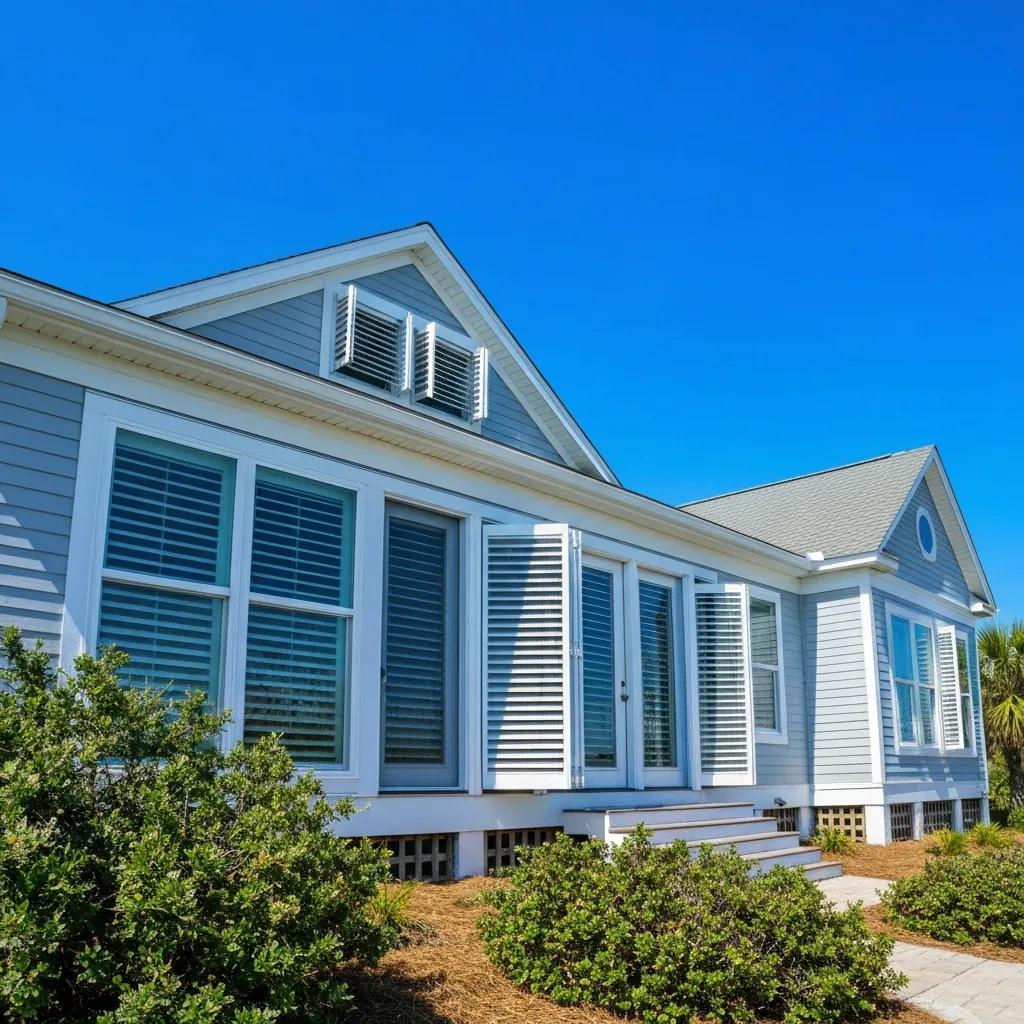
Accordion Shutters vs. Other Hurricane Solutions: Which Is Best for Coastal NC & SC Homeowners?
Accordion shutters are a permanently mounted, folding-panel system that creates a continuous barrier across windows and doors to block wind-borne debris. The panels slide on tracks and lock into place, so deployment is fast and straightforward. This guide explains how accordion shutters work, compares them with rolldown, Bahama, and Colonial shutters plus storm panels, hurricane screens, and impact-rated glazing, and helps homeowners along the Carolina coast choose the right option. If you own property around Wilmington, Myrtle Beach, Oak Island, Topsail, New Bern, or Pawleys Island, you’ll want to weigh cost, salt-air durability, ease of use when storms approach, and any code or insurance implications. We also cover material and hardware choices—like marine-grade aluminum and stainless fasteners—typical cost drivers, maintenance needs, permitting and Design Pressure Analysis, and practical recommendations for different opening types. Read on for clear comparisons, quick-reference tables, a maintenance checklist, and specific guidance to help you pick the best hurricane protection for your coastal home.
What Are Accordion Shutters and How Do They Compare to Other Hurricane Protection Options?
Accordion shutters mount permanently beside an opening and fold across windows or doors to form a rigid, wind-resistant shield. Interlocking panels ride in top and bottom tracks and latch at one edge, so you don’t need to fetch or store separate panels—deployment is fast and repeatable. That permanent mount delivers continuous security and removes storage headaches, which makes accordion shutters a smart choice when readiness and simplicity matter. Below we outline the core features and show how accordion shutters stack up against common alternatives so you can match function to your home’s needs.
Accordion shutters bring a handful of practical advantages thanks to their fixed installation and mechanical design.
- Fast deployment with no offseason storage required.
- Full-coverage storm protection and constant physical security when closed.
- Solid metal construction resists impact better than fabric screens and is easier to use than heavy, removable storm panels.
Those strengths make accordion shutters particularly useful for frequently used openings and homes where storing panels isn’t practical. Next we’ll dig into features, materials, and real-world use cases.
What Features and Benefits Do Accordion Shutters Offer?
Accordion shutters combine quick deployment, permanent attachment, and durable materials to provide reliable storm protection—and everyday security—when they’re not in use. Most openings can be closed by one person in seconds, eliminating the coordination and labor that removable systems demand. The fixed tracks remove seasonal storage concerns. In coastal settings, material choice matters: shutters built from 6063‑T6 marine‑grade aluminum with 18‑8 stainless fasteners resist salt‑air corrosion far better than ordinary alloys, extending service life and preserving operation. Accordion shutters also add a physical security layer and can offer privacy and shading when closed, so their value extends beyond storm events. Those operational and material advantages explain why accordion shutters are a common choice in areas with frequent storms, and they set the stage for how other systems differ.
How Do Rolldown, Bahama, Colonial Shutters, and Storm Panels Differ?
Different protection systems emphasize appearance, automation, or temporary use—understanding those trade-offs helps match the right product to a home. Rolldown shutters retract into a housing and often include motorized operation for single-button deployment, which works well where automation or integration with smart-home systems is desired. Bahama shutters attach above windows like awnings and deliver shade plus partial storm coverage—good for coastal style but sometimes limited in full-seal protection. Colonial shutters hinge closed for a traditional look and reasonable protection, though they’re less practical for very wide openings. Storm panels, whether aluminum or polycarbonate, are the most budget-friendly temporary choice but require storage and manual installation for every event. Knowing these differences helps you balance aesthetics, convenience, and protection level.
Quick comparison:
- Rolldown: prioritizes automation and a low profile when retracted.
- Bahama: adds shading and architectural character with moderate storm capability.
- Colonial: decorative, secure closure suited to traditional facades.
- Storm panels: lowest upfront cost but need storage and manual installation.
Those trade-offs lead into a more detailed look at cost, durability, and real-world use.
How Do Accordion Shutters vs. Rolldown Shutters Compare in Cost, Durability, and Ease of Use?

Accordion and rolldown shutters aim for the same goal—protecting openings—but they differ in key ways that affect price, exposure to the elements, and user experience. Accordion shutters are mechanically simple, usually manual, and avoid the automation premium. Rolldown systems add a motor and housing, increasing per‑opening cost and complexity. In coastal installations, longevity depends on materials and fasteners: systems built with 6063‑T6 marine‑grade aluminum and 18‑8 stainless hardware stand up better to salt air, and certified installations cut maintenance risks. Motorized rolldown systems can be easier to operate during outages when powered backups are in place, but accordion shutters often win for reliable manual use and lower outage-related failures. Below we break down typical cost and maintenance considerations so you can decide by budget, opening size, and how you plan to operate the system.
What Is the Typical Cost of Accordion Shutters Compared to Rolldown Shutters?
Cost factors include per‑square‑foot materials and fabrication, whether you add automation, complexity for large or irregular openings, permitting and engineered attachments, and labor for a custom fit. Prices vary by supplier and project, but accordion shutters typically carry a moderate per‑opening cost with lower automation expenses compared with motorized rolldown systems, which require a barrel, housing, and motor. Local factors like coastal access, permitting requirements, and the number of openings will affect final estimates—homeowners in Wilmington, Myrtle Beach, and neighboring towns should expect some variation. For accurate local pricing, use a cost calculator or request a free estimate and an on‑site visit; installers can confirm exact scope and pricing. Systems specified with marine‑grade materials and backed by a strong warranty often deliver better long‑term value even if the initial cost is higher.
- Cost is driven by opening size, automation, and custom fabrication needs.
- Permitting and engineered attachments can increase project cost.
- Marine‚Äëgrade materials and comprehensive warranties improve long‚Äëterm value.
Knowing these cost trade‚Äëoffs helps weigh upfront budget against lifecycle performance.
What Are the Pros and Cons of Accordion Shutters Compared to Bahama and Colonial Shutters?
Accordion, Bahama, and Colonial shutters meet overlapping homeowner priorities in different ways: accordion shutters focus on full coverage and quick deployment; Bahama shutters add shade and coastal style; Colonial shutters combine a traditional look with protection. Accordion shutters deliver fast, complete closure and strong security. Bahama shutters provide curb appeal and daylight control but may not seal as completely for high wind loads. Colonial shutters can be engineered for protection but may be less practical for very large openings. Maintenance differs, too: accordion systems need track care and fastener checks, while Bahama and Colonial styles emphasize hinge and support inspections. Match the shutter type to the portion of the house and the homeowner’s priorities—appearance, protection, or a mix of both.
How Do Accordion Shutters and Bahama Shutters Differ in Style and Storm Protection?
Bahama shutters double as sun control and storm protection, hinging outward to shade windows and reduce heat gain while providing some impact resistance when secured. They suit coastal architecture and porches well, but because they hinge away from the opening they may not achieve the same full perimeter seal as interlocking accordion panels. Accordion shutters are designed for complete coverage and quick sealing across larger openings, so they’re generally better for heavy impact scenarios and where a full perimeter attachment is required. The choice often comes down to whether shading and curb appeal or maximum sealed protection is the priority.
What Are the Security and Energy Efficiency Benefits of Accordion vs. Colonial Shutters?
Both accordion and Colonial shutters add a physical barrier that deters intrusion and reduces solar gain, but accordion shutters typically seal more tightly across the opening, lowering drafts and offering improved performance against wind‑driven rain and impacts. Colonial shutters—when specifically engineered for storms—can offer good protection, but decorative installations may leave small gaps. Energy benefits come from reduced convective losses and blocked UV; a well‑sealed accordion system can boost thermal performance and cut direct sun, while Bahama shutters reduce cooling demand through shading. These differences matter for homeowners who want seasonal energy savings or daily privacy in addition to storm readiness.
- Pros of Accordion: immediate full coverage, no storage, strong intrusion resistance.
- Cons of Accordion: closed appearance may not suit every home’s look.
- Pros of Bahama/Colonial: architectural character, shading, and curb appeal.
- Cons of Bahama/Colonial: may leave gaps and can be harder to scale for very wide openings.
That balance between looks and protection points to situations where accordion shutters are the clearer choice, which we cover next.
When Are Accordion Shutters the Best Choice Over Storm Panels and Hurricane Screens?
Accordion shutters outperform storm panels and hurricane screens when you need instant readiness, frequent use, or high impact resistance for large glazing areas. Storm panels are economical for occasional use but require storage and manpower for installation; hurricane screens provide ventilation, insect protection, and light wind defense but usually do not meet the impact ratings required by code or insurers for primary openings. Accordion shutters remove the storage and logistics burden of removable systems and raise protection levels for wide openings like multi‚Äëpanel glass walls and lanais. The sections below compare large‚Äëopening scenarios and the everyday convenience of accordion shutters so you can decide by frequency of use and storage constraints.
What Are the Advantages of Accordion Shutters for Large Openings Compared to Hurricane Screens?
For lanais, multi‑panel sliding doors, and expansive glazing, rigid shutter systems such as accordion shutters provide a continuous structural barrier that resists debris impact and wind pressure better than flexible fabric screens. Hurricane screens are excellent for ventilation, insect control, and daylight filtering but typically don’t achieve the impact ratings many codes and insurers require for primary openings in high‑wind zones. Accordion shutters can be engineered and manufactured to span wide or nonstandard widths while maintaining consistent protection across an elevation. Those structural advantages make accordion shutters the safer, code‑friendly choice where exposure or insurance incentives demand high protection.
How Do Accordion Shutters Offer Convenience Compared to Storm Panels?
Accordion shutters remove the storage and staging steps that storm panels require: no off‑season storage, no labeling or inventory, and deployment that’s usually a one‑person task completed in seconds per opening. Storm panels demand lifting, aligning, and fastening multiple sheets for each window or door—often needing two or more people for large panels—and that complicates last‑minute preparations. Permanent tracks and latches reduce human error and shrink the window of vulnerability because the system is always ready. That operational simplicity lowers physical and cognitive load during stressful storm preparations and helps families shelter in place faster.
- No offseason storage required for permanent shutters.
- One‚Äëperson deployment possible for most openings.
- Lower long‚Äëterm labor burden compared with removable panels.
Those efficiencies naturally raise questions about permitting, code, and insurance credits in coastal jurisdictions, which we address next.
How Do Local Building Codes and Insurance Benefits Affect the Choice Between Accordion Shutters and Other Solutions?
Local building codes and insurance programs along the North and South Carolina coast prioritize engineered attachments, tested product performance, and documented installations to qualify for permits and mitigation credits. A key requirement is a Design Pressure Analysis that matches a product’s attachment to site‑specific wind loads and building geometry—often required to demonstrate code compliance for permanent shutter systems. Certified products and professionally documented installations are more likely to satisfy insurers for wind mitigation discounts. Homeowners should confirm which systems can be documented and engineered to meet permit and insurer standards, and work with a qualified installer who can supply the necessary calculations and paperwork.
What Building Code Requirements Should Coastal NC and SC Homeowners Know?
Coastal code priorities include meeting design pressures, using tested or certified products, and providing engineered fastenings that transfer wind loads into the building structure to resist impact and uplift. Verify that any proposed protection system can be accompanied by a Design Pressure Analysis and that your installer will handle permit submissions and inspections. Many jurisdictions expect product testing documentation or certified compliance for permanent systems; engineered attachment details speed up permitting. Bringing a local, certified installer into the conversation early reduces the risk of delays or noncompliant work.
Do Accordion Shutters and Other Hurricane Solutions Lower Insurance Premiums?
Insurance discounts hinge on documented wind mitigation features, certified products, and permanent, verifiable installations. Permanent shutters installed with supporting documentation—engineering analysis and manufacturer test reports—are generally more persuasive to insurers seeking mitigation credits. Temporary panels may qualify for fewer or no credits because they lack permanent engineered attachments and consistent verification. Save installation paperwork, product ratings, and any Design Pressure Analysis you used for permitting to present to your insurer; an installer who manages permitting can usually provide the documents insurers request. Doing a pre‑installation check with your insurer and keeping engineered documentation improves the likelihood and accuracy of premium reductions.
Next we cover practical installation, maintenance, and warranty considerations that affect long‚Äëterm performance.
What Should Homeowners Know About Installation, Maintenance, and Warranty for Accordion Shutters vs. Other Options?

Installation quality, ongoing maintenance, and clear warranty terms are essential to long‑term performance—especially in corrosive coastal environments. Professional installers ensure precise fit, correct attachment to structural framing, and compliance with permit drawings, which reduces failure risk during a storm. In salt‑air climates, maintenance focuses on rinsing salt off surfaces, keeping tracks clean and lubricated, and inspecting fasteners to avoid binding and corrosion. Warranty scopes vary; look for explicit coverage of material corrosion, finish, and labor. A multi‑year local warranty combined with marine‑grade materials increases confidence in long‑term performance. The sections below outline the installation steps and a maintenance checklist that supports longevity and warranty compliance.
How Is the Installation Process Different for Accordion Shutters Compared to Other Shutters?
Accordion shutters mount permanently to the opening frame using top and bottom tracks and require accurate measurement and fabrication for a tight, smooth fit. Installation usually includes checking for structural backing to accept engineered fasteners and may require minor trim or framing adjustments. Rolldown systems need a housing and barrel assembly anchored to structure and, if motorized, electrical hookup and controls. Storm panels are the least invasive to mount but demand storage planning and regular fit checks. Professional installation ensures attachments match engineered specifications, simplifies permit approval, and preserves warranty and insurance documentation. Working with an installer who offers in‚Äëhouse fabrication and installation reduces the chance of misfit parts and coordination delays.
What Maintenance Is Required and What Warranty Coverage Is Offered?
Routine maintenance keeps shutter systems operating and corrosion‑resistant: rinse tracks and panels with freshwater to remove salt, lubricate moving parts seasonally, and check 18‑8 stainless fasteners for proper torque and condition. Recommended intervals include visual checks after storms, quarterly inspections in high‑salt environments, and lubrication twice a year to prevent binding. Following these steps preserves sealing performance and supports warranty claims. When buying, confirm warranty details for material, finish, and labor and note any owner responsibilities. For homeowners who want local service, American Hurricane Shutters offers in‑house manufacturing and installation, performs Design Pressure Analysis for code compliance, uses 6063‑T6 marine‑grade aluminum with 18‑8 stainless fasteners, provides OSHA‑30 certified technicians for installation, backs work with a seven‑year warranty, and offers free, no‑obligation estimates while handling permitting—services that simplify installation, documentation, and ongoing support.
Maintenance checklist: Regular upkeep preserves performance and keeps warranty eligibility intact.
- Inspect tracks and panels quarterly for debris and salt buildup.
- Rinse and dry exterior surfaces with freshwater after coastal storms.
- Lubricate moving parts and check fastener tightness at least twice yearly.
In short: consistent maintenance prevents corrosion‚Äërelated failures and supports warranty and insurance claims. Working with an installer who documents recommended upkeep helps preserve long‚Äëterm benefits.
If you’d like a site‑specific recommendation or a formal Design Pressure Analysis to match solutions to local code and insurance expectations, request a free estimate and consultation; professional installers serving coastal North and South Carolina—covering Wilmington, Myrtle Beach, Oak Island, Topsail, New Bern, and Pawleys Island—can evaluate openings, recommend the optimal shutter type, and handle permitting. American Hurricane Shutters performs local Design Pressure Analysis, uses marine‑grade materials and stainless fasteners, provides OSHA‑30 certified technicians for installation, and backs installations with a seven‑year warranty to give homeowners confidence in both performance and documentation for insurance purposes.
Accordion Shutters Reduce Wind‚ÄëDriven Rain Intrusion
Testing showed accordion shutters reduced wind‑driven rain intrusion by roughly 6–14%. That suggests shutters can help limit water entry during storm events in addition to providing impact protection.
The study provides detail on the test methods used to calculate that reduction.
Testing Wind‚ÄëDriven Rain Intrusion for Shuttered Windows
Shutter systems are widely used in hurricane‚Äëprone zones to reduce damage from high winds and debris. This paper outlines a holistic testing methodology to quantify wind‚Äëdriven rain intrusion for shuttered configurations and compares a standard window with and without an accordion shutter and with an impact‚Äëresistant window.
Beyond rain intrusion, direct impact performance of shutter materials is a critical factor.
Performance of Hurricane Shutters Under Impact
A test matrix evaluated steel panels of three thicknesses and aluminum panels of two thicknesses using a 2×4 projectile at velocities from 15 to 50 ft/s. Results showed steel panels resisted impact with less deformation than the aluminum specimens.
Frequently Asked Questions
What are the main differences between accordion shutters and impact‚Äëresistant windows?
Accordion shutters are external, deployable barriers that you close before a storm; impact‑resistant windows are permanently installed glass designed to withstand debris and wind without additional shutters. Shutters give flexibility—open windows during good weather—and are generally less costly up front than replacing multiple windows with impact glazing. Impact windows provide continuous protection but usually have a higher initial price. Both can improve safety and may affect insurance, depending on local requirements.
How do I choose the right hurricane protection for my home?
Choose based on your openings’ size and type, local building codes, budget, and how you use the space. Consider ease of use, storage needs, and aesthetics. Accordion shutters are a strong fit where fast deployment and robust protection matter; Bahama or Colonial shutters may be better where style and shading are priorities. A local expert can assess your home and recommend the best solution for typical storms in your area.
What maintenance is required for accordion shutters?
Keep shutters effective with regular maintenance: rinse tracks and panels to remove salt, lubricate moving parts to prevent binding, and inspect fasteners for corrosion and tightness. Perform checks at least twice a year and after major storms. Following a maintenance routine preserves operation and helps validate warranty claims.
Can accordion shutters be customized for non‚Äëstandard window sizes?
Yes. Accordion shutters are commonly custom‚Äëbuilt to fit nonstandard openings and unique architectural features. Manufacturers can engineer solutions for oversized or unusual shapes; work with a qualified installer to ensure accurate measurements and a proper fit that meets both aesthetic and protective needs.
Are there any insurance benefits associated with installing accordion shutters?
Yes. Installing certified accordion shutters with documented installation and engineering can make you eligible for wind mitigation credits from insurers. To qualify, ensure the system meets local codes, is installed by a certified professional, and that you keep installation and engineering documentation to share with your carrier.
How do accordion shutters perform against other hurricane protection options in terms of cost‚Äëeffectiveness?
