
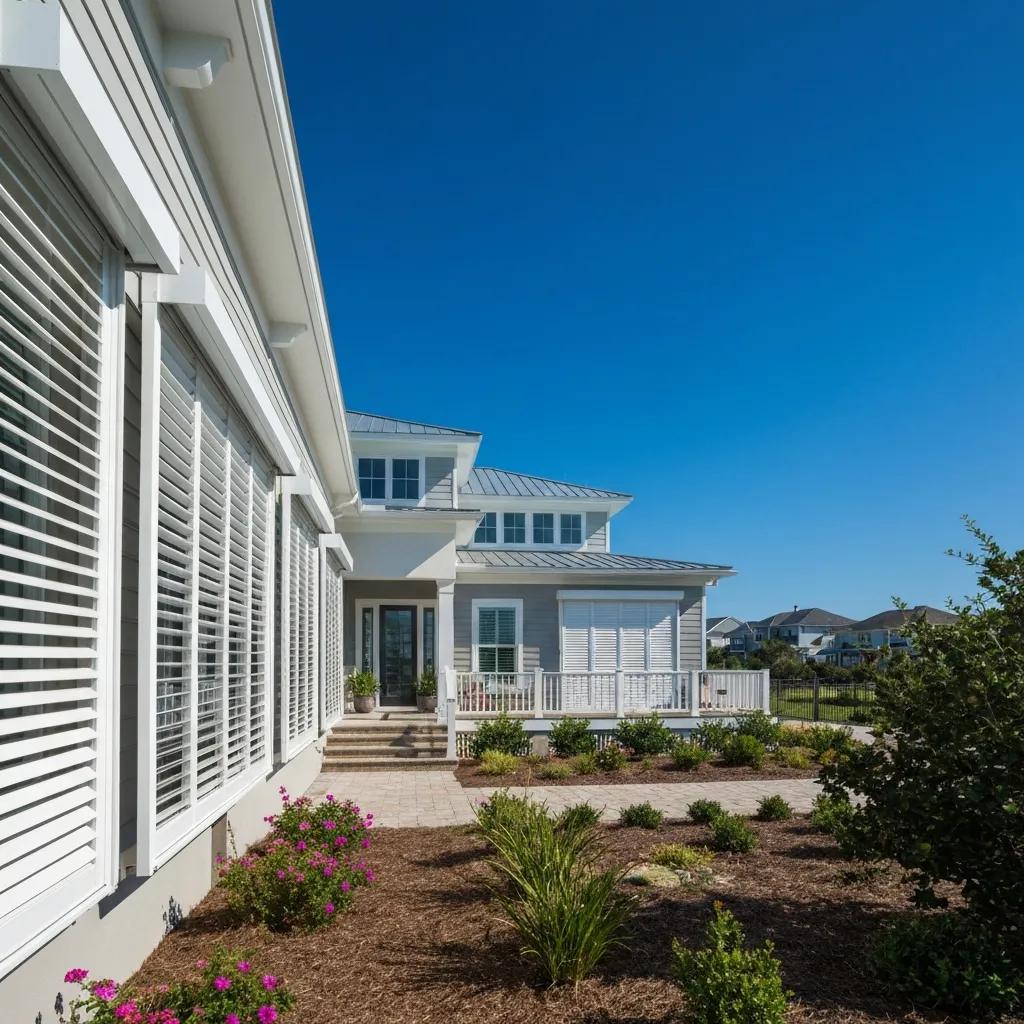
Accordion Shutters vs Hurricane Shutters: Which Is Better for Carolina Homes?
Hurricane shutters are specialized exterior systems made to protect windows and openings from wind-driven debris, high winds, and break‑ins during tropical storms and hurricanes. This guide compares accordion shutters with other common options used in coastal North and South Carolina — looking at protection, cost, deployment, looks, upkeep, and code compliance. You’ll learn how accordion shutters operate, how they compare to roll‑down systems and temporary panels or fabric, and which priorities should steer a local buying decision. After laying out the differences and decision criteria, we map practical tradeoffs, offer comparison tables and checklists, and finish with clear answers to frequently asked questions. The goal is to give Carolina homeowners the practical context they need to pick storm protection that balances safety, convenience, and curb appeal.
What Are Hurricane Shutters and Their Common Types?
Hurricane shutters are impact‑resistant coverings that shield windows and doors from hurricane‑force winds and flying debris, helping protect the home’s envelope and interior. They form either a rigid or flexible barrier that resists pressure changes and prevents glass failure during storms. Many shutters also add year‑round forced‑entry resistance. Choosing the right type depends on priorities like permanence, deployment speed, budget, visibility, and local building codes. Below we summarize the common shutter families and the situations where each works best.
What Defines Accordion Shutters and How Do They Work?
Accordion shutters are permanently mounted folding aluminum panels that slide sideways in vertical tracks to cover openings and lock at each end. The panels fold together when open and expand across the window when you deploy them — no removal or off‑site storage required. Built from heavy‑gauge aluminum with locking hardware, they’re fast to close (often by a single person) and provide notable forced‑entry resistance as a permanent exterior feature. Their always‑ready nature and quick deployment make them a strong choice for homeowners who want immediate protection without seasonal storage, though you should weigh the visual and sightline tradeoffs for your home.
What Other Hurricane Shutter Types Are Available?
Other shutter families trade permanence, cost, storage, or visibility in different ways. Roll‑down shutters are aluminum units stored in a headbox above the opening and can be motorized or manual — they deploy quickly and close to a low‑profile surface. Hurricane panels (aluminum, steel, or polycarbonate) are removable and usually more economical, but they need storage and manual installation. Fabric systems use high‑strength textile anchored over openings; they’re lightweight and fast to set up but offer less forced‑entry resistance and shorter lifespans. Bahama and colonial shutters serve as architectural elements that provide partial shade and moderate protection, and hurricane screens protect large openings like lanais while preserving ventilation and sightlines.
How Do Accordion Shutters Compare to Roll-down Hurricane Shutters?
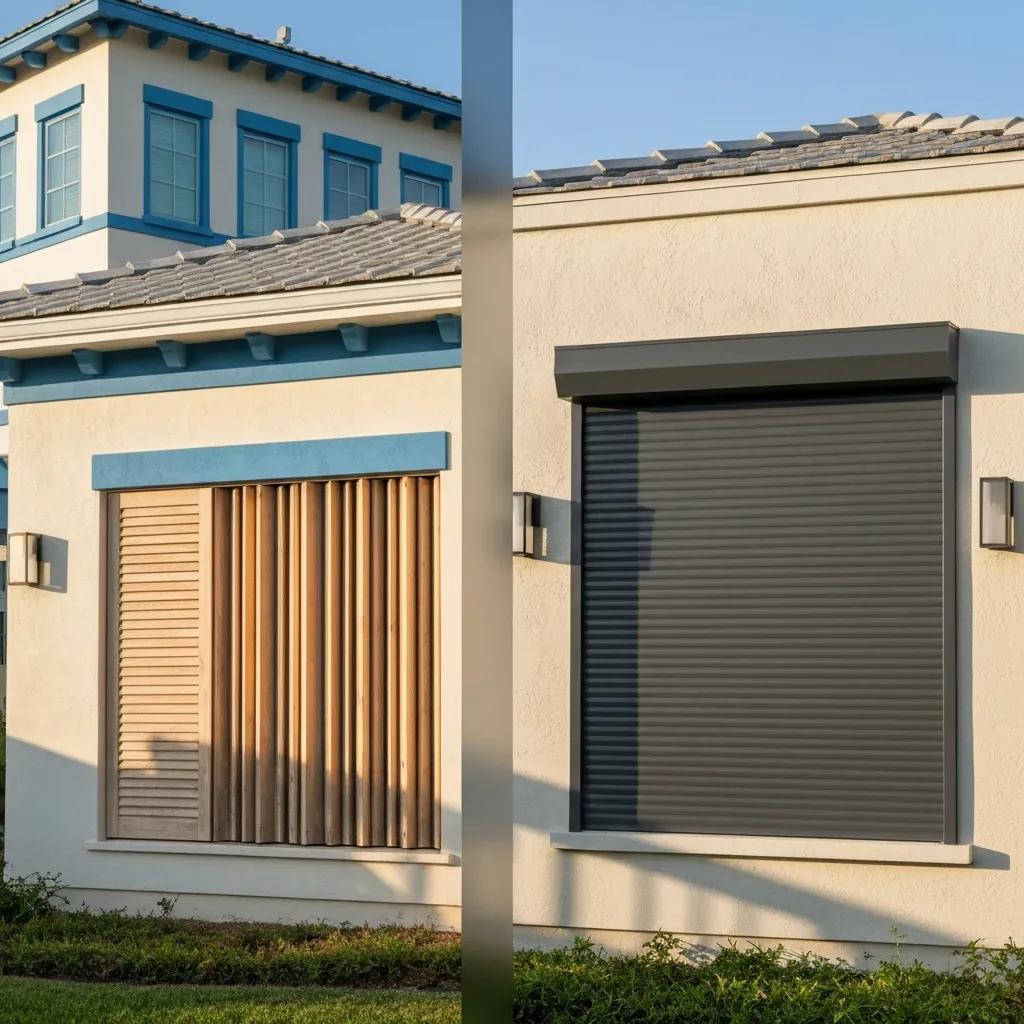
Both accordion and roll‑down shutters are permanent, metal‑based systems, but they answer different homeowner needs. Accordion shutters prioritize simplicity and quick manual deployment; roll‑down systems prioritize automation and a cleaner retracted profile. Accordions don’t need an overhead housing and remain operable during power outages if used manually. Roll‑down shutters can be motorized for one‑touch deployment — a big advantage on multi‑story homes or when you prefer hands‑free operation — and they typically close to a flatter sealed surface. The table below highlights the core differences to help you match system features with your priorities.
This comparison focuses on cost drivers, deployment, security, maintenance, and typical lifespan to guide decision‚Äëmaking for coastal Carolina homes.
In short, accordion shutters shine when manual speed and constant readiness matter, while roll‚Äëdown systems win on convenience and a more discreet look. Your product choice can also affect insurance discounts, maintenance costs, and curb appeal.
What Are the Cost Differences Between Accordion and Roll-down Shutters?
Cost depends on material grade, opening size, motorization, and local installation complexity. Accordion shutters often have lower base costs than motorized roll‚Äëdowns because they avoid headbox fabrication and motor installation. Roll‚Äëdown units add motor costs, wiring, and possible home automation integration. Over time, roll‚Äëdown motors may need service while accordions mainly need track lubrication. Both permanent systems typically outlast temporary panels. For accurate installed pricing, use a cost estimator or request a professional quote that reflects local labor and permit fees.
- Accordion shutters usually have fewer moving parts and lower initial installation complexity.
- Motorized roll‚Äëdown shutters cost more but offer convenience that pays off on large or hard‚Äëto‚Äëreach openings.
- Insurance savings and long‚Äëterm durability can offset higher upfront costs depending on local storm exposure and premiums.
How Do Accordion and Roll-down Shutters Differ in Ease of Use and Deployment?
Ease of use depends on motorization and window locations. Accordion shutters offer a simple manual slide into place and quick securing — reliable even during power outages. Motorized roll‑downs let you deploy multiple openings from a switch or remote, reducing physical effort and deployment time for multi‑window homes. Maintenance differs: roll‑downs need periodic motor and electrical checks, while accordions need track lubrication and hardware inspection.
- Accordion shutters: straightforward manual deployment and minimal mechanical complexity.
- Roll‑down shutters: automated deployment that’s helpful for multi‑story or mobility‑limited households.
- Choose accordion when you want manual simplicity and fewer mechanical parts to maintain.
These distinctions help families decide between manual reliability and automated convenience, especially in regions where storm warnings come with little notice.
What Are the Security and Protection Levels of Each Shutter Type?
Both accordion and roll‚Äëdown shutters provide strong protection against wind‚Äëdriven debris and add forced‚Äëentry resistance compared to temporary panels, but actual performance comes down to tested ratings and hardware. Accordion shutters use continuous vertical tracks and multiple lock points to act as a year‚Äëround security barrier. Roll‚Äëdown shutters with reinforced slats and heavy‚Äëduty motors can match or exceed that protection and may include tamper‚Äëresistant locks. For coastal Carolina homes, specify products with documented impact ratings and corrosion‚Äëresistant finishes to ensure long‚Äëterm performance.
- Accordion shutters offer dependable, permanent security with multiple locking points.
- Roll‚Äëdown shutters can match or exceed security when built with reinforced slats and quality locks.
- Verify product ratings and use professional installation to ensure both systems meet performance expectations.
How Do Accordion Shutters Compare to Hurricane Panels and Fabric?
Accordion shutters are permanent, always‚Äëready systems; panels and fabric are removable or temporary options that trade permanence for lower upfront cost and different storage needs. Panels are budget‚Äëfriendly for seasonal or secondary properties but require storage and manual installation. Fabric systems are lightweight and fast to attach but offer less forced‚Äëentry resistance and a shorter useful life. The right choice depends on occupancy, storage space, storm frequency, and how much you value year‚Äëround curb appeal.
Remember: panels and fabric suit different use cases — panels for cost‑sensitive or occasional deployment, fabric for quick, temporary protection with minimal storage needs.
What Are the Installation and Storage Considerations for Accordion Shutters vs Panels?
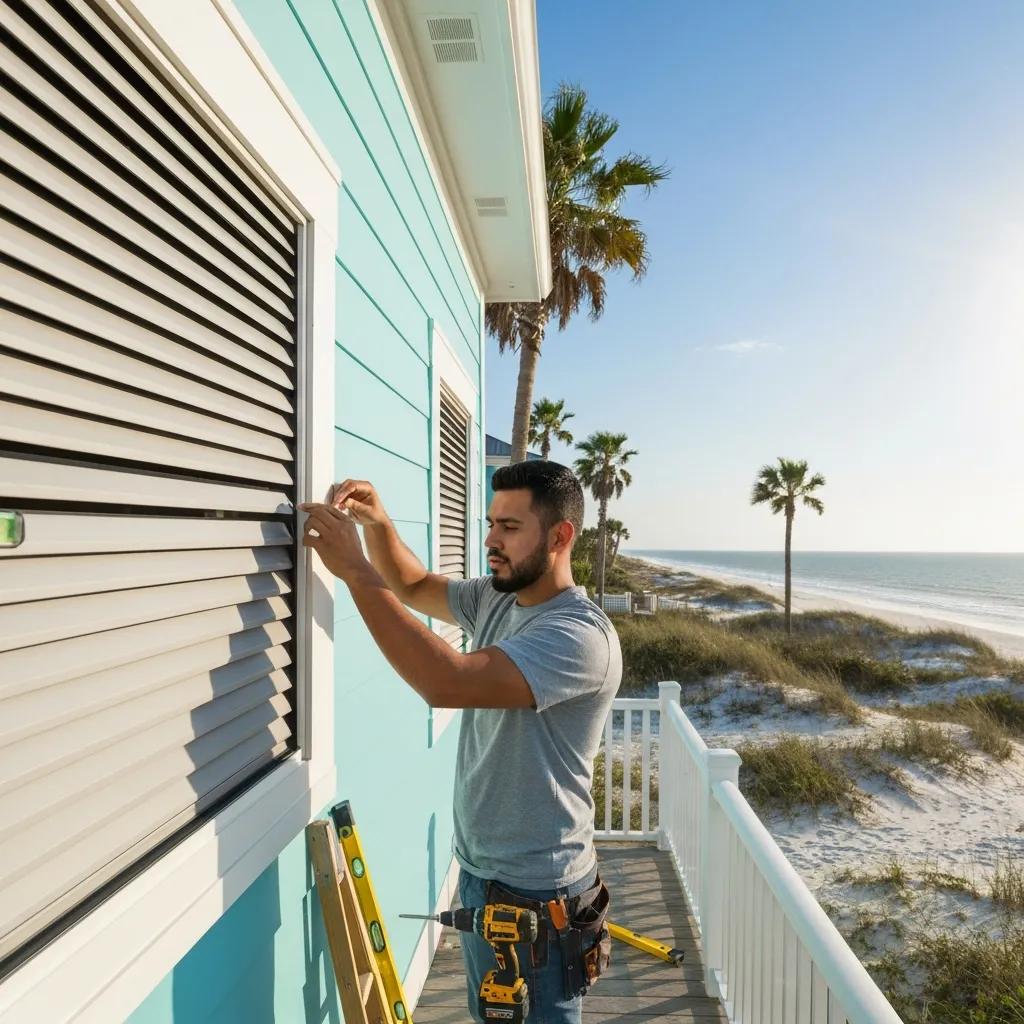
Installing accordion shutters is a permanent, professional job that requires accurate measurements, secure anchoring to framing or masonry, and fine‑tuning of guides and locks for a weather‑tight fit. Panels are simpler to manufacture and install but require homeowner labor for mounting and space for storage when not in use — a drawback for smaller properties. Panels and fabric also benefit from clear labeling and a storage plan so they can be installed quickly when a storm is forecast. For many coastal Carolina households, permanent solutions reduce last‑minute stress, while panels remain a sensible, lower‑cost option for seasonal homes.
- Accordion shutters eliminate storage needs but require professional fitting.
- Panels need storage and manual installation during storm warnings.
- Fabric systems mount quickly but may need replacement sooner because of UV exposure.
How Do Visibility and UV Resistance Differ Between Accordion Shutters and Hurricane Fabric?
Closed accordion shutters block daylight and outside views, providing a secure, insulated barrier but reducing natural light while deployed. Fabric systems often allow some translucency, preserving daylight and sightlines but offering less abrasion and UV resistance than aluminum. Fabric degrades sooner under prolonged sun exposure and may need replacement more often, while properly finished aluminum accordions resist UV and coastal corrosion. Choosing the right material grade and finish for the Carolina coast is key to long life and a good appearance.
- Accordion shutters perform well long‚Äëterm for UV resistance and corrosion protection when finished correctly.
- Fabric solutions let in more light but typically have a shorter service life in high‚ÄëUV climates.
- Consider permanent shutters where frequent storms make durability more important than temporary visibility.
What Key Factors Should Carolinas Homeowners Consider When Choosing Hurricane Shutters?
Homeowners in the Carolinas should balance budget, deployment speed, building‚Äëcode compliance, maintenance, aesthetics, and security benefits when choosing shutters. Local wind speeds, surge risk, storm frequency, and household mobility will affect whether a permanent, quick‚Äëdeploy option like accordion or an automated roll‚Äëdown is better than removable panels or fabric. Insurance discounts and permit approvals often depend on certified impact ratings and code‚Äëcompliant installation, so confirm product documentation and installer credentials before buying. Below is a short checklist to match priorities with likely product choices.
- Budget and ROI: Compare upfront cost to long‚Äëterm maintenance and potential insurance savings.
- Deployment Speed: Favor motorized or permanent options if storms are frequent or warning time is short.
- Aesthetics and Resale: Factor curb appeal and permanence into future home value considerations.
This checklist helps homeowners prioritize choices based on their risk profile and lifestyle. For specific financial or code guidance, use a cost estimator or schedule a professional on‚Äësite assessment to capture local permitting and sizing variables.
How Does Budget Influence the Choice of Accordion vs Other Hurricane Shutters?
Budget often decides whether homeowners invest in permanent protection or stick with removable, lower‚Äëcost options. Accordion shutters usually sit in a mid‚Äërange price band that balances initial cost with long‚Äëterm durability. Panels and fabric cost less up front and make sense for seasonal homes, but they add storage and installation labor during storms. Cost drivers for permanent systems include opening size, motorization, material grade, and any reinforcement or framing work. Insurance premium discounts and reduced repair bills after storms can make a more durable system the better long‚Äëterm value.
- Compare initial cost to lifecycle cost for each option.
- Automation and larger openings raise upfront expense but may cut deployment time and labor.
- Use a professional estimator to capture local labor and permit costs for accurate budgeting.
Why Are Ease of Use and Deployment Speed Important for Coastal Homes?
Deployment speed matters because storm warnings can give only a short window to secure a property, and some homeowners have mobility or time limits that make manual installation impractical. Fast‑deploy systems like accordion or motorized roll‑down shutters reduce the window of vulnerability and the physical strain on residents during stressful times. Houses that face frequent storms should prioritize systems that are quick and reliable to operate; occasional‑use properties might accept panels’ storage and installation tradeoffs. Household composition — for example, elderly occupants — should influence whether automation or permanent mounting is the default choice.
- Faster deployment cuts reliance on strenuous labor and saves valuable minutes before a storm.
- Motorization helps multi‚Äëwindow or multi‚Äëstory homes by centralizing control.
- Permanent shutters remove storage logistics and reduce human error during preparations.
How Do Local Building Codes Affect Hurricane Shutter Selection in North and South Carolina?
Local building codes and permit rules determine which products and installation methods are acceptable; compliance protects safety and often affects insurance eligibility. Carolina homeowners should confirm that chosen shutters meet required impact and wind‚Äëload standards for their jurisdiction and verify installer certifications and permitted plans before buying. Professional installers can interpret code requirements, prepare permit paperwork, and ensure anchorage and flashing meet structural standards that support warranties and insurance recognition. Ask providers for code‚Äëfocused documentation to simplify permitting and claims.
- Confirm product impact ratings and wind‚Äëload documentation for permit approval.
- Hire professional installation to ensure anchorage and flashing meet local standards.
- Keep documentation of compliance to support insurance benefits and post‚Äëstorm claims.
If you’re looking for a local vendor that focuses on code compliance and offers estimating tools, consider vetted installers who provide educational resources and free assessments. American Hurricane Shutters serves coastal North and South Carolina with engineered protection, free estimates, and a cost calculator to help homeowners model likely installation scenarios — all with an emphasis on meeting or exceeding code.
What Maintenance and Longevity Differences Exist Among Shutter Types?
Maintenance varies by material and mechanism. Aluminum shutters typically need periodic inspection, track lubrication, and corrosion checks. Motorized roll‑down systems require scheduled electrical and motor maintenance. Fabric systems need regular UV and seam inspections and are replaced more often in harsh coastal climates, while properly finished aluminum shutters can last for decades with modest upkeep. A seasonal maintenance checklist — inspect fasteners, clean tracks, test locks, and check seals — will help extend service life and preserve performance.
- Regular inspection: Check fasteners, seals, and hardware before and after storm season.
- Lubrication: Keep tracks and moving parts lubricated for smooth deployment.
- Protective finishes: Specify corrosion‚Äëresistant coatings for coastal longevity.
Routine care reduces the chance of failure during storms and supports warranty terms where they apply.
How Do Security Benefits Vary Across Different Hurricane Shutters?
Permanent shutters like accordions and roll‑downs offer passive security by creating a hard barrier to forced entry, deterring break‑ins and improving year‑round safety. Panels and fabric help when installed but don’t provide the continuous deterrent of a permanent system. Lock quality, anchorage, and design details (interlocking slats, reinforced frames) determine real‑world security performance, so evaluate hardware when comparing options. In many cases, the combined storm‑protection and security benefits make permanent shutters a strong long‑term value.
- Permanent systems generally deliver the highest forced‚Äëentry resistance.
- Removable panels provide limited security and must be anchored properly.
- Assess hardware quality and lock design when measuring security performance.
Why Choose American Hurricane Shutters for Accordion and Other Hurricane Shutter Solutions?
American Hurricane Shutters focuses on engineered hurricane protection for homeowners and businesses across coastal North and South Carolina. Their product lineup includes Accordion Shutters, Roll‚Äëdown Shutters, Colonial and Bahama styles, Hurricane Screens, and various panels. The company emphasizes education, free estimates, and professional installation that aims to meet or exceed local building codes. If you want help balancing cost, deployment, and curb appeal, you can request a free estimate or try their cost calculator to explore likely pricing scenarios before you commit.
This section explains the practical services you can expect from a regional specialist and how those services address the decision factors we’ve covered. Working with a local installer who documents code compliance and provides estimating tools makes permitting and selection easier for Carolina properties.
How Does American Hurricane Shutters Meet or Exceed Carolina Building Codes?
American Hurricane Shutters emphasizes meeting or exceeding applicable building codes as part of its installation approach. That focus helps ensure safety and supports insurance recognition for protected properties. The company’s practices typically align product choice, anchorage methods, and installation details with regulatory expectations, easing the permit path and increasing confidence in long‑term performance. Homeowners should still confirm local requirements and request documentation showing that the proposed product and installation meet the wind‑speed and impact criteria for their jurisdiction. Installers who prioritize code compliance simplify approvals and offer important assurance of effectiveness.
What Free Services and Support Does American Hurricane Shutters Offer?
American Hurricane Shutters provides free estimates and tools to help homeowners understand likely project costs and suitable product options. Their site offers resources such as a Cost Calculator, The Process, Our Products, Past Projects, and a Maintenance Guide to help you research before scheduling an on‚Äësite assessment. Free estimates combined with an online estimator make it easier to compare options, set a budget, and understand permitting implications. These tools plus professional guidance help homeowners make more informed, code‚Äëcompliant choices.
How Have Carolina Homes Benefited from American Hurricane Shutters’ Protection?
Homes that use engineered shutter systems see improved protection from high winds, wind‑driven debris, and opportunistic break‑ins, reducing storm damage and repair costs. American Hurricane Shutters positions its work as custom‑fit and professionally installed to boost property resilience during severe weather. While specific testimonials aren’t included here, homeowners are encouraged to request local project references during a free estimate to learn more about past performance and installation practices. Local case studies and clear maintenance guidance can help reassure buyers considering a long‑term exterior protection investment.
Frequently Asked Questions
What are the main benefits of using accordion shutters over other types?
Accordion shutters give quick manual deployment, permanent readiness without storage, and year‑round security. Their heavy‑gauge aluminum construction delivers durability in coastal environments, and they can be finished to complement your home’s exterior. For homeowners who want reliable protection that’s always on hand, accordion shutters are a practical choice.
How do accordion shutters perform in terms of maintenance compared to other shutter types?
Accordion shutters typically need less maintenance than motorized roll‚Äëdowns because they have fewer moving parts. Regular tasks include inspecting tracks and locks, lubricating moving parts, and checking for corrosion in coastal areas. Roll‚Äëdown systems require service of electrical components and motors, which can be more complex. Fabric systems, although easy to deploy, often need replacement sooner due to UV exposure.
Can accordion shutters be customized for different window sizes and styles?
Yes. Accordion shutters are made to fit a wide range of window sizes and architectural styles. Manufacturers offer various sizes, colors, and finishes so you can match the home’s look and accommodate unique window shapes. That flexibility helps you balance function and curb appeal.
What should homeowners consider regarding insurance when installing accordion shutters?
Check with your insurer to see how accordion shutters affect premiums. Many carriers offer discounts for homes with approved hurricane protection that meets local codes and impact ratings. Proper installation and documentation of compliance improve eligibility for those discounts and can lower repair costs after storms.
How do accordion shutters impact the resale value of a home?
Accordion shutters can boost resale value, especially in hurricane‚Äëprone regions. Buyers often value built‚Äëin protection because it reduces their future maintenance and retrofit costs. Attractive finishes and proper installation help retain curb appeal, making the property more marketable.
Are there any specific building codes that accordion shutters must comply with in the Carolinas?
Yes. Accordion shutters must meet local building codes in North and South Carolina, which set standards for impact resistance, wind loads, and installation methods. Work with certified installers who understand local rules and can provide the documentation needed for permits and insurance credits.
Which Is Better: Accordion or Roll-down Hurricane Shutters?
There’s no single answer — it depends on your priorities. Accordion shutters are the better choice when you want quick manual deployment, permanent readiness, and fewer mechanical parts to maintain. Roll‑down shutters are better when you want automation, a cleaner retracted look, or centralized control for many openings. A hybrid approach—mixing systems by elevation or o
