
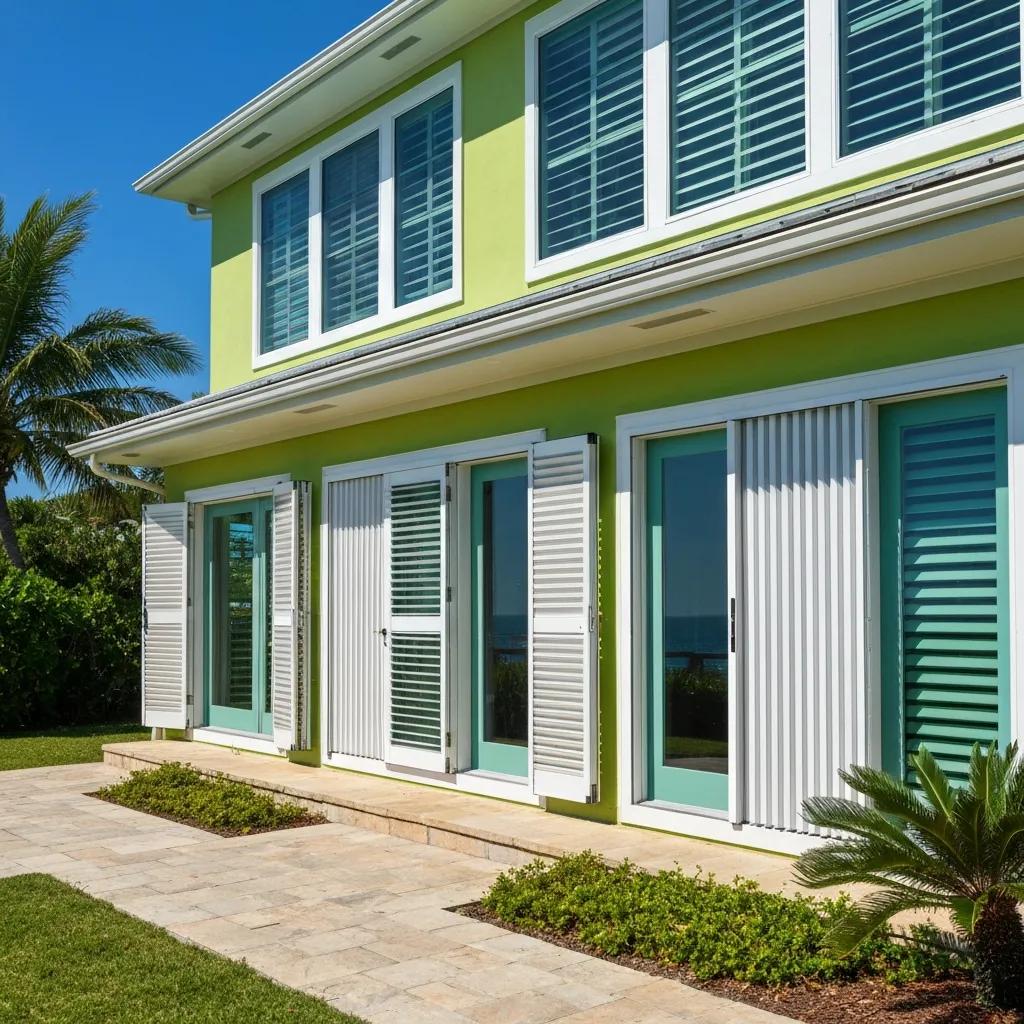
Accordion Shutters — Durable Hurricane Protection That Boosts Your Home’s Curb Appeal
Accordion shutters are a permanently mounted storm-protection system that fold sideways to cover windows and doors, combining impact resistance with a compact retracted profile that preserves curb appeal. They slide out from a stacked position and lock across openings to form an interlocking barrier that resists wind‚Äëborne debris and helps limit water intrusion during storms. For coastal homeowners who value storm readiness, energy efficiency, and added security, a well‚Äëfinished aluminum accordion system delivers both protection and a clean exterior look. Below we explain what accordion shutters are, their main features and benefits for coastal properties, typical costs and financing options, the professional installation process (including NC and SC code considerations), and straightforward maintenance and warranty guidance. Use this guide to compare options, estimate a budget, and find where to get a free estimate or use our online cost calculator to plan your project.
What Are Accordion Shutters and How Do They Enhance Coastal Home Exteriors?
Accordion shutters mount permanently above openings and fold inward into a neat stacking section when not in use. Interlocking slats and sturdy mounting rails make each shutter a rigid barrier when deployed, delivering immediate impact resistance and dependable wind‚Äëload performance. Because they tuck close to the wall, accordion shutters keep window sightlines and architectural details intact, letting you protect your home year‚Äëround without changing its look. The sections below outline the key features that make accordion shutters a strong fit for coastal climates and how design options help them blend with different architectural styles.
What Key Features Define Accordion Hurricane Shutters?
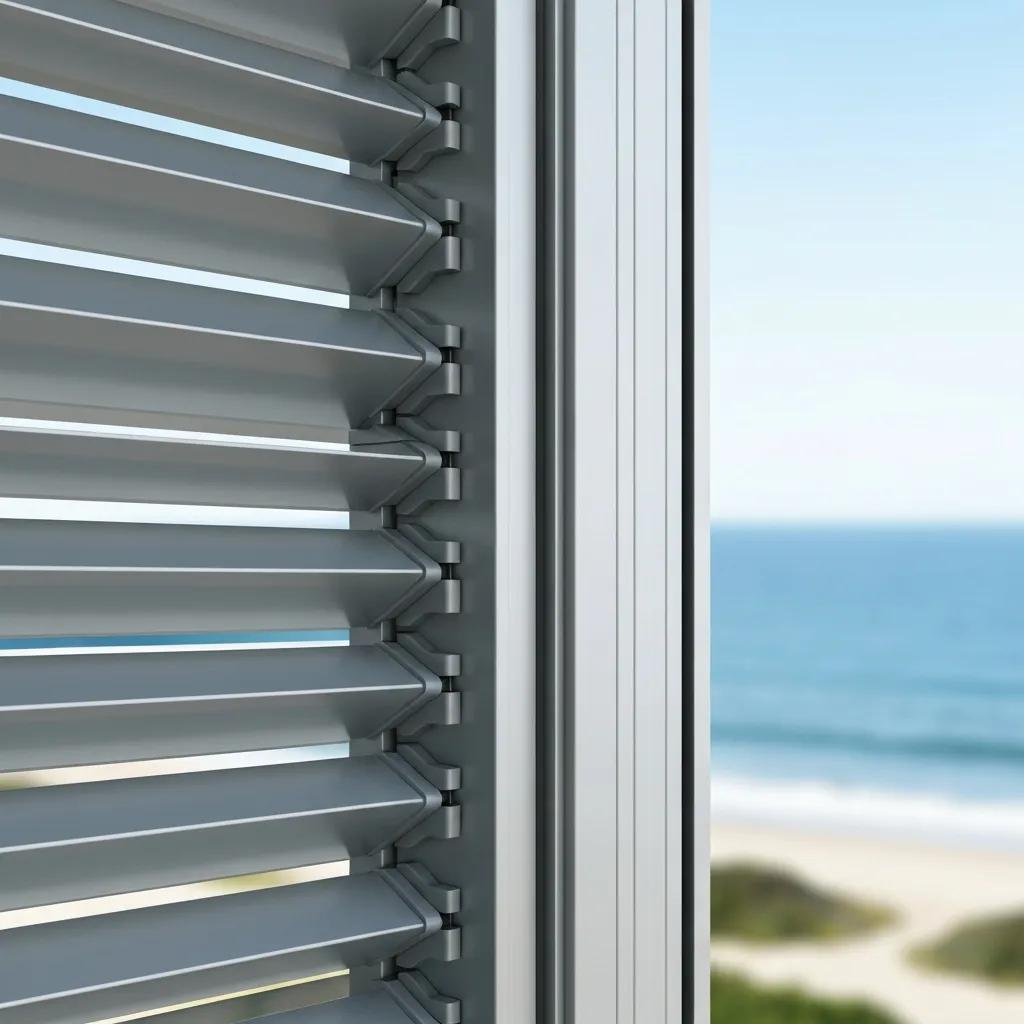
Accordion shutters rely on interlocking slats that lock together to form a continuous shield, mounting rails that transfer wind loads into the structure, and locking hardware that secures the shutter closed. The interlocking slat design minimizes debris penetration by distributing impact forces across overlapping seams, while heavy‚Äëduty rails and anchors hold the system to its rated wind loads. Most systems use aluminum with corrosion‚Äëresistant finishes suited to salt‚Äëair environments, and common hardware options include keyed locks and flush bolts for daily security. Knowing these core components helps homeowners judge durability, upkeep needs, and how the system will perform in coastal storms.
How Do Accordion Shutters Complement Coastal Architectural Styles?
Accordion shutters come in a wide range of powder‑coat colors and textures so they can complement coastal cottages, modern beach houses, or traditional homes without a bulky look when retracted. Their narrow stacking profile keeps the shutters close to the opening, preserving trim and window proportions so your home keeps its original design. Soft neutrals and matte finishes suit quaint cottages and shiplap siding, while sleeker profiles and darker anodized or charcoal finishes work well on contemporary homes. Matching the finish and profile to existing materials helps the shutters read as an intentional design element — a key consideration for curb appeal and resale.
What Are the Top Benefits of Accordion Shutters for Coastal Homeowners?

Accordion shutters combine storm protection, everyday security, energy control, and visual value — answers to the main concerns coastal homeowners raise. When closed they reduce impact and wind‑driven water entry, locking hardware increases security and privacy, and the compact retracted profile keeps the house looking finished year‑round. Below is a concise list of core advantages and a table that shows how each benefit translates to real homeowner value.
Accordion shutters offer these core advantages:
- Storm and Impact Protection: An interlocked, rigid barrier that lowers the risk of window failure in hurricanes.
- Home Security and Privacy: Lockable panels that deter intrusion and provide privacy when needed.
- Aesthetic Integration: Low‚Äëprofile retraction and customizable finishes that preserve curb appeal.
- Energy and Weather Control: Reduced solar heat gain and added insulating value when closed.
- Resale and Insurance Value: Rated, documented systems that can strengthen resale messaging and support insurance conversations.
The table below clarifies how each functional feature delivers a tangible homeowner benefit.
Use this table when you prepare documentation for insurers or when promoting resale value. When you’re ready to estimate costs, American Hurricane Shutters provides free on-site estimates and an online cost calculator to help you model project scope and budget. If you’d rather talk it through, call American Hurricane Shutters to request a free estimate and learn how the calculator ties into financing and scheduling.
How Much Do Accordion Hurricane Shutters Cost and What Influences Pricing?
Installed prices for accordion shutters vary with material quality, opening size, installation complexity, and finish and hardware choices. Homeowners typically use per‚Äësquare‚Äëfoot estimates as a starting point, but final quotes reflect custom fabrication, number of corners and sills, and any structural reinforcement required. Below is a brief overview and a table showing the main price drivers to help you build a project baseline.
Common cost factors that influence accordion shutter pricing:
- Material grade and finish quality.
- Opening size, shape, and number of units.
- Installation complexity, including reinforcement and access.
This breakdown helps you separate choices you control (color, hardware) from necessary expenses (reinforcement, permits). Example calculations below give practical context before you use an online cost calculator or request a site estimate.
What Is the Average Cost per Square Foot for Accordion Shutters?
Quality aluminum accordion shutters are often priced per square foot, but installers also apply base fees or per‚Äëopening minimums for small or custom units. For planning, estimate both per‚Äësquare‚Äëfoot rates and per‚Äëopening costs: smaller, standard windows usually cost less per square foot than large or irregular openings that need custom work and reinforcement. Typical scenarios include:
- Example 1: Single standard window — base fabrication plus per‑sq‑ft charge.
- Example 2: Multiple identical openings — economies of scale lower the per‑unit price.
- Example 3: Large or custom openings — higher per‑sq‑ft cost due to reinforcement and labor.
These examples illustrate why a cost calculator or free estimate is useful — American Hurricane Shutters offers both to turn ranges into project‑specific quotes and to discuss financing options.
What Financing Options Are Available for Accordion Shutter Installation?
Financing commonly comes through contractor payment plans, third‑party home improvement loans, or vendor‑arranged financing that spreads payments over time. When applying, you’ll typically need ID, recent pay stubs, and possibly home‑equity details. Compare APRs, terms, and any prepayment penalties before signing. Ask your installer about in‑house plans or preferred lenders and request sample payment schedules so you can compare total costs over the loan term.
Discuss financing early — ask about pre‑approval timelines, required down payments, and how a free estimate or cost‑calculator result will be used in loan documents. Early planning helps align budget, fabrication lead times, permits, and installation scheduling.
What Is the Accordion Shutter Installation Process for Coastal Homes?
Professional installation starts with a site assessment and precise measurements, moves through custom fabrication and finish, and finishes with careful mounting, testing, and homeowner instruction to ensure code compliance and reliable performance. Installers check mounting substrates, recommend reinforcement where necessary to meet rated wind loads, and select anchors that resist coastal corrosion. The steps below outline a typical workflow and what you should expect during installation.
The installation workflow includes survey, fabrication lead time, mounting, and final testing — each phase confirms the shutters meet performance ratings and local permitting requirements. Accurate measurements reduce on‑site modifications, and correct anchor selection prevents movement or corrosion in a salt‑air environment. After installation, a full functional test and homeowner walkthrough ensure you can deploy shutters quickly and safely during storm events.
- Site Survey and Measurement: Detailed measurements, substrate inspection, and documentation for permitting.
- Fabrication & Coating: Custom panels manufactured and powder‚Äëcoated to the chosen finish; lead time varies.
- Mounting & Anchoring: Secure mounting rails and anchors installed to rated attachment points.
- Testing & Adjustment: Functional checks, lock checks, and storm-load verification performed.
- Handover & Documentation: Homeowner demonstration, care instructions, and warranty paperwork provided.
Knowing these steps helps you plan access and inspections. Professional installers typically help with permits and submit the documentation inspectors need, simplifying approvals for coastal NC and SC properties.
What Steps Are Involved in Professional Accordion Shutter Installation?
On site, installation typically focuses on three phases: prepare secure attachment points, mount shutters precisely, and complete operational testing with a homeowner walkthrough. Technicians prepare mounting surfaces and add reinforcement so loads transfer into the structure, not the siding. Mounting requires careful alignment of rails and shutter stacks so panels open and close without binding; fasteners are torqued to resist cyclic loads. Final testing checks smooth operation, lock function, and if applicable keyed hardware. The installer then demonstrates deployment, locking, and routine checks so homeowners are ready before storm season.
How Do Local Building Codes in NC and SC Affect Installation Requirements?
Coastal building codes in North Carolina and South Carolina define wind‚Äëload criteria, attachment methods, and permit processes that influence shutter design and installation. Installers reference regional wind maps and use manufacturer‚Äërated attachment patterns that satisfy inspectors. Many jurisdictions accept Florida Building Code standards or equivalent performance requirements, so installers commonly provide product ratings, test data, and engineered drawings at permit time. Expect your installer to coordinate permit submissions and supply the documentation inspectors require to ensure the system meets local safety standards.
How Do Accordion Shutters Compare to Other Hurricane Protection Options?
Accordion shutters balance continuous protection with visual integration, but it’s wise to compare them with roll‑down shutters, storm panels, and Bahama or colonial styles so you can pick the best fit for your priorities. Key comparison points include cost, daily usability, visual impact, maintenance, and durability in coastal environments. The table below summarizes these attributes, followed by short pros and cons to clarify typical trade‑offs.
Different systems vary by cost, appearance, and usability; the comparison helps you see where accordion shutters excel versus alternatives.
This comparison highlights why accordion shutters are often the right choice for homeowners who want a middle ground between daily usability and consistent protection. The sections that follow unpack those trade‚Äëoffs in more detail.
What Are the Pros and Cons of Accordion Shutters Versus Roll-Down Shutters?
Accordion shutters are generally faster to deploy by hand and serve as a visible deterrent that doubles as everyday security, while roll‑down shutters offer motorized convenience and a fully concealed profile when retracted. Advantages of accordion systems include simple manual operation without the need for power — an important benefit during outages — and fewer mechanical parts to maintain. Drawbacks include a slightly larger visible stack compared with hidden roll‑down housings and more manual effort for very large openings. Roll‑down shutters work well when automation and complete concealment are priorities, but they typically cost more up front and can be more complex to repair if motorized. Consider how often you’ll operate the shutters and whether concealment or instant manual deployment matters most.
How Do Aluminum Accordion Shutters Stand Out in Durability and Design?
Aluminum accordion shutters offer an excellent strength‑to‑weight ratio and resist corrosion when properly finished, making them a strong choice for salt‑air coastal conditions. Powder‑coat and anodized finishes add protection and reduce maintenance while keeping a clean appearance. Aluminum allows slimmer slat profiles and precise tolerances, producing a tighter retracted stack and neater sightlines around windows and doors. With the right finish and hardware, aluminum systems deliver long service life and predictable performance through repeated storm cycles — which is why many coastal homeowners select aluminum for its balance of durability and design flexibility.
How Can Homeowners Maintain Accordion Shutters for Long-Term Performance?
Routine maintenance preserves shutter performance and prevents emergency repairs. A simple seasonal checklist keeps hardware operating smoothly and finishes protected: rinse off salt and airborne residue, lubricate moving parts, and inspect anchors and fasteners for corrosion or looseness. The list below lays out practical maintenance steps and the warranty and support services you can expect from professional installers.
Follow a maintenance rhythm tied to pre‚Äëstorm and post‚Äëstorm checks: confirm smooth deployment and secure locks before a storm, and inspect for dents or fastener issues afterward. Keep clear records of maintenance and installation paperwork to simplify warranty claims and insurance questions. Use the checklist below as a year‚Äëround guide.
- Pre-Storm Inspection: Verify smooth travel, test locks, and clear debris from tracks.
- Seasonal Cleaning: Rinse shutters and rails to remove salt; dry and inspect the finish.
- Lubrication: Apply manufacturer‚Äërecommended lubricant to pivot points and locking hardware.
- Fastener Check: Tighten exposed anchors and look for corrosion or movement.
- Post-Storm Assessment: Check for bent slats, misalignment, or damaged seals; document issues for service.
Following this checklist prevents small problems from becoming costly repairs and keeps shutters storm‚Äëready for years.
What Are the Best Maintenance Practices to Extend Accordion Shutter Lifespan?
Combine regular cleaning with hardware inspections and seasonal lubrication to fight coastal corrosion and wear. Rinse shutters and rails with fresh water to remove salt that speeds finish degradation, then visually inspect anchors and slats for early signs of fatigue. Use recommended lubricants on moving parts and locks to maintain smooth operation without attracting grit. Perform a post‚Äëstorm inspection after significant weather to document any impacts or misalignments for timely repair. Consistent upkeep also simplifies warranty service and supports accurate insurance documentation.
What Warranty and Support Services Does American Hurricane Shutters Provide?
American Hurricane Shutters stands behind installed systems with warranty and service options; keep your installation and maintenance records handy to speed any claim or service request. Existing customers can request maintenance and repair visits, and our team helps assemble the documentation insurers or inspectors may require. If you need service, call American Hurricane Shutters to schedule an inspection — retaining original installation paperwork and photos will speed the process. Using professional service channels for repairs ensures attachments remain code‑compliant and replacement parts meet original performance specifications.
This section explains how warranty and support work and shows the documentation steps that streamline claims while preserving rated performance.
Frequently Asked Questions
What are the main differences between accordion shutters and other hurricane protection options?
Accordion shutters differ from roll‑down shutters and storm panels in several practical ways. When retracted, accordion shutters are more visible but tend to integrate well with a home’s appearance and are quick to deploy by hand without power. Roll‑down shutters often hide completely and can be motorized, but they typically cost more. Storm panels are less expensive material‑wise but are heavier to install and require storage. Each system has trade‑offs, so choose based on budget, how often you’ll operate the system, and whether concealment or instant manual deployment matters most.
How do I choose the right color and finish for my accordion shutters?
Pick a color and finish that complements your home’s architecture and existing palette. Manufacturers offer many powder‑coat colors and textures that suit coastal cottages, modern beach houses, and traditional homes. Soft neutrals and matte finishes pair well with classic coastal siding, while darker anodized or charcoal finishes suit contemporary exteriors. Choose a finish rated for coastal conditions to ensure long‑term durability, and consult a pro if you want samples or suggestions tailored to your home.
What maintenance is required for accordion shutters?
Seasonal maintenance keeps shutters working and extends their life. Regular tasks include rinsing off salt and debris, lubricating moving parts, and tightening or inspecting fasteners for corrosion. Do a quick pre‚Äëstorm check to confirm smooth operation and secure locks, and perform a post‚Äëstorm assessment to document any damage. Following a simple checklist prevents small issues from becoming costly repairs.
Can accordion shutters be installed on any type of window or door?
Accordion shutters fit most windows and doors, but installation details depend on size, shape, and structure. Non‚Äëstandard openings may need custom fabrication, and some installations require reinforcement to meet local building codes. A professional installer can evaluate your openings, recommend the right design, and ensure proper anchoring for optimal protection.
What should I expect during the installation process of accordion shutters?
Expect a site survey and precise measurements, followed by custom fabrication and finishing. Installation includes secure mounting and anchoring, then testing to confirm smooth function and code compliance. Finally, the installer will demonstrate operation and provide care and warranty documentation so you know how to deploy and maintain the system.
Are accordion shutters a good investment for home resale value?
Yes. In coastal markets, accordion shutters are a practical upgrade that combines curb appeal with documented storm protection. Installed, rated systems can make a property more attractive to buyers and may help in insurance conversations, potentially qualifying for premium discounts. Keep records of installation and maintenance to support resale claims and show buyers the system was properly cared for.
Conclusion
Accordion shutters give coastal homeowners a practical blend of protection and style — strong, easy to use, and designed to stay out of sight until you need them. Properly specified and installed, they enhance safety, improve daily security, and preserve curb appeal while offering potential energy and insurance benefits. Explore your options with American Hurricane Shutters today to see how accordion shutters can protect and elevate your home.
