Who installs storm panels in Brunswick County, NC?
American Hurricane Shutters (AHS Carolinas) installs aluminum and polycarbonate hurricane storm panels in Brunswick County, NC — including Oak Island, Southport, Holden Beach, Ocean Isle Beach, Sunset Beach, and Caswell Beach. Storm panels are the most economical rated hurricane protection system. Call (910) 256-1288 for a free estimate.
Are storm panels the lowest-cost rated hurricane protection option?
Yes. Hurricane storm panels are generally the lowest-cost rated storm protection system, starting at approximately $22 per square foot installed. Panels slide into wall-mounted tracks and store flat when not in use. AHS installs aluminum storm panels and clear polycarbonate panels throughout coastal NC and SC.
Most Affordable Rated Option
Clear & Aluminum Panel Hurricane Shutters for the Carolinas
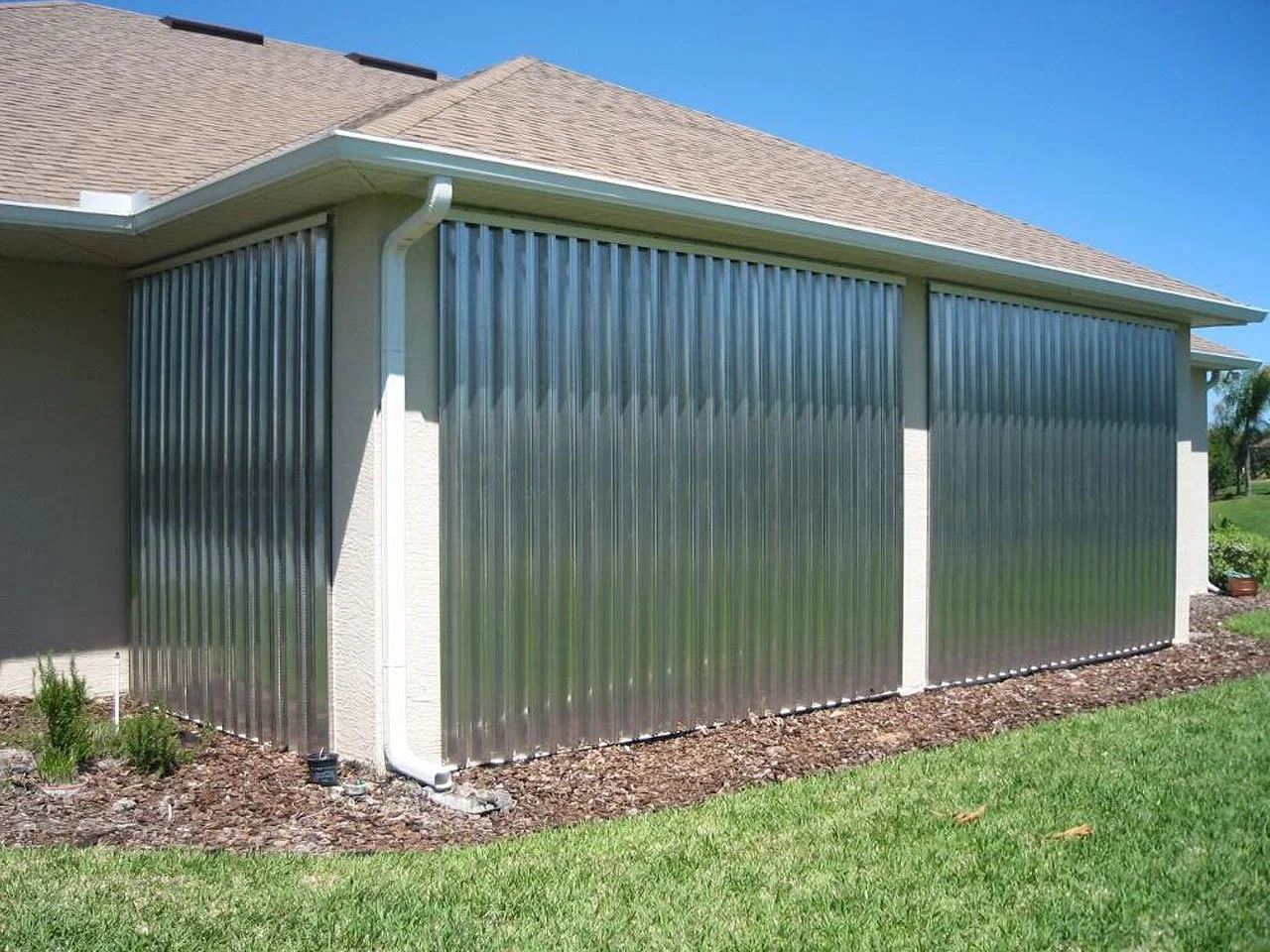
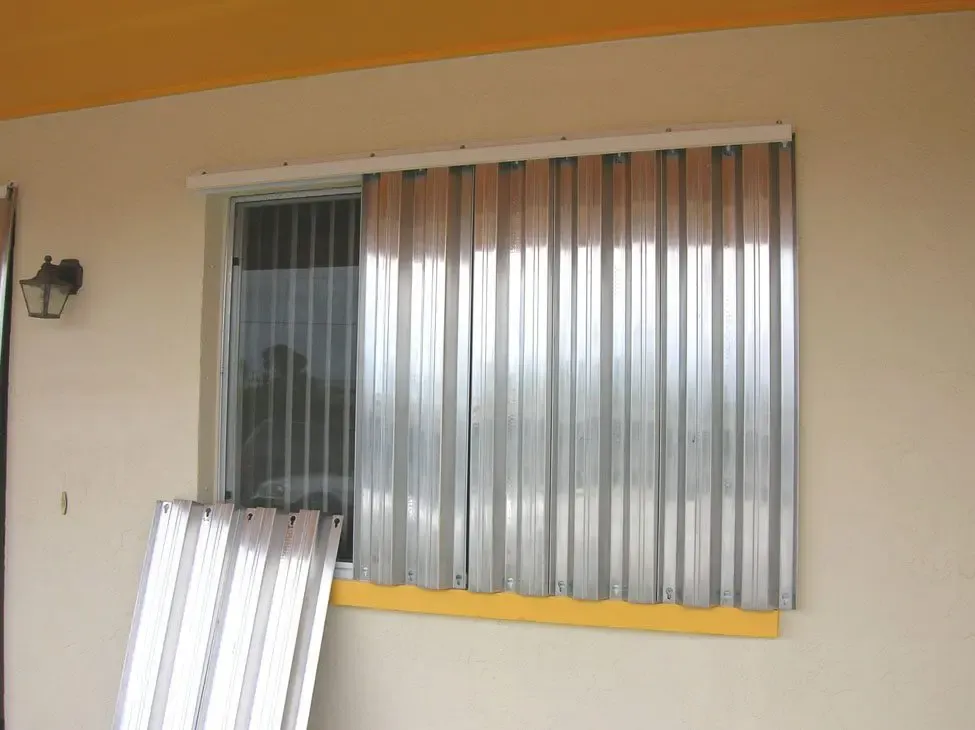
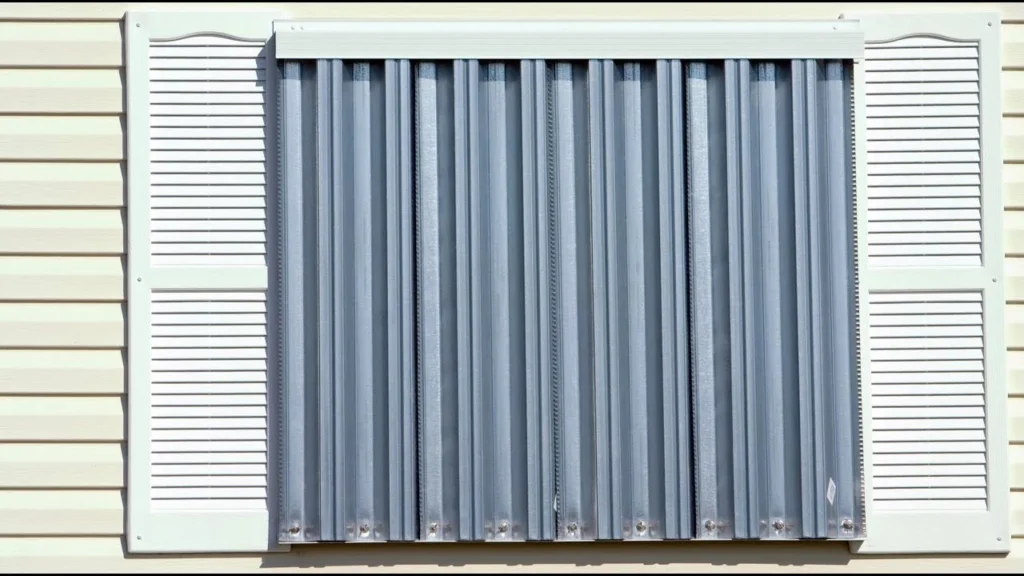
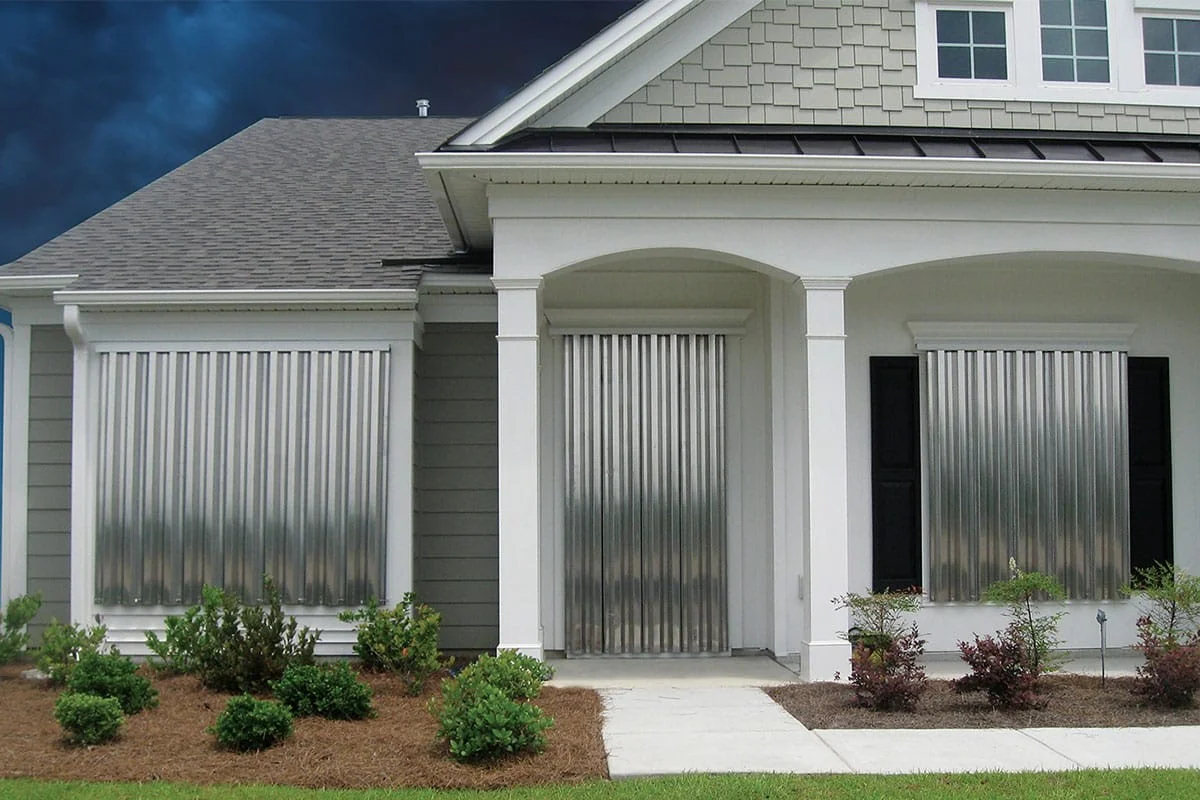
Bertha™ Storm Panel Shutters offer value and protection. These removable panels made of corrugated aluminum or clear polycarbonate are cut to size and attach with anchors or tracks for easy assembly. The most affordable certified storm protection available — approved in NC, SC, and Florida.
Bertha™ Storm Panel Shutters offer value and protection. These systems include a removable panel made of aluminum or clear polycarbonate. We cut each panel to size and attach with anchors or tracks for easier assembly and installation. They meet impact codes (ASTM 1886/1996) and are approved in North Carolina, South Carolina, and Florida — the least expensive of all hurricane shutter options.
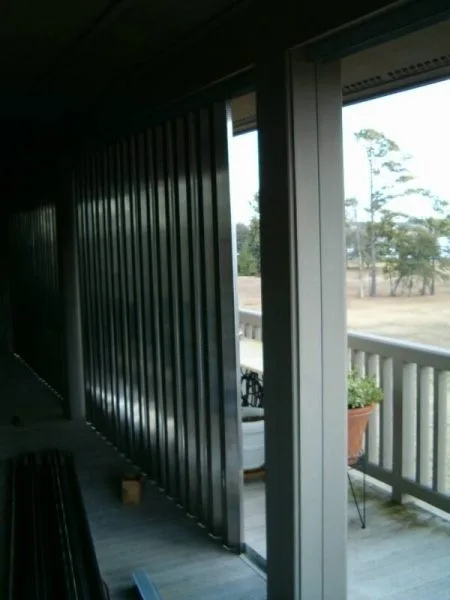
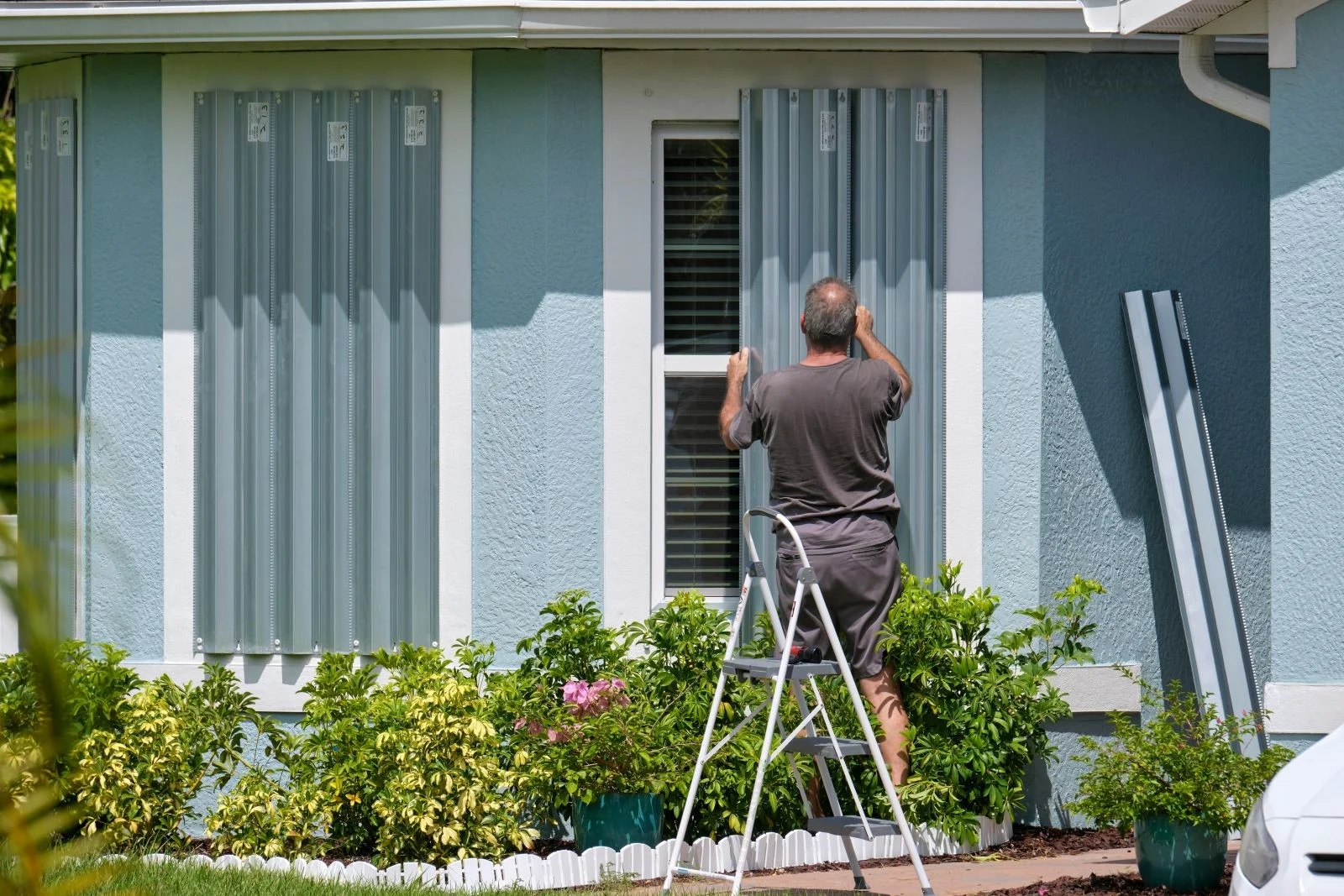
Our corrugated panel design has approximately 25% more strength than a flat panel or plywood. The tracks are installed once by our crew and stay permanently. Before a storm, you slide the panels into the tracks and secure them with wing nuts. We label every panel set so you know exactly which goes where. A typical home can be fully protected in 1-2 hours with two people — no tools required beyond a work glove for handling the aluminum edges.
Storm panels are the go-to choice for vacation properties and rental homes where the owner can deploy panels before storms, budget-conscious homeowners protecting a large number of openings, and seasonal residents who want certified coverage at a price that makes full-home protection practical. They are not the most convenient system — but they are the most affordable rated option in our entire product line.
See It in Action
How long does it take to put up storm panels?
Watch how hurricane storm panels slide into permanently installed tracks — from storage to storm-ready in under two hours for a full home.
Aluminum vs. Clear
Which Panel Type Is Right for You?
Both types use the same track system and carry identical storm ratings. Many homeowners mix aluminum and clear panels on the same home to optimize budget and comfort.
Aluminum Storm PanelsMost Affordable
Lowest cost per square foot of any rated storm protection — from $22/sq ft installed
Exceptional corrosion resistance — ideal for coastal areas unlike steel which rusts and weighs many times more
Corrugated design provides approximately 25% more strength than flat panels or plywood
Panels stack neatly and compactly, requiring limited storage space in a garage or carport
Opaque — blocks all natural light and views when installed
Aluminum oxide (white layer) may appear if stored outdoors — cosmetic only, does not affect integrity
Clear Polycarbonate PanelsLet Light In
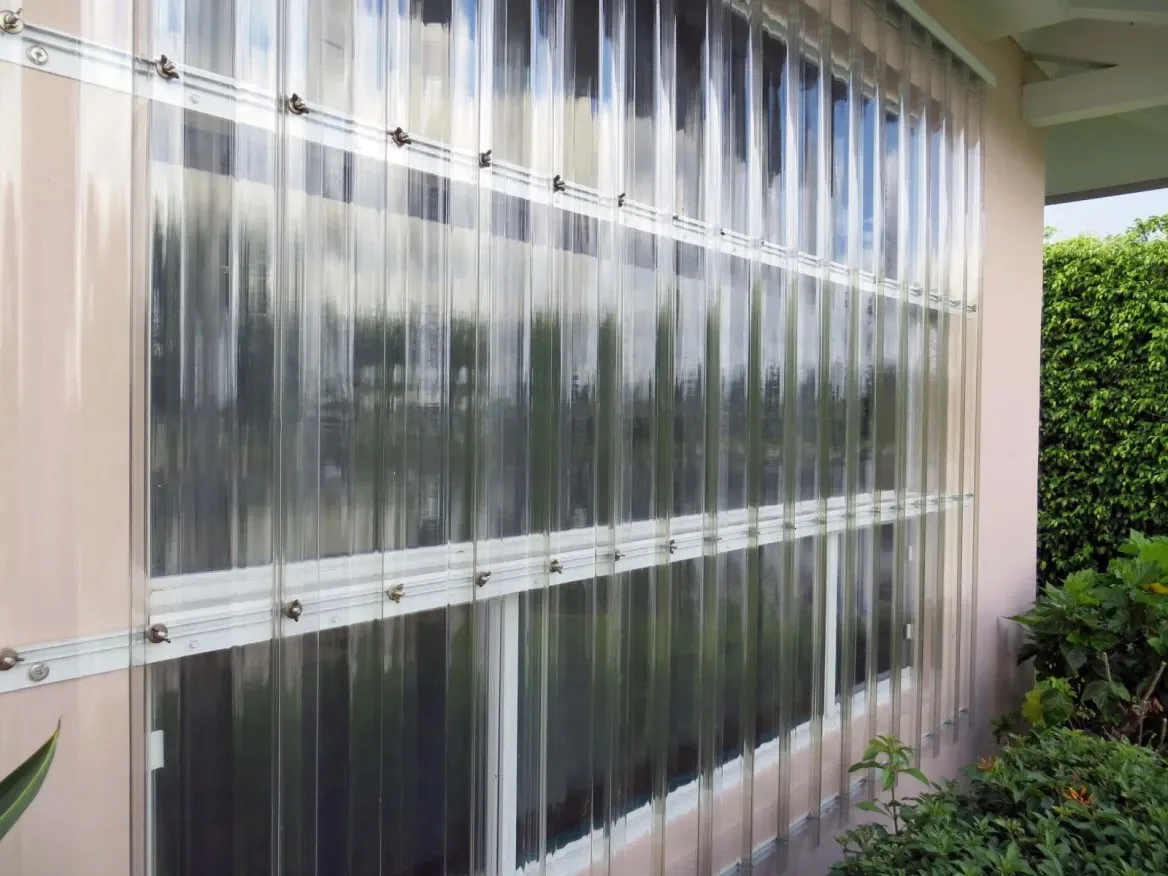
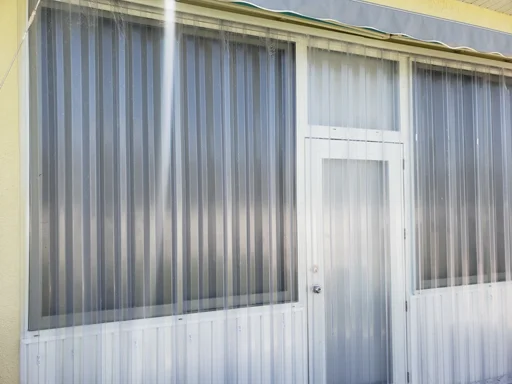
Transparent — lets natural light through even with panels fully deployed, preventing the “cave-like” feeling
Same ASTM and TAS storm ratings as aluminum — identical wind and impact protection
Impact-resistant polycarbonate with UV protection coating — won’t yellow or fade with proper storage
Interchangeable with aluminum in the same track system — mix and match on the same home
Slightly higher cost at $26/sq ft — still far less than permanent shutter systems
Store indoors out of direct UV to maximize lifespan — outdoor storage can cause yellowing over years
The permanently installed tracks require very little maintenance. Rinse with fresh water 1-2 times per year to remove salt and debris. Lubricate track channels annually with dry silicone spray. Panels only need rinsing and stacking in a dry location. Clean with soap and water as needed — avoid harsh chemicals or abrasive materials on clear panels. See our Maintenance Guide.
Most Affordable Rated Protection
At $22/sq ft for aluminum and $26/sq ft for clear, storm panels are the lowest cost per square foot of any hurricane-rated system. A typical coastal home with 20 openings at 15 sq ft each starts around $6,600 — versus $11,400 for accordion shutters. The right answer for many vacation properties and rental homes where the owner can deploy panels before storms.
Easy Homeowner Deployment
We install the tracks permanently and label every panel. Your pre-storm job is to carry panels and slide them in — no tools required, no professional needed. Two people can protect a full home in 1-2 hours. For assembly, do a dry run early to see how long the process takes. This gives you the opportunity to fix anything before it’s too late.
Reusable Year After Year
Storm panels are a one-time investment that lasts decades. Aluminum panels have exceptional corrosion resistance — far superior to steel panels, which used to be the standard but corrode and weigh many times more. Panels stack neatly requiring limited storage space. Both types can be reused each hurricane season with no replacement parts.
Design Pressure Rated
Every storm panel track installation includes a site-specific design pressure analysis. Both aluminum and clear polycarbonate panels meet ASTM E1886/E1996 and TAS 201/202/203 certification for coastal NC and SC wind-borne debris regions. Our shutters meet and exceed Florida Storm Codes — full documentation provided at installation.
Insurance & Warranty
Storm panels qualify for wind mitigation credits in NC and SC when covering all openings. We provide all product approval documentation and complete the wind mitigation form. Every installation is backed by our 7-year workmanship warranty on the tracks and anchorage — the longest in the region. We carry a $2M umbrella liability policy on every job.
Our Work
Where has AHS installed storm panels?
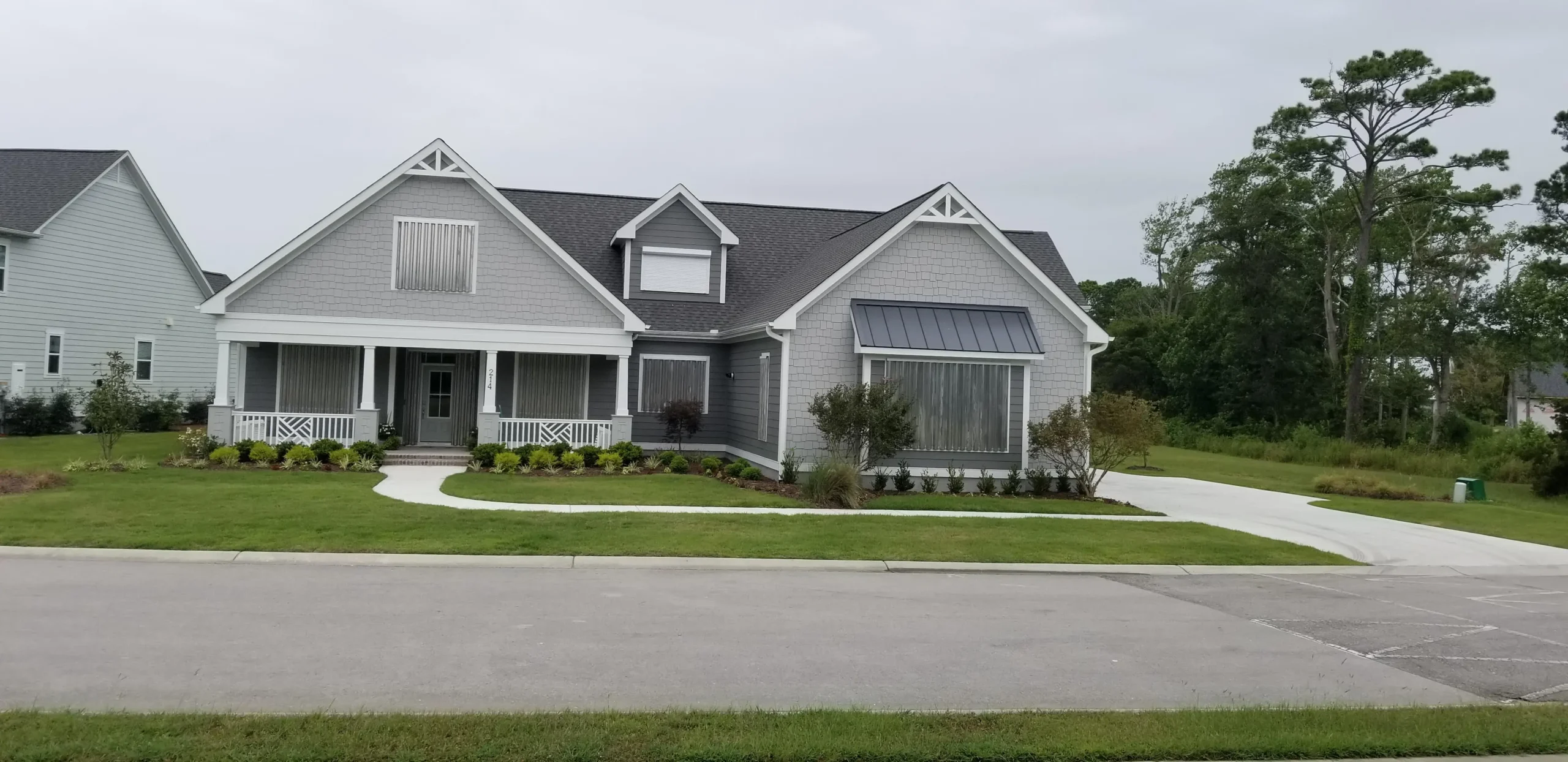
Aluminum and clear polycarbonate hurricane panel installations on homes and commercial properties across coastal NC and SC.
Corrugated Aluminum
Clear Panel Install
Clear Panels
Holden Beach
Beach Home
Hampstead
Installation
Myrtle Beach
Full Coverage
Track Detail
Storm Ready
Two-Story
Residential
Track System
UNCW
Wing Nuts
Sliders
Upper Story
Full Home
Track Close-Up
Protected
Commercial
Estate
Security
New Bern
Gray Home
★★★★★
“Best value in hurricane protection. The team installed the tracks perfectly and showed us exactly how to deploy them. Total peace of mind at a fraction of the cost.”
Verified Google Review · Morehead City, NC
Common Questions
Hurricane Panel FAQ
Real answers from the team that installs storm panels across coastal NC and SC. More questions? Visit our full FAQ page or call us.
Aluminum storm panels start at $22 per square foot installed. Clear polycarbonate panels start at $26 per square foot installed. Both prices include permanently mounted tracks, the panels themselves, and wing nut hardware. A typical coastal home with 15-20 openings runs $4,950 to $6,600 for complete aluminum panel installation — the lowest cost for rated storm protection of any system we offer. Use our cost calculator for a personalized estimate.
Both carry identical ASTM and TAS hurricane certifications and use the same track system. Aluminum panels ($22/sq ft) are opaque, block all light when installed, and have exceptional corrosion resistance — far superior to steel panels which used to be the standard but corrode and weigh many times more. Clear polycarbonate panels ($26/sq ft) are transparent with UV protection coating, letting natural light through even when fully deployed. Clear panels can be stored indoors to prevent yellowing. Both types can be mixed on the same home — clear on living areas, aluminum on bedrooms and less critical windows.
We install Bertha™ Storm Panel Shutters. These systems include removable panels made of aluminum or clear polycarbonate, cut to size and attached with anchors or tracks. The corrugated panel design provides approximately 25% more strength than a flat panel or plywood. They meet impact codes (ASTM 1886/1996) and are approved in North Carolina, South Carolina, and Florida.
Our crew installs permanent aluminum tracks (top and bottom channels) around each window and door, anchored into structural framing — not trim — using fasteners sized to our site-specific Design Pressure analysis. We fabricate the panels to exact dimensions and label every panel. Before a storm, you slide each panel into its tracks and secure with wing nuts. No tools needed. Panel tracks make assembly and installation faster and easier than direct-attach anchor systems. We walk you through the process and leave a labeled diagram.sembly and installation faster and easier than direct-attach anchor systems. We walk you through the process and leave a labeled diagram.sembly and installation faster and easier than direct-attach anchor systems. We walk you through the process and leave a labeled diagram.
Two people can deploy storm panels on a typical 3-bedroom coastal home in 1-2 hours, assuming the panels are stored close to the home. We recommend doing a dry run early in the season to see how long the process takes and to fix anything before it’s too late. When a storm is 24-48 hours out, having panels pre-staged by window is best practice.
Panels are stackable and require a dry place for storage, usually a garage or carport. A wall-mounted horizontal rack keeps panels organized, labeled, and easy to grab quickly. Aluminum panels stored outdoors may develop a small aluminum oxide layer (white colored) on the surface — this is not a corrosion issue and will not compromise the integrity of the panel. Clear polycarbonate panels should always be stored indoors out of direct UV to prevent yellowing over time. Never store panels flat on a concrete floor without spacers.
Yes — when properly installed, hurricane panels meet the same ASTM E1886/E1996 and TAS 201/202/203 certification standards as accordion and rolldown shutters. The protection provided is equivalent. The difference is convenience, not protection level. Panels require physical deployment before a storm. Accordion shutters deploy in seconds without leaving your home. If you are consistently present before storms and can do the physical work, panels give you the same rated protection for roughly half the cost.
Steel panels used to be the industry standard but have been largely replaced by aluminum. Aluminum has exceptional corrosion resistance, making it ideal for coastal areas. Steel corrodes and rusts in salt air, weighs many times more, and offers no cost savings over aluminum. The only apparent weathering on aluminum is a small aluminum oxide layer that may appear if panels are stored outdoors — this is cosmetic and does not compromise integrity.is is cosmetic and does not compromise integrity.is is cosmetic and does not compromise integrity.
Yes. Storm panels covering all openings qualify for wind mitigation credits in NC and SC. We provide all product approval documentation and complete the wind mitigation inspection form. Many customers see premium reductions that recover a meaningful portion of the installation cost within a few renewal cycles.
Storm panels work on most standard window and door openings. They require flat wall space for the track channels and clearance to slide panels in from one end. They are not ideal for arched windows, round openings, or casement windows that open outward. For those openings we can mix systems. Aluminum panels come in different sizes and offer design flexibility including curves and openings. Our estimator will identify any openings that need a different solution at your free estimate visit.
Yes. Building permits are required for track installations in most coastal NC and SC counties. We manage all permit applications, engineering documentation, and inspections as part of our standard installation service at no additional charge.
We provide a 7-year workmanship warranty on all track installations and anchorage — the longest in the region. Panels carry manufacturer product warranties. We have been in business since 2006 and will still be here.
Free Estimate
Get Your Free Estimate
Protect your home with the Carolinas’ most trusted shutter installer.
Contact American Hurricane Shutters for a free, no-obligation in-home estimate. We respond within one business day and offer same-week scheduling throughout coastal NC and SC.
Aluminum storm panels are your fastest rated option when a storm is approaching. AHS can supply and install storm panels on most homes in a single day for pre-storm emergency installations. For homes with existing panel tracks, deployment is entirely self-serve — slide panels into tracks, secure wing nuts, done. You never depend on a contractor when a storm is 48 hours away.
AHS offers competitive pricing on larger projects. Homes with ten or more openings receive per-unit pricing advantages due to installation efficiency. We also offer off-season pricing from November through April when scheduling is flexible. Contact us to ask about current promotions and multi-opening project pricing.
Portable Hurricane Shutters — Panels You Can Take With You
Aluminum storm panels stored at home give you the flexibility to protect any opening and take the panels with you if you move. Unlike permanent accordion or roll-down systems fixed to the structure, removable storm panels are your property — stored in a garage, transferred to a new home, and used on any opening that fits the panel dimensions.
Professionally installed by Matthew Burns, VP, President/CEO of American Hurricane Shutters and OSHA-30 certified storm protection expert. Learn about our team.
Matthew Burns is President/CEO of American Hurricane Shutters, the Carolinas' rated storm protection specialists founded in 2006 by Michael Burns. OSHA-30 certified and specializing in Miami-Dade and TAS-approved hurricane shutter systems, Matthew has personally overseen the installation of storm protection on thousands of homes from Emerald Isle to Myrtle Beach. His expertise covers accordion shutters, rolldown shutters, Bahama shutters, colonial shutters, hurricane panels, and fabric hurricane screens. Based in Wilmington, NC.