
Why Roll-Down Hurricane Shutters Make Sense for Your Home: Protection, Value, and Peace of Mind
Roll-down hurricane shutters are a tough, impact-rated exterior system that shields windows and doors from wind, rain, and flying debris—delivering immediate storm protection and longer-term value for your home. This guide walks through how roll-down shutters work, why they outperform simple wind-resistant solutions, and how they can help with energy efficiency, security, and potential insurance savings for coastal homeowners. Coastal properties face repeated storm exposure, UV damage, and higher noise levels; roll-down shutters answer those challenges by creating a continuous barrier that reduces solar heat gain, improves privacy, and meets recognized code benchmarks. You’ll learn the basics of slat interlocks and housings, the differences between manual and motorized systems, realistic maintenance and lifespan expectations, and why professional installation matters in North and South Carolina. The guide finishes with practical next steps—what to inspect, which documents to save for insurance, and how to find local service—so you can choose the right shutters and care for them over time.
What Are the Key Storm Protection Benefits of Roll Down Hurricane Shutters?
Roll-down hurricane shutters protect openings by forming an interlocked, impact-resistant barrier that stands up to high wind loads and deflects flying debris, helping preserve window and door assemblies. The system relies on interlocking slats stored in a headbox and anchored with sturdy mounting brackets to create a continuous shield that transfers wind loads to the building structure and cuts down on breach points. Because they’re impact-rated, these shutters lower the likelihood of broken glass and interior water intrusion during hurricane-force events, which in turn reduces secondary damage inside the home. Knowing these protection benefits helps homeowners choose permanent, code-compliant shutters instead of temporary storm panels when living with recurring coastal exposure.
Top storm protection points for roll-down shutters:
- Impact resistance: Interlocking slats and reinforced housings stand up to flying debris.
- Wind-load handling: Continuous mounting moves loads into the structure to limit deformation.
- Debris shielding: Full-coverage closure keeps water-driven projectiles from breaching the envelope.
- Quick deployment: Fast closure cuts exposure time as storms approach.
Those features mean fewer broken panes and less interior water damage after major storms. They also point to the slat mechanics and testing standards that prove a shutter’s performance.
How Do Roll Down Shutters Resist High Winds and Flying Debris?
Roll-down shutters resist winds and debris by combining strong materials—usually impact-rated aluminum or steel—with interlocking slat geometry that spreads forces across mounting brackets and the headbox. The slats lock together to form a solid surface, while reinforced guides limit lateral movement that could let projectiles through. Impact-rated shutters are tested to resist specified projectile sizes and velocities, and installers follow anchorage patterns designed to meet local wind-load requirements. Understanding these mechanical details explains why shutters perform better than temporary panels and why material selection and professional mounting are essential for reliable protection.
What Building Codes Do Roll Down Shutters Meet for Coastal Safety?
Roll-down shutters are often certified to well-known benchmarks—such as tests used by the Florida Building Code (FBC)—to show impact resistance and wind-load compliance. Installers commonly provide certification paperwork to demonstrate a product’s suitability for coastal conditions. Meeting those benchmarks matters because insurers and local permitting authorities frequently require documented compliance for discounts and approvals. Homeowners should ask for product test reports and installation documentation before buying to confirm code alignment and ensure the shutters will be accepted by local officials and insurers. That verification also ties into maintenance schedules, warranty terms, and the paperwork needed to pursue insurance savings.
For homeowners ready to move from information to estimates, American Hurricane Shutters offers free estimates and a dedicated cost calculator to model options and pricing. Those tools help translate the protection details above into realistic budgets and product choices without interrupting the decision process. Our focus is roll-down shutters, professional installation, and local service across coastal North and South Carolina—so you get compliant installations and the documentation insurers want.
How Do Roll Down Hurricane Shutters Enhance Home Security and Privacy?
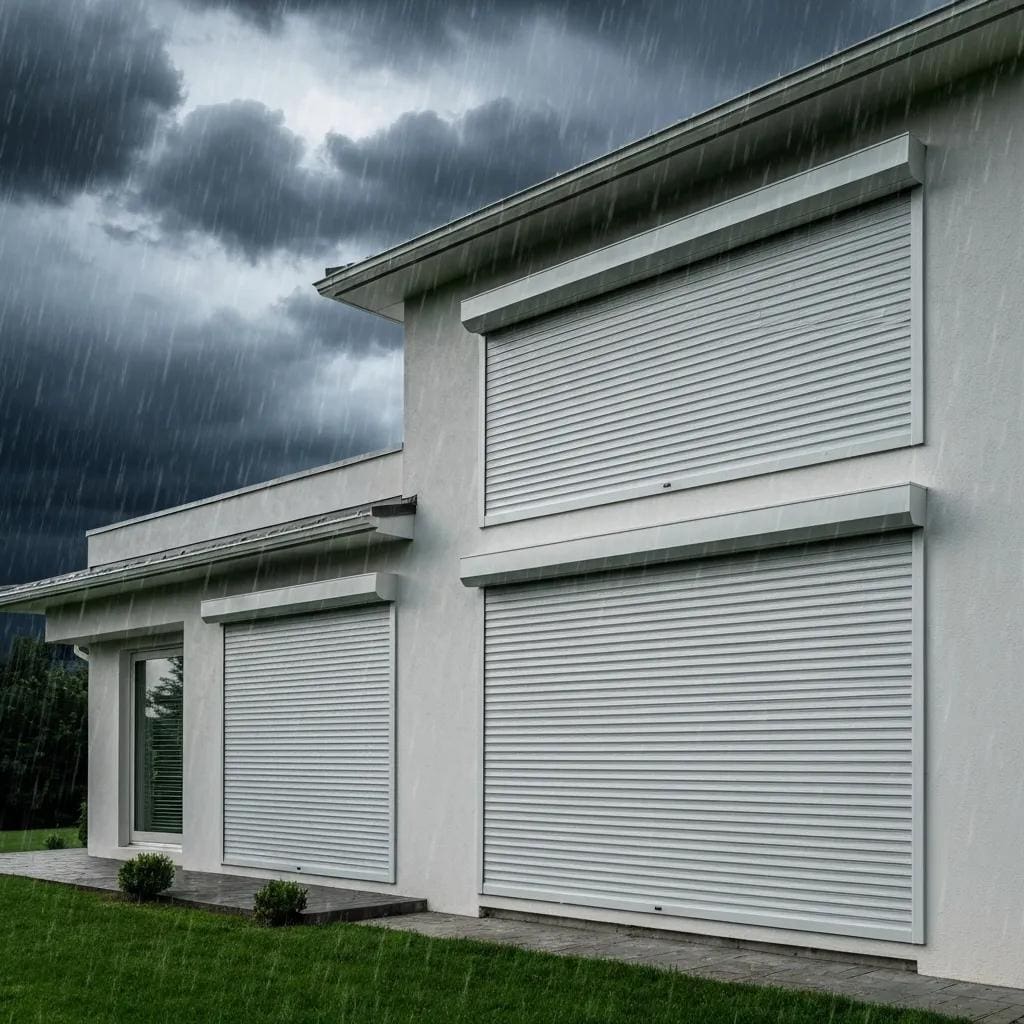
Roll-down hurricane shutters improve security and privacy by serving as a strong physical barrier and a visible deterrent. When closed, they make forced entry much more difficult than unprotected openings. Locks, reinforced slats, and tamper-resistant housings work together to block common break-in methods like glass smashing or prying, and a fully closed shutter prevents passersby from seeing inside—protecting occupants and valuables. These security and privacy benefits are why many homeowners choose permanent roll-down systems over temporary covers, especially for vacation homes and rentals. From hardware choices to how you use them, the right shutter setup maximizes intrusion resistance and privacy control.
Key security and privacy features include:
- Robust locks and anti-lift systems that stop unauthorized opening.
- Reinforced slat construction that resists forceful impacts.
- Opaque, continuous coverage that blocks visual access and streetlight glare.
What Security Features Make Roll Down Shutters Effective Against Burglary?
Anti-burglary shutters include secure locking systems, anti-lift pins or channels, and reinforced guides to prevent pry and lift attacks. Locks can be mechanical or tied into motorized drives depending on the system. Strong materials—like interlocking aluminum slats with reinforced ribs—add penetration resistance, and tamper-resistant housings protect drive units and locking hardware from direct attack. For long-term performance, keep installation records and check locks regularly. Those practices not only maintain security but also help with insurance and resale, since documented physical upgrades speak to a property’s resilience.
How Do Roll Down Shutters Provide Privacy for Coastal Homes?
Roll-down shutters offer complete opaque coverage when closed, giving homeowners control over light and sightlines—useful for vacation homes, rentals, or houses with large windows facing public areas. Partial deployment can diffuse light and reduce visibility, while full closure provides total screening and darkness for comfort or long absences. For coastal properties with frequent rentals or seasonal vacancy, shutters secure interiors, protect furnishings from UV, and deter opportunistic entry. How you operate the shutters—manual or motorized—and when you schedule maintenance affects how well they preserve privacy over time.
In What Ways Do Roll Down Shutters Improve Energy Efficiency and Reduce Noise?
Roll-down shutters boost energy efficiency by blocking solar radiation and creating an insulating air pocket between the shutter and the window, which cuts conductive and radiative heat gain. That thermal barrier lowers cooling loads during hot months and protects interiors from UV damage that fades furnishings. Shutters also add mass and separation that help attenuate airborne noise; while they’re not a complete soundproofing solution, they can noticeably reduce street and storm noise. Quantifying energy and noise improvements helps homeowners estimate return on investment and choose materials that balance thermal reflectivity, weight, and sound damping.
Typical thermal and acoustic attributes include UV blocking, reflective finishes to reduce solar gain, and added mass for noise reduction. Those properties influence material choice, color, and maintenance needs. The link between energy savings and reduced HVAC runtime feeds into cost-calculator estimates and long-term value discussions, and it leads to realistic expectations about savings and decibel reduction for common materials.
How Do Roll Down Shutters Block UV Rays and Lower Energy Bills?
Roll-down shutters block UV rays with reflective outer finishes and continuous coverage that prevents direct sunlight from hitting glass and interiors, reducing fading and heat gain. The air gap between closed shutters and the window acts as extra insulation, lowering conductive heat transfer and easing the load on air conditioning during peak sun hours. Energy savings vary by home orientation, climate, and glass type, but conservative estimates show meaningful cooling reductions for sun-exposed facades—especially in coastal climates with strong solar exposure. Consider finish reflectivity and shading patterns when estimating energy and interior-protection benefits.
What Noise Reduction Benefits Do Roll Down Shutters Offer for Quieter Living?
Roll-down shutters reduce ambient noise by adding a dense, continuous barrier that increases the sound transmission loss of window assemblies and by creating an airspace that helps dampen reverberation. Realistic expectations matter: shutters can cut typical urban or coastal background noise by several decibels, making interiors noticeably quieter and improving sleep or focus during storms. Acoustic performance depends on material mass, slat stiffness, and seal tightness—laminated or insulated slats usually perform better. Weigh these trade-offs to pick materials and seals that balance storm protection with quieter living, and keep maintenance up to preserve acoustic performance.
How Can Roll Down Hurricane Shutters Increase Property Value and Save on Insurance?
Roll-down shutters can boost property value by providing documented, permanent storm protection and showing compliance with recognized impact and wind-load benchmarks—qualities coastal buyers and appraisers often value. Permanent, certified installations are easier to list as upgrades because they reduce perceived risk and expected storm-related repairs. Insurers may offer premium discounts when shutters meet certification standards and homeowners provide installation documentation; discounts vary by carrier and underwriting practice. Knowing what documentation appraisers and insurers need helps turn shutters into measurable financial benefits.
The financial case is strongest when homeowners keep receipts, permits, and certifications and present consistent product documentation during appraisals and insurance reviews. Clear records help underwriters assess risk reduction, and appraisers can assign a conservative value uplift when shutters are permanent, certified, and professionally installed. Keeping a complete dossier supports both resale and insurance conversations.
What Evidence Shows Increased Home Value from Installing Roll Down Shutters?
Market observations show that permanent, certified storm-mitigation features like roll-down shutters are viewed favorably in coastal resale markets because they lower perceived risk and demonstrate preparedness. Appraisers consider fixed improvements that reduce expected storm damage when making value adjustments, and well-documented installations backed by test reports and permits strengthen those assessments. Homeowners should assemble a dossier—photos, receipts, product certifications, and installer sign-off—to give appraisers local evidence of resiliency. Presenting that documentation during listing helps agents and appraisers place appropriate value on the upgrade.
How Do Insurance Savings Work with Quality Hurricane Shutters?
Insurance savings usually follow a clear path: confirm the shutters meet recognized testing benchmarks, keep installer documentation and product certifications, and submit that paperwork to your insurer for review. Some carriers respond with premium credits or mitigation discounts when they verify reduced risk. The size of any discount depends on the insurer and local underwriting rules, but the steps are consistent—demonstrate compliance, document the installation, and ask for reassessment. Contact your insurer after installation and keep all records to support a mitigation claim. That’s why certified products and professional installation matter when seeking insurance savings.
What Are the Advantages of Manual vs. Motorized Roll Down Hurricane Shutters?
Choosing manual or motorized roll-down shutters comes down to trade-offs in cost, deployment speed, convenience, and smart-home integration. Manual shutters use a crank or latch and are cost-effective, reliable, and low-maintenance—good for smaller homes or occasional use. Motorized shutters give one-touch or remote operation, fast deployment, and options for automation or battery backup—beneficial for larger homes, frequent storm zones, or occupants needing accessibility features. Weigh these operational differences along with durability, maintenance, and power needs to find the solution that balances convenience and resilience for your home.
What Are the Benefits of Motorized Roll Down Shutters for Easy Operation?
Motorized shutters let you lower or raise all openings quickly with a remote, wall switch, or automation—ideal when time is critical and for homeowners with limited mobility. Motorization can include battery backup and manual override so shutters still operate during power outages. Automation can trigger shutters on weather alerts or set schedules for added protection. While motorized systems cost more up front and need electrical work, their speed and convenience are valuable for larger homes or properties that must secure many openings fast. Ask a professional about proper electrical connections and backup strategies to ensure reliability.
As part of planning, request a professional assessment for automation needs and backup options to keep protection working during outages.
When Are Manual Roll Down Shutters the Best Choice for Homeowners?
Manual shutters are the best choice when simplicity, lower cost, and minimal electrical complexity matter. They provide dependable protection with straightforward mechanical parts that are easy to service. For smaller homes, secondary properties, or places where shutters are used infrequently, manual systems reduce the chance of electronic failure and typically need less specialist maintenance, making them cost-effective over the long run. Manual systems also serve as a reliable override for motorized setups and suit owners comfortable with occasional physical operation during storm prep.
How Does Professional Installation Ensure Optimal Performance of Roll Down Shutters?
Professional installation makes sure roll-down shutters perform as rated by delivering accurate site assessments, precise measurements, proper anchorage patterns, and correct commissioning of mechanical or motorized systems. Installers who know coastal North and South Carolina can recommend materials and mounting strategies that resist prevailing wind loads, salt-air corrosion, and local code requirements that affect permits and insurance. After installation, testing and a homeowner walkthrough confirm operation and hand over the documentation needed for warranties and insurance. Hiring a pro reduces the risk of improper mounting, wrong-sized housings, or electrical issues that could undermine performance in a real storm.
A certified installation process also simplifies collecting the paperwork for insurance discounts and appraisals, and it sets clear expectations for maintenance and warranty service.
What Is the Typical Installation Process for Roll Down Hurricane Shutters?
A typical professional installation begins with a site assessment and precise measurements, followed by ordering or selecting shutters sized for each opening and planning mounting details that meet rated anchorage patterns. On installation day, technicians prepare mounting surfaces, install housings and guides, anchor systems into structural substrates, and calibrate motor drives or fit manual mechanisms. They test operation, verify seals and locks, and walk homeowners through use and maintenance while handing over documentation to support warranties and insurance. Knowing these steps helps homeowners prepare the site, schedule the work, and expect a clean handoff of records for compliance and claims.
Why Is Local Expertise Important for Coastal North and South Carolina Installations?
Local expertise matters because coastal North and South Carolina have specific storm patterns, salt-air exposure, and code interpretations that affect product selection, finishes, and anchorage methods to resist corrosion and wind fatigue. Installers experienced in these markets know how to meet permitting expectations and document compliance in ways insurers and appraisers recognize. Local knowledge also helps prevent common coastal failure modes—like long-term hardware corrosion or wind-driven water intrusion—by recommending appropriate finishes, fasteners, and maintenance schedules. Choosing a regional, experienced installer supports durability and preserves the shutters’ protective performance.
Professional installation teams serving Wilmington, NC; Myrtle Beach, SC; Oak Island, Topsail, New Bern, and Pawleys Island combine local insight with certified products to deliver shutters that perform in storms and produce the documentation homeowners need for insurance and resale.
- Pre-installation assessment: Ensures accurate measurement and code alignment.
- Certified mounting and anchoring: Transfers loads to structural framing per ratings.
- Commissioning and documentation: Provides test reports and installation records for insurance and appraisal use.
Frequently Asked Questions
What maintenance is required for roll-down hurricane shutters?
Regular maintenance keeps shutters working reliably. Inspect tracks and guides for debris, test manual or motorized operation, and check seals and locks for wear. Rinse and clean with mild soap and water—especially near the coast where salt can build up—to help prevent corrosion. Schedule a professional check every few years to catch small issues before they become bigger problems.
Can roll-down hurricane shutters be customized for different window sizes?
Yes. Roll-down shutters are made to fit many window and door sizes and architectural styles. Manufacturers and installers offer custom sizing and configurations so shutters provide proper protection and a clean look. Work with a professional installer to measure openings and pick the design that meets both performance and local code requirements.
How do roll-down shutters compare to other storm protection options?
Compared with temporary options like plywood or fabric panels, roll-down shutters deliver permanent, impact-rated protection that deploys quickly. They also add security and privacy when closed. While temporary solutions may cost less up front, roll-down shutters can save money over time through lower insurance risk and reduced storm damage. Their appearance and ease of use are additional reasons many coastal homeowners choose them.
What is the lifespan of roll-down hurricane shutters?
Lifespan depends on materials, usage, and maintenance. High-quality aluminum or steel shutters can last 20 years or more with proper care. Regular cleaning and inspections extend life, and choosing certified products with professional installation helps ensure long-term performance—especially in salty coastal environments where corrosion is a factor.
Are roll-down hurricane shutters energy-efficient?
Yes. When closed, roll-down shutters create an insulating air space and block solar radiation, lowering heat transfer and helping reduce cooling costs. They also block UV rays that fade furniture and flooring. For many coastal homes, shutters are a practical way to improve comfort and cut energy bills.
How do I choose between manual and motorized roll-down shutters?
Decide based on budget, frequency of use, and convenience needs. Manual shutters are less expensive and simple to maintain—good for smaller homes or occasional use. Motorized shutters offer fast, one-touch operation and automation, which is helpful for larger homes or accessibility needs. Talk with a professional to balance cost, reliability, and backup power options.
Conclusion
Installing roll-down hurricane shutters gives homeowners durable storm protection, better security, and energy benefits—plus the potential to increase property value and reduce insurance risk. These permanent systems protect against extreme weather and can lower long-term maintenance and repair costs. Professional installation ensures the shutters perform to code and provides the documentation insurers and appraisers expect. Ready to protect your home? Explore our range of premium roll-down hurricane shutters and get a free estimate to find the right solution for your property.