
Elegant Accordion Shutter Designs for Coastal Homes — Stylish Storm Protection That Complements Your Exterior
Accordion shutters are hinged, folding storm shutters mounted beside windows and doors that deploy quickly to secure openings during severe weather. They combine tested hurricane protection with design-conscious details so your home stays safe without looking like it’s in emergency mode.
Operation is straightforward: panels slide along a track and lock into place. Built from extruded aluminum with stainless‑steel hardware and engineered locking systems, accordion shutters form a continuous barrier that resists high winds and flying debris while preserving the home’s exterior lines.
This guide walks coastal homeowners through how accordion shutters can boost curb appeal, pair with coastal and contemporary architecture, and offer upscale options—like motorization and compact stacking—that keep the look clean when shutters are retracted. You’ll find practical color and finish advice, solutions for bay windows and large patio openings, and the maintenance and code considerations that matter in North and South Carolina’s coastal zones. Each section includes actionable design tips, clear comparisons of operation modes and finishes, and installation best practices so you can choose shutters that protect without compromising elegance. When you’re ready, the guide explains when to call a pro and how to request a free estimate to move from design to installation.
How Accordion Shutters Enhance Home Elegance and Curb Appeal
Accordion shutters offer a slim profile, consistent finish, and compact stacking that preserve a home’s architectural lines while providing reliable storm protection. Their interlocking blades run on a dedicated track to create a clean visual plane when closed; finishes can be matched to trim, siding, or accent colors to either blend in or create a considered contrast. The outcome is a built‑in appearance—an exterior element that reads as intentional design rather than a temporary fixture. Knowing the right color, finish, and stacking approach helps make shutters feel integrated, not bolted on.
Color Choices That Complement Elegant Coastal Exteriors

Color anchors your exterior palette and determines whether shutters disappear into the background or become a deliberate accent. Soft white, warm ivory, and sandy beige create timeless, low‑contrast looks for clapboard or shingle siding; deeper bronze, muted navy, or charcoal provide a tasteful contrast that emphasizes window geometry and trim. In coastal climates, choose corrosion‑resistant powder‑coat or fluoropolymer finishes that hold color under strong sun and salt air, and consider custom color matching when you want shutters to coordinate with doors, neighboring homes, or historic trim. Factor in roof tone and landscaping so the shutter color supports curb appeal without feeling purely utilitarian.
Coastal Home Construction: Hurricane Shutters and Grid Systems for Protection
The grid system—an arrangement of interconnected beams and columns—creates a resilient structure well suited to coastal conditions, where wind and wave forces are common. Properly designed shutter systems work within that framework to protect small openings while preserving daylight and sightlines.
At The Water’s Edge: The Grid in Coastal Construction, 1999
How Compact Stacking Keeps Shutters Visually Minimal
Compact stacking reduces the visual footprint of accordion shutters when retracted by folding the panels into a shallow pocket or neatly alongside the opening. Narrow stacking assemblies and recessed tracks can hide the shutter within trim or pockets above doors and windows so the system occupies minimal visible space; flush hardware minimizes protrusion when panels are stowed. If unobstructed views are a priority, specify compact stacking early so the system balances protection with sightlines.
Common stacking and trim pairings for different palettes:
- White or Ivory: Ideal for classic coastal homes; shallow stacking pockets keep the look clean.
- Bronze or Charcoal: Works as a deliberate accent on contemporary façades with narrow exposed stacking.
- Custom Match: Best when shutters should visually recede against painted trim.
These treatments let shutters read as an architectural detail rather than an emergency add‑on.
Which Architectural Styles Work Best with Accordion Shutters?
Accordion shutters are versatile: changing blade profile, hardware visibility, and finish lets them blend into or complement many architectural styles. For Coastal and Traditional homes, slightly rounded blade profiles, classic colors, and discreet hardware preserve historic charm while adding modern protection. For Modern and Contemporary architecture, low‑profile blades, narrow stacking, and matte or textured finishes keep lines minimal and façades clean. Match shutter proportions to window rhythm and trim to avoid a mismatched appearance on high‑visibility elevations.
Fitting Accordion Shutters to Modern and Contemporary Coastal Homes
On contemporary coastal houses, integration focuses on slim profiles, minimal visible hardware, and finishes that echo window frames or architectural metalwork. Low‑visibility tracks, flush anchoring, and matte powder‑coat textures let shutters recede when retracted and complement large glazing runs without bulk. Motorized drives and compact stacking support modern lifestyles with one‑touch operation and an uncluttered look; muted greys or deep charcoals create a refined contrast with glass expanses.
Custom Solutions for Bay Windows, Curves, and Large Patios
Unusual openings require segmented panels, curved tracks, or coordinated multi‑panel systems to maintain smooth operation and consistent stacking. Bay windows often use custom curved tracks or sectional accordion assemblies that follow the geometry while keeping locking continuity. Large patio openings are handled with synchronized multi‑panel systems—often with optional motorization—so panels operate together, minimize gaps, and form a unified plane when closed. Early collaboration between designer and installer ensures hardware placement and track routing respect both the aesthetic and structural anchoring needs.
Luxury Features and Custom Options for Upscale Homes
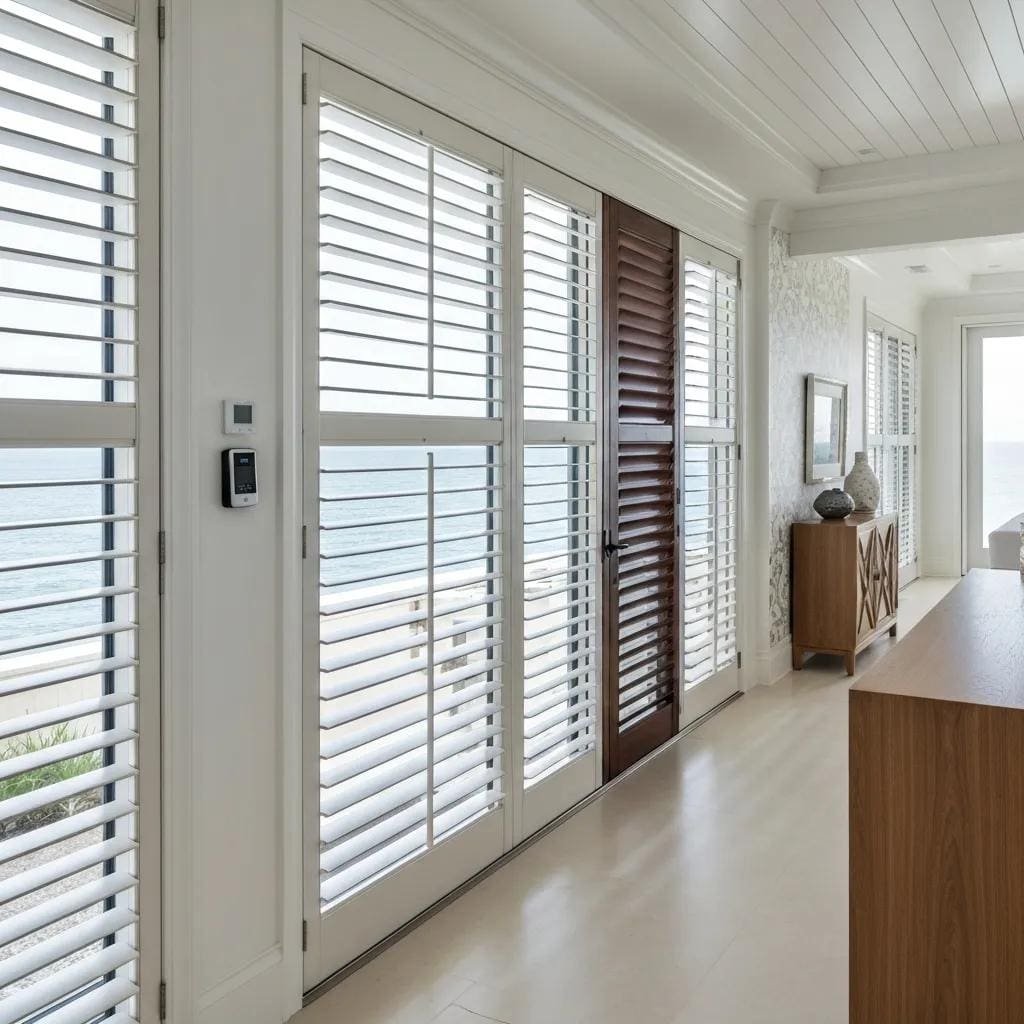
Luxury upgrades focus on convenience, refined appearance, and materials engineered for coastal longevity—elevating shutters from functional to bespoke exterior elements. Motorization delivers one‑touch deployment and smart‑home integration with backup power choices; premium powder‑coat and textured finishes provide depth and a handcrafted look that complements high‑end façades. Other options include recessed pockets, keyed locks with concealed hardware, and custom panel widths to keep sightlines uninterrupted. A professional design consult helps prioritize features based on window types and daily use.
Compare motorized and manual systems to weigh convenience, cost, maintenance, and visual impact.
In short: motorized systems prioritize ease and coordinated operation, while manual systems offer simplicity and long‑term reliability. Your choice depends on budget, user patterns, and how important one‑touch operation is to daily life.
Motorized vs. Manual: Convenience, Service, and Style
Motorized shutters deploy quickly and consistently and can be integrated into automated scenes—useful in upscale homes or where multiple openings should operate together. Manual shutters are straightforward to service, with fewer components to maintain; the finished look depends primarily on stacking and finish rather than operation type. Motorized installs can be more complex and may need occasional electrical servicing, while manual systems keep long‑term maintenance simpler. Consider how often you’ll use them and the number of openings when deciding.
Material Finishes and Textures That Last and Look Refined
For coastal durability and a polished look, choose extruded aluminum in corrosion‑resistant alloys with high‑performance powder‑coat or fluoropolymer finishes that resist salt‑air corrosion and UV fade. Textured coatings and architectural pigments add depth, reduce glare, and hide minor wear. Stainless‑steel fasteners and marine‑grade tracks extend longevity; prioritize finishes with tested coastal warranties. Regular care preserves textured coatings so shutters remain a design asset rather than a maintenance liability.
Aluminum Corrosion Resistance in Coastal Environments: Surface Treatments
Surface treatments—anodizing, organic coatings, or plating—are critical to improving aluminum corrosion resistance. In coastal settings, interactions with cementitious materials and salt exposure require careful material selection and protective measures to ensure long‑term performance.
Aluminum Interaction with Cementitious Materials in a Coastal Environment, A De Luca, 2022
Key finish attributes to prioritize:
- Corrosion Resistance: Essential for long life in salt‑laden air.
- Color Retention: Prevents fading that undermines the intended look.
- Texture & Matte Options: Reduce reflections and convey craftsmanship.
These factors steer finish selection toward options that both look premium and hold up in coastal climates.
How Accordion Shutters Add Value Beyond Storm Protection
Accordion shutters deliver both measurable and perceived value: they tidy the façade for stronger curb appeal, improve occupant comfort with shading and noise reduction, and support insurance and resale conversations when installations are documented and code‑compliant. Well‑integrated shutters signal attention to detail—an attractive trait for buyers—while airtight seals and shading can lower cooling loads. The combination of visible quality and practical benefits makes shutters a year‑round asset, not just a storm item.
Benefits at a glance:
Together, these advantages align protection with everyday improvements homeowners notice and appreciate.
How Shutters Improve Curb Appeal and Property Value
Design‑led installations that match shutter profiles and colors to trim and siding create a cohesive exterior that reads as intentionally detailed and well cared for. Buyers view professionally integrated exterior systems as lower‑risk investments—especially in storm‑prone coastal markets—which can translate to stronger offers or faster sales. Documenting materials, finish warranties, and code‑compliant installation builds buyer confidence; before‑and‑after visual staging makes the benefit tangible. Small design choices—like concealed stacking pockets and matching hardware—turn shutters into selling features, not emergency fixtures.
Energy and Noise: Practical Comfort Gains from Shutters
Accordion shutters act as an exterior shading layer that blocks direct solar heat and reduces conductive transfer through glazing, lowering peak cooling loads. When fully closed, tight seals along tracks and locks reduce air leakage and improve thermal performance versus unshaded windows. The continuous barrier also helps attenuate airborne noise, especially when combined with sealed frames and insulated glazing. Professional measurement can quantify savings, but homeowners should expect noticeable comfort improvements that often translate into lower energy use and a more pleasant interior environment.
Why Professional Installation Matters for Performance and Longevity
Professional installation guarantees precise track alignment, correct anchoring into structural framing, and compliance with local approvals—each essential to shutter performance, safety, and warranty coverage. Installers set stacking depth, prevent panel rubbing, and verify that locks and guides engage reliably to avoid premature wear and keep aesthetics aligned. In coastal areas, code requirements often favor certified products and documented installation methods; professionals handle permits and choose anchoring strategies that meet regional standards. Proper installation protects both function and design over the long term.
Installation best practices:
- Structural Anchoring: Fasten into framing—not just surface materials—for dependable load transfer during storms.
- Track Alignment: Accurate leveling prevents binding and ensures smooth operation.
- Sealing & Finish Touches: Use appropriate sealants and trim details to integrate shutter pockets with existing trim.
Following these steps creates durable, visually coherent installations and sets the stage for maintenance routines that preserve appearance.
Maintaining Shutter Appearance and Operation
A seasonal maintenance routine keeps shutters looking and working their best: clean tracks and hardware, rinse salt deposits, inspect powder‑coat for chips, and lubricate moving parts per the manufacturer’s recommendations. Touch up minor paint abrasions and tighten fasteners to prevent corrosion from starting at compromised points. For textured or custom finishes, follow manufacturer guidance to avoid solvents or abrasives that could damage the coating. Periodic professional servicing addresses alignment or motor issues before they affect appearance or operation. Consistent care protects the investment and keeps shutters presenting as an architectural feature, not a weathered necessity.
How Building Codes Shape Shutter Design in Coastal Regions
Codes and approvals determine acceptable materials, anchoring methods, and design loads in coastal jurisdictions, influencing choices from blade profile to fastener type and installation spacing. Products with regional approvals and documented test results streamline permitting, and installation details—such as spacing and embedment—must meet local requirements for safety and insurability. Professional installers usually verify code references during design and prepare the documentation needed for permitting and inspections. Compliance ensures life‑safety performance and protects warranty and insurance positions.
Frequently Asked Questions About Elegant Accordion Shutters
Homeowners commonly ask about cost, customization limits, lead times, and whether a DIY install is possible—questions that move a project from inspiration to purchase. Cost drivers include opening size, material and finish choices, motorization, and installation complexity for special openings like curved bays. Customization is broad—color matching, textured finishes, and bespoke stacking solutions are common—though extreme geometries may need specialized fabrication. For accurate pricing and timelines, request a detailed estimate that factors in measurements, site conditions, and selected options.
Typical cost drivers:
- Size and Number of Openings: Larger or more openings increase material and labor costs.
- Operation Type: Motorized systems add equipment and wiring compared with manual units.
- Finish and Hardware: Premium coatings and concealed hardware increase fabrication expense.
What Do Elegant Accordion Shutters Typically Cost?
Costs vary with panel width, finish, operation, and installation difficulty. Motorization and premium finishes raise the upfront investment; manual systems remain more economical. Regional labor rates and any needed structural reinforcement for large spans also affect pricing. Lead times depend on fabrication schedules and permitting. For precise figures, request a free on‑site estimate that includes measurements and a clear cost breakdown. Our cost calculator or a conversation with a local installer helps clarify trade‑offs between aesthetics, convenience, and budget.
Can Accordion Shutters Be Customized to Match Any Home Style?
Yes—accordion shutters offer wide customization in color, texture, hardware concealment, and panel sizing to suit most architectures, from historic coastal cottages to contemporary beach houses. Very irregular shapes or extreme curves may require segmented solutions or alternative shutter types, but common openings—including bay windows and large patio doors—have proven custom approaches. Early design discussions with fabricators and installers identify what’s feasible and any structural work needed so shutters complement, not conflict with, your home’s style.
American Hurricane Shutters serves homeowners across coastal North and South Carolina with education, free estimates, installation, and maintenance tailored to elegant, code‑compliant shutter solutions. When you’re ready to move from design to project plan, request a free estimate and on‑site consultation—call American Hurricane Shutters at +1 (910) 256-1288 to schedule an appointment or discuss custom options and design consultation.
Frequently Asked Questions
What are the benefits of motorized accordion shutters compared to manual ones?
Motorized accordion shutters give you one‑touch convenience and integrate with smart‑home systems—handy for large openings or homes with several shuttered areas. They typically cost more and may need more complex installation and periodic electrical upkeep. Manual shutters are reliable, lower cost, and simpler to service, but require physical operation. The right choice depends on your lifestyle, budget, and how often you expect to deploy the shutters.
How do I choose the right size for my accordion shutters?
Measure the width and height of each opening carefully and account for trim or molding that could affect installation. Also consider stacking depth when shutters are retracted, as that impacts both aesthetics and functionality. A professional installer can recommend the best sizing and stacking solutions for your openings and design preferences.
What maintenance is required for accordion shutters?
Routine seasonal care keeps shutters working and looking their best: clean tracks and hardware, rinse away salt, inspect powder‑coat for chips, and lubricate moving parts per manufacturer guidance. Touch up paint as needed and tighten fasteners to slow corrosion. Schedule professional checks for alignment or motor service to catch issues early. These steps help shutters remain an attractive, functional part of your home.
Are accordion shutters effective for noise reduction?
Yes. When closed, accordion shutters form a continuous barrier that helps reduce airborne noise—especially useful in busy coastal neighborhoods or near roads. Noise reduction is strongest when shutters are paired with well‑sealed frames and insulated glazing. Combined, these measures improve interior comfort and create a quieter living space.
What factors influence the cost of accordion shutters?
Cost depends on the size and number of openings, operation type (motorized vs. manual), materials and finishes, and installation complexity—particularly for large or irregular openings. Custom options like color matching and concealed hardware add to fabrication costs. Ask for detailed estimates that reflect these variables so you understand the total investment.
How do building codes affect the installation of accordion shutters?
Building codes influence material choices, anchoring methods, and design loads in coastal regions. Products with regional approvals and documented test results ease permitting; installers must follow local spacing and embedment requirements to meet safety and insurance standards. Professional installers know the local code landscape and prepare the documentation needed for permitting and inspections.
Can accordion shutters be installed on any type of window or door?
Most standard windows and doors can accept accordion shutters, but unique openings—like bay windows or very large patio doors—may need custom tracks, segmented panels, or alternative solutions. A professional assessment will identify the best approach for your openings and ensure smooth operation while complementing your home’s style.
Conclusion
Accordion shutters offer an elegant balance of storm protection and design. When specified and installed thoughtfully, they protect your home while enhancing curb appeal, comfort, and long‑term value. To explore premium shutter options and request a free estimate, contact us today.