
Roll-Down Hurricane Shutters vs. Storm Panels — Which Gives Better Protection When a Storm Hits?
Living on the Carolina coast means making thoughtful choices about storm protection. This guide breaks down roll‑down hurricane shutters and removable storm panels — how each system works, the materials behind them (like marine‑grade aluminum and polycarbonate), deployment realities (motorized convenience vs. manual storage), and how local codes and Design Pressure (DP) analysis affect compliant selection. We compare safety, cost, maintenance, and curb appeal for beachfront and inland properties, outline when a permanent system outperforms removable panels, and include side‑by‑side tables and practical checklists. Scroll through for a clear comparison and steps to get a free estimate and professional installation from a local team serving Wilmington, Myrtle Beach, Oak Island, Topsail, New Bern, and Pawleys Island.
What Are Roll‑Down Hurricane Shutters and How Do They Work?
Roll‑down shutters are permanently mounted curtains built from interlocking slats that run in guide rails. They can be driven by a motor or operated manually and form a continuous protective barrier over windows and doors. Motorized systems use an integrated motor and gearbox with wall switches or remotes; manual units use a crank or spring assist and usually include a manual override for power outages. Their main advantage is always‑available protection that resists wind loads and flying debris without taking up storage space — a big plus for high‑exposure coastal homes. Knowing the material choices, deployment methods, and simple failure‑mitigation steps (backup power, heavy‑duty anchors) helps explain why many homeowners choose this permanent option over removable panels.
What Materials and Deployment Options Are Used in Roll‑Down Shutters?
Top‑quality roll‑down shutters typically use extruded 6063‑T6 marine‑grade aluminum for slats and tracks, with 18‑8 stainless steel fasteners and anchors to resist coastal corrosion and keep rated performance intact. Motorized models include a motor and gearbox with convenient controls; manual versions use cranks or spring assistance and include manual overrides for when power is out. Battery backup systems preserve closing ability during outages and increase reliability when storms knock out electricity. Correct anchor selection and corrosion‑resistant components are essential for meeting code and ensuring longevity in salty, coastal environments.
How Do Roll‑Down Shutters Improve Safety During Storms?
Roll‑down shutters form a continuous, rigid barrier that transfers wind loads into the building through rated anchors, strengthening the opening and helping the structure resist impact. These systems carry manufacturer ratings and can be sized to local demands through a Design Pressure (DP) Analysis — documentation inspectors and insurers look for. Because they’re always in place and can be closed quickly (often instantly with a motor), roll‑down shutters reduce the risk of human error and the exposure time before a storm. For homeowners who want reliable, ready protection that also adds security and sound reduction, roll‑down shutters are a strong choice.
What Are Storm Panels and What Materials Are Available?

Storm panels are removable sheets mounted over openings when a storm is forecast and stored when not needed. They attach with bolts, tracks, or racks and come in common material families: aluminum, clear polycarbonate (e.g., Lexan), and high‑strength fabric panels. Each material offers a different mix of impact resistance, weight, and light transmission. Panels are a cost‑effective seasonal option and work well where upfront budget or infrequent storm exposure make permanent systems less practical. Because they’re removable, panels demand safe storage and practiced installation — homeowner readiness is essential for their real‑world effectiveness.
How Do Aluminum, Clear, and Fabric Storm Panels Differ in Protection?
The table below summarizes how the common panel materials compare so you can choose the right type for exposure and aesthetic preferences.
These panel types vary by strength, visibility, and installation needs:
In short: aluminum panels are economical and strong; polycarbonate keeps views while offering high impact resistance; fabric panels trade some raw strength for fast deployment and easier storage.
What Are the Safety Benefits and Limitations of Storm Panels?
Storm panels deliver solid protection when installed to rated anchors and attached correctly. Their practical limits are human factors: panels need secure, accessible storage; practiced, timely installation; and a plan if homeowners are away or unable to install them. Last‑minute deployment, missing hardware, and repeated handling can reduce a panel system’s effectiveness over time. To get the best safety from panels, keep fastener locations marked, store hardware in labeled kits, and rehearse installation so you can minimize time‑to‑protection.
How Do Roll‑Down Shutters and Storm Panels Compare on Safety and Other Key Factors?
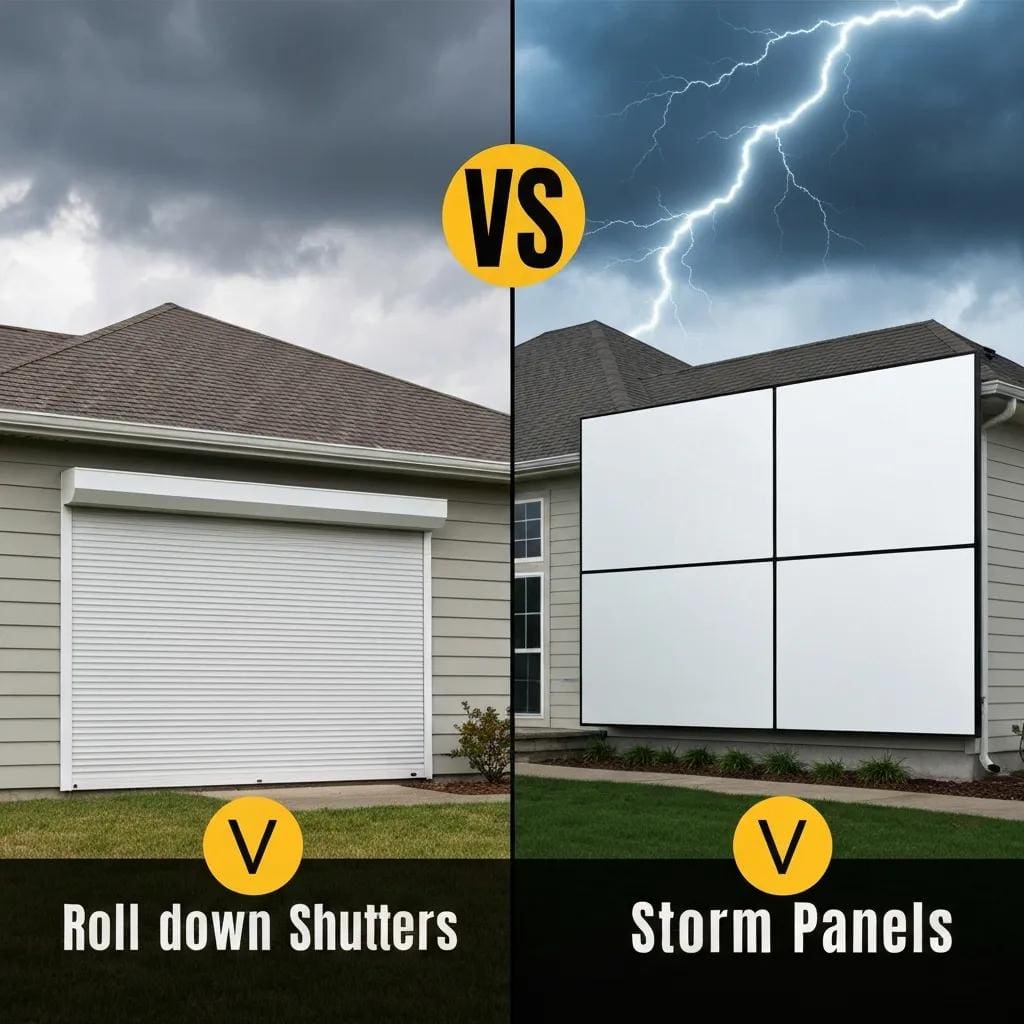
Compare systems across specific attributes: safety (rated impact resistance and continuous coverage), deployment time, lifecycle cost, maintenance, aesthetics, and storage. Roll‑down shutters give continuous coverage and motorized deployment to reduce human error; storm panels lower initial cost and can be practical where permanent systems don’t fit. Durability in coastal settings depends on materials and fasteners — 6063‑T6 aluminum and 18‑8 stainless steel resist corrosion better than cheaper parts, which extends service life for either approach. Knowing these tradeoffs helps you match protection to exposure, budget, and lifestyle.
Which Option Offers Superior Safety During Hurricanes?
Roll‑down shutters typically deliver superior protection in major hurricanes because they form a continuous barrier that transfers wind loads to the structure and reduces dependence on timely human action. Motorized roll‑downs close quickly and cut exposure time; manual roll‑downs and panels require more prep and labor. That said, storm panels — especially clear polycarbonate — can be fully sufficient for lower‑exposure properties if they’re installed correctly and on schedule. The right choice depends on exposure, your ability to deploy protection reliably, and whether you prefer always‑ready protection over a lower initial investment.
How Do Cost, Durability, and Ease of Use Compare Between the Two?
Storm panels win on upfront cost, but lifecycle math often favors roll‑down shutters because of longer service life and fewer storage and replacement costs. Coastal durability ties back to materials: systems built with 6063‑T6 marine‑grade aluminum and 18‑8 stainless fasteners resist salt corrosion better and retain ratings longer. Ease of use is a major factor — motorized roll‑downs provide near‑instant protection, while panels demand manual labor and organized storage. Don’t forget insurance credits and resale value; permanent, rated systems with documentation can improve premiums and buyer appeal, which affects true ROI.
After reviewing these system‑level comparisons, it helps to see how a local, certified installer maps these attributes to products and code compliance.
At American Hurricane Shutters we match materials and installation practices to real coastal needs: 6063‑T6 marine‑grade aluminum, 18‑8 stainless steel fasteners, custom Design Pressure (DP) Analysis to meet local code, and a 7‑year warranty. Our local crews are OSHA‑30 certified and Aerial Lift trained, and we serve coastal NC and SC communities including Wilmington, Myrtle Beach, Oak Island, Topsail, New Bern, and Pawleys Island. That combination — durable materials, rated analysis, and certified installation — helps produce better real‑world safety outcomes.
What Local Building Codes and Storm Risks Affect Hurricane Protection Choices in Coastal NC and SC?
Local codes typically follow the International Building Code (IBC) framework and require products to meet Design Pressure (DP) and impact testing appropriate for the site’s wind exposure. Coastal wind loads vary across towns like Wilmington and Myrtle Beach, and some jurisdictions reference ASTM, TAS, or Miami‑Dade testing for the highest exposures. Choosing rated products and keeping professional installation records supports permitting and insurance. Ask for product test reports, anchor specifications, and the DP Analysis used to size your system — that documentation prevents under‑design and helps qualify for wind mitigation credits.
Below is guidance tying locations to common wind loads and recommended approaches.
How Do Roll‑Down Shutters and Storm Panels Meet NC/SC Building Code Requirements?
Both systems can meet IBC and local codes when you use rated products, document DP Analysis, and install anchors sized for local wind loads. Inspectors expect proof that installation matches the DP assumptions. Roll‑down shutters usually come with manufacturer ratings and can be sized by DP Analysis; storm panels must be mounted per manufacturer instructions using specified anchors and bolt patterns to meet their ratings. Homeowners should request product test reports, the DP Analysis used for selection, and an installation report showing anchor types and corrosion‑resistant fasteners like 18‑8 stainless steel. Proper documentation smooths permitting and improves chances for insurance credits.
How Should Homeowners Tailor Protection Based on Local Storm Patterns?
Match protection to exposure: beachfront and barrier‑island homes benefit most from permanent, always‑ready systems with higher DP ratings; inland or intermittently exposed properties may opt for panels if reliable deployment is realistic. Consider time‑to‑deployment — if you can’t guarantee panels will be installed in time (for example, if you travel often), a motorized roll‑down shutter reduces deployment risk. Also weigh maintenance capacity — systems built with marine‑grade materials need less frequent replacement when maintained correctly. Align permanence and rated performance with exposure, manpower, and local code to get the protection you expect.
What Factors Should Homeowners Consider When Choosing Between Roll‑Down Shutters and Storm Panels?
Choosing between the two comes down to budget, convenience, curb appeal, maintenance, expected lifespan, insurance effects, and property exposure. Think about whether protection needs to be always available, whether you’ll store and install panels seasonally, and how visible protection will be when not deployed. Consider related options, too — accordion, Bahama, and colonial shutters, hurricane screens, and impact windows — each balances permanence, ventilation, and curb appeal differently.
Key considerations to weigh before selecting a product:
- Budget and ROI: Compare up‑front costs with lifecycle costs and potential insurance savings.
- Convenience: Decide whether motorized or manual deployment fits your household.
- Aesthetics: Choose between an integrated retractable look or removable panels.
- Maintenance and Warranty: Favor corrosion‑resistant materials and clear warranties.
These points form the base for a tailored decision. If you want local advice, a professional consultation can clarify tradeoffs and provide precise costs.
How Does Budget Influence the Choice of Hurricane Protection?
Budget often determines whether you choose lower up‑front cost or lower lifetime cost. Storm panels are cheaper to buy and install initially; roll‑down shutters require more capital but usually last longer and reduce storage and replacement costs. When you calculate lifecycle cost, include maintenance, storage, panel replacement, and likely insurance discounts for rated permanent systems — some insurers offer mitigation credits when you have DP documentation and certified installation. Also consider resale: permanent, rated systems that improve resilience and come with documentation can boost buyer confidence. Looking at short‑ and long‑term value gives a clearer financial picture.
What Are the Convenience and Aesthetic Considerations for Each Option?
Convenience is about deployment and storage: motorized roll‑down shutters provide near‑instant protection and stay out of sight when retracted, while panels need manual labor, organized hardware, and storage space that can fill a garage or shed. Aesthetically, clear polycarbonate panels and integrated shutters can avoid the “cave” look, while painted aluminum panels and traditional shutter styles can be color‑matched to your home. Homeowners who travel or can’t guarantee someone will install panels usually prefer motorized shutters for reliability and curb appeal. Pick the solution that fits your daily life so it will actually be used and properly maintained.
How Can Homeowners Get a Free Estimate and Professional Installation from American Hurricane Shutters?
American Hurricane Shutters offers a simple, no‑obligation estimate process that pairs the right products to local code and your priorities. We combine an initial information step, an on‑site measurement and Design Pressure (DP) Analysis, and a written proposal that spells out materials, ratings, timeline, and warranty. Our service advantages include 6063‑T6 marine‑grade aluminum, 18‑8 stainless steel fasteners, a 7‑year warranty, OSHA‑30 and Aerial Lift trained installers, and coverage across coastal North and South Carolina. Expect a clear schedule for measurement, permitting support, and coordinated installation that meets local code and inspection requirements.
What Are the Advantages of Choosing American Hurricane Shutters for Installation?
Working with American Hurricane Shutters connects you with materials and practices built for coastal durability and code compliance while minimizing deployment risk and long‑term upkeep. We use marine‑grade 6063‑T6 aluminum and 18‑8 stainless fasteners to resist corrosion, perform custom Design Pressure Analysis to match products to local wind loads, and back installations with a 7‑year warranty. Our installers are OSHA‑30 certified and Aerial Lift trained for safe, professional work on complex sites. Those elements together support safer, code‑compliant outcomes for coastal properties.
How Does the Free Estimate Process Work for Roll‑Down Shutters and Storm Panels?
Our free estimate follows a three‑step workflow that’s transparent and actionable:
- Initial Contact & Information Gathering: Tell us about your property and protection goals so we can prepare the right documentation.
- On‑Site Measurement & DP Analysis: We visit to record opening sizes, exposure, and anchoring needs, then produce a Design Pressure Analysis tied to local code.
- Detailed Written Estimate & Scheduling: You receive a written proposal with materials, warranty, timeline, and permit guidance; then we confirm installation dates.
This process gives you a documented plan that aligns materials and installation to local wind loads, delivering a compliant proposal and a predictable timeline. To schedule a free estimate or ask questions, call our office at the listed business number to get started.
- Request an estimate by phone to schedule an assessment.
- Host the site visit for measurements and DP analysis.
- Review the written proposal and schedule installation once permits and approvals are in place.
Those steps move you from evaluation to professional installation with clear, code‑oriented guidance.
Frequently Asked Questions
What are the key differences in maintenance requirements between roll‑down shutters and storm panels?
Roll‑down shutters generally demand less hands‑on maintenance than storm panels. Shutters need periodic checks of the motor and gearbox and inspections of slats and tracks for wear or corrosion. Storm panels require regular checks for dents, scratches, and fastener wear because they’re removed and stored between storms. Keeping hardware organized and accessible is crucial for quick deployment. Overall, roll‑down shutters tend to be the lower‑maintenance, more convenient option.
How do insurance companies view roll‑down shutters versus storm panels?
Insurers often prefer roll‑down shutters because they’re permanent and typically carry higher safety ratings. Many policies offer discounts or credits for homes with roll‑down shutters since they lower the risk of storm damage. Storm panels can be effective but may not qualify for the same discounts because they rely on manual installation and can be subject to human error. Check with your insurance agent to understand what each option qualifies for under your policy.
Can roll‑down shutters and storm panels be customized for different home styles?
Yes — both systems can be customized to match a home’s architecture. Roll‑down shutters can be color‑matched and finished to blend with your exterior when retracted. Clear polycarbonate panels preserve views and daylight while protecting openings. Work with manufacturers or installers to select materials, colors, and styles that fit your home’s look without compromising protection.
What is the average lifespan of roll‑down shutters and storm panels?
High‑quality roll‑down shutters made from marine‑grade aluminum commonly last 20 years or more with proper care. Storm panels typically last 10–15 years, depending on material, handling, and storage conditions. Saltwater exposure, UV, and repeat handling affect longevity, so factor those conditions into your decision.
How do local weather patterns influence the choice between roll‑down shutters and storm panels?
Local storm frequency and severity should guide your choice. In areas with frequent hurricanes or severe storms, roll‑down shutters are often preferred for their quick deployment and constant protection. Where storms are less frequent, homeowners may accept seasonal panels for lower upfront cost. Know your local patterns and plan protection that matches likely storm behavior.
Are there any additional features available for roll‑down shutters?
Yes. Roll‑down shutters can include security features like locks or alarm integration, remote control operation for inside deployment, and options that combine impact‑resistant glass or screens for added protection while allowing light. These features increase safety, convenience, and usability.
Conclusion
Deciding between roll‑down hurricane shutters and storm panels hinges on exposure, budget, and how much convenience you need. Roll‑down shutters offer continuous, fast protection and lower day‑to‑day effort; storm panels are a more affordable seasonal choice when deployment is manageable. Understanding the tradeoffs helps you choose the solution that fits your home and lifestyle. For personalized guidance and a free estimate, contact our team today.