
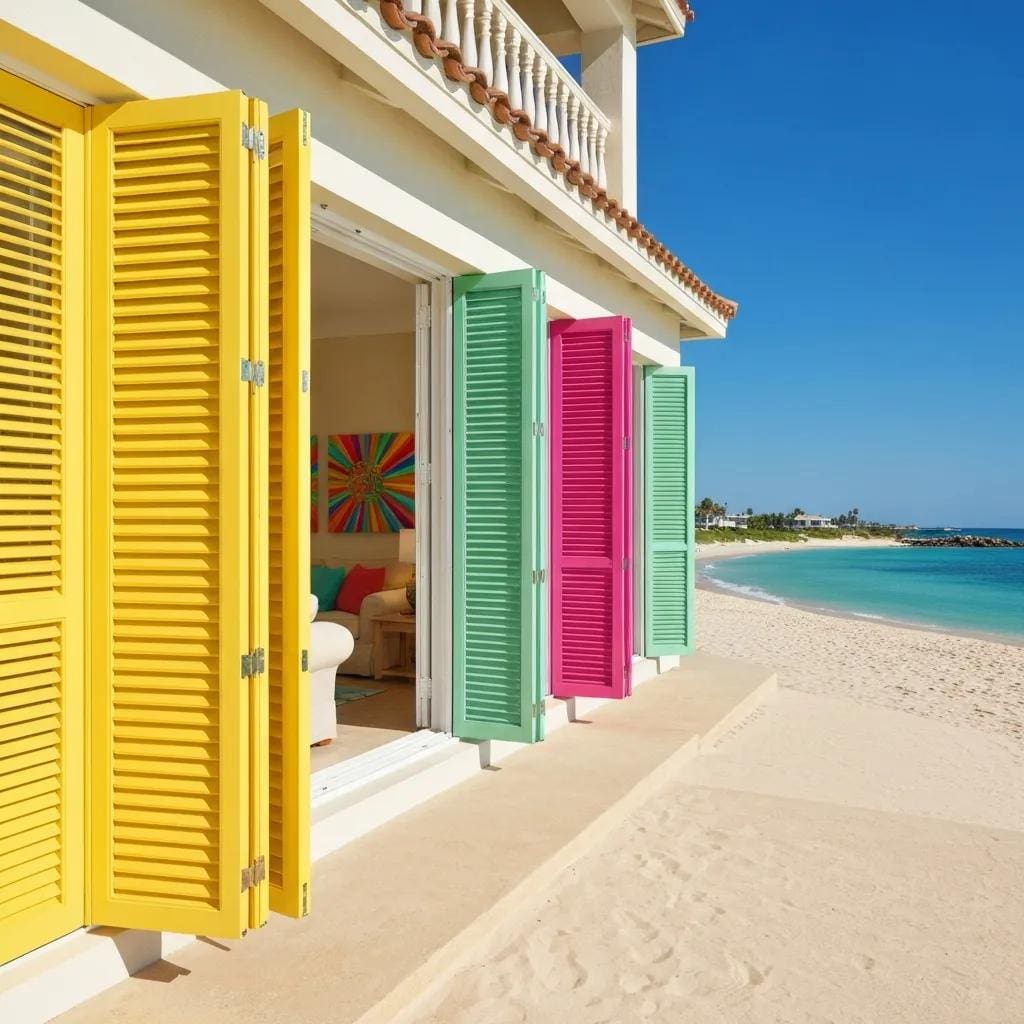
Accordion Shutters: Choosing Colors and Styles That Work for Coastal Homes
Accordion shutters pair simple operation with proven storm protection. Picking the right colors and profiles affects curb appeal, maintenance, and long-term performance—especially on the coast. This guide walks homeowners through how common color choices behave in salty, sunny climates, which residential styles fit different architectures, and how aesthetic decisions connect to finish systems, material performance, and installation quality. You’ll get practical selection criteria—UV exposure, salt-stain visibility, heat absorption, and architectural matching—plus how design choices change load distribution and ease of use. After comparing shutter types and trade-offs, we outline a homeowner decision flow and where professional estimates and cost planning fit. Read on to compare color trade-offs, match styles to common coastal homes, and learn the right questions to ask your installer so your shutters look great and perform as engineered.
What Are the Popular Color Options for Accordion Shutters?
Manufacturers typically offer a palette that balances neutral, low-maintenance tones with darker accents. Light colors—white, ivory, beige—reflect sunlight and make salt streaks less obvious. Mid-tone grays and bronze give contrast and hide dirt between cleanings. Color choices also imply finish decisions: powder-coat or anodized systems differ in UV stability and corrosion resistance, and that influences how often you’ll need to maintain the shutters. Knowing these attributes helps you prioritize durability while achieving a cohesive exterior—below we cover coastal recommendations and customization options.
Which Colors Are Best for Accordion Shutters in Coastal Homes?
On coastal properties, lighter neutrals are often the most practical: they show less salt staining and reduce heat build-up on metal surfaces. White and ivory reflect sunlight and ease maintenance, while beige and soft gray hide minor discoloration and suit classic seaside palettes. Dark bronze and deep grays give strong contrast and conceal small dents, but they absorb more heat and can make salt streaks more visible, increasing cleaning needs. Balance curb appeal with maintenance frequency, and consider siding, trim, and how exposed your property is to salt spray when choosing a color.
Can You Customize Accordion Shutter Colors to Match Your Home?
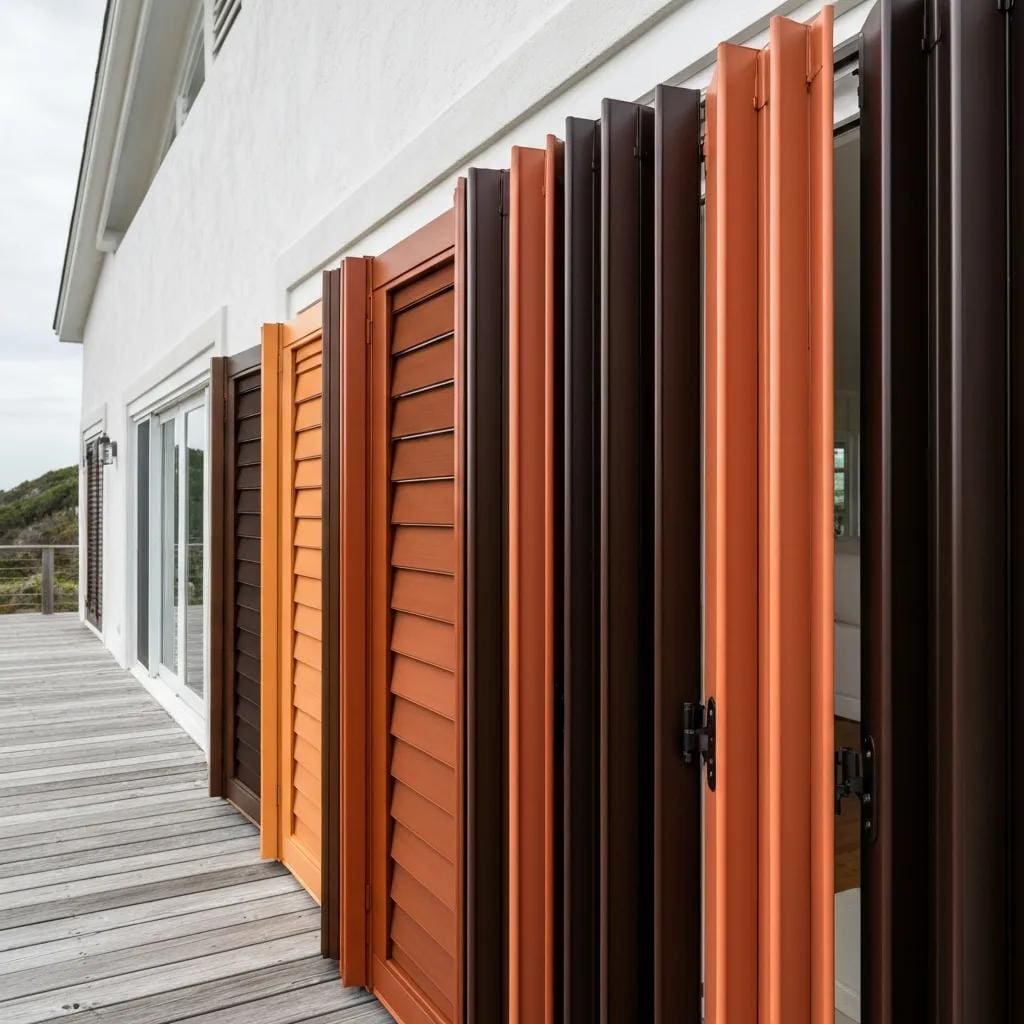
Yes—many manufacturers offer factory powder-coating or special-order finishes so shutters can match siding, trim, or accent colors. Factory-applied powder coat typically gives the best adhesion and warranty coverage; field painting is possible but can void warranties and offers less corrosion protection. Ask for color-match samples and confirm the finish system is rated for coastal use—marine-grade coatings and UV-stable pigments extend color life and reduce upkeep. Compare lead times and costs for custom colors versus standard options, and make color decisions early so finish and hardware meet both aesthetic and performance needs.
Different finishes and color choices produce predictable trade-offs for coastal durability and appearance:
What Styles of Accordion Shutters Are Available for Residential Use?
Residential accordion shutters come in styles from compact folding stacks to full-width continuous panels. Each affects the look when retracted and the behavior when deployed. Compact folding shutters stack neatly to one side and keep a low visual profile, while full-width panels offer seamless coverage for large openings but are more visible when open. Decorative profiles and stamped faces add architectural character, letting shutters blend with colonial, cottage, or modern homes without sacrificing storm ratings. Understand these visual and operational trade-offs to pick a shutter that complements your home and meets needs like storage footprint and deployment speed.
How Do Different Accordion Shutter Styles Enhance Home Appearance?
Profiles create distinct visual results: compact stacks stay nearly hidden, full-width panels make a stronger architectural statement, and decorative faces echo traditional shutters for historic homes. Compact folding shutters preserve sightlines and curb appeal because they take up minimal facade area when retracted—ideal if unobstructed views matter. Full-width panels convey strength and suit long window banks or sliding doors where visible hardware fits the design. Choose a style that respects window proportions and rooflines so the shutters enhance curb appeal both open and closed.
What Are the Key Features of Hurricane Accordion Shutter Designs?
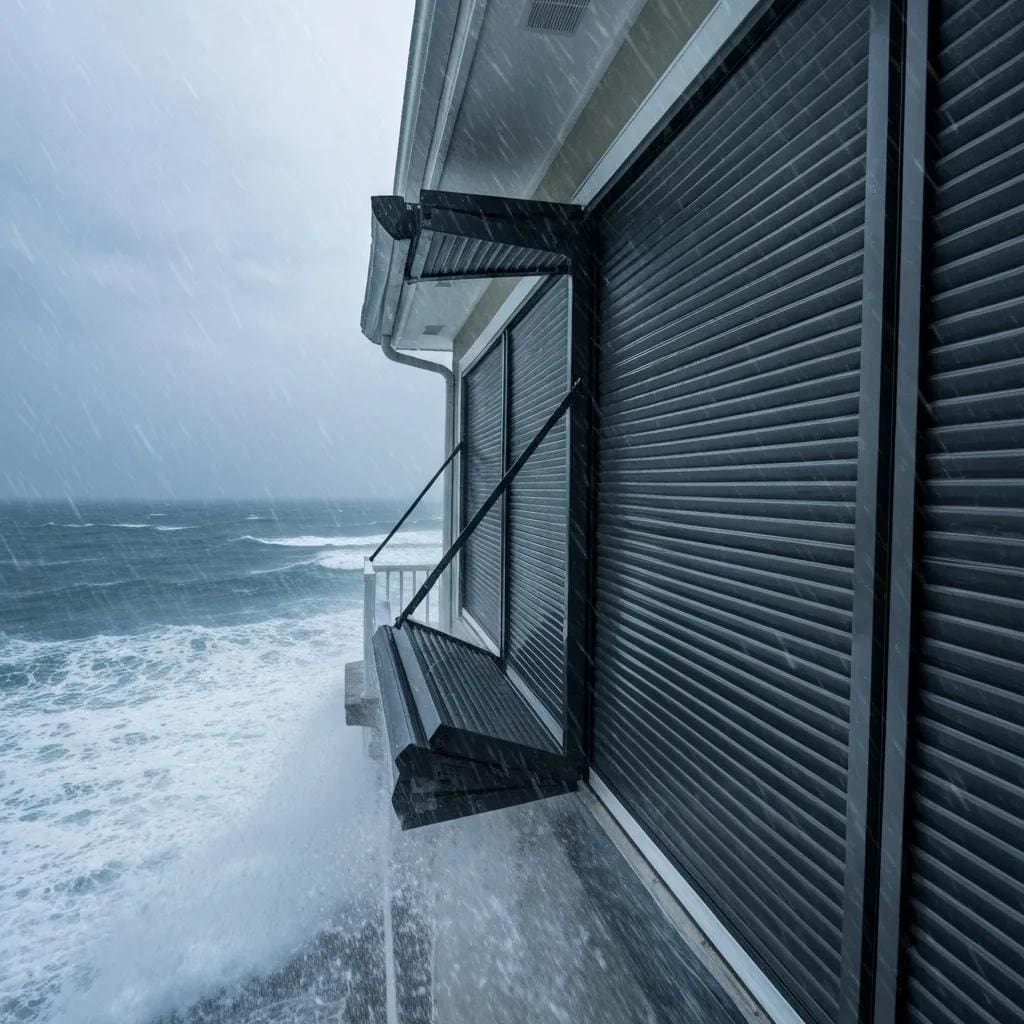
Hurricane-rated accordion shutters use thicker panels, reinforced track systems, and secure anchoring to resist wind-borne debris and uplift. Important design features include panel gauge, interlocking seams that distribute loads, heavy-duty tracks to prevent buckling, and locking mechanisms that hold under pressure. Fastener and hardware grades—especially corrosion-resistant stainless options—and compliance with codes such as the Florida Building Code determine suitability for high-wind coastal areas. Review these features to ensure shutters meet both aesthetic expectations and engineered performance requirements.
Quick selection notes on common residential styles:
- Compact folding styles stack tightly for minimal facade intrusion.
- Full-width panels deliver continuous protection for large openings and long runs.
- Decorative profiles add traditional or modern visual detail while remaining storm-rated.
How Do Accordion Shutter Colors and Styles Affect Hurricane Protection?
Color and style affect protection mainly through finish behavior, thermal cycling, and how loads move through panels and tracks. Darker colors absorb more solar heat, which can increase thermal expansion and stress paint adhesion over time; lighter tones reduce thermal stress but may show salt deposits more readily. Style matters structurally: full-width panels spread wind loads across multiple anchors, while narrower stacks rely on track and hinge strength at localized points. That’s why finish systems, material alloys, and installation quality matter as much as color and profile when assessing long-term protection.
What Materials and Finishes Improve Accordion Shutter Durability?
Aluminum alloys with corrosion-resistant treatments and quality powder-coat systems typically perform best near salt water; marine-grade coatings add further protection against salt spray. Powder-coat offers a thick, even film resistant to chipping and UV fade when made with UV-stable pigments, while anodizing creates a hard oxide layer that slows corrosion. Maintenance varies: powder-coat usually needs periodic rinsing to remove salt, while marine-grade coatings may reduce cleaning frequency but raise upfront cost. Choosing alloys and finishes rated for coastal conditions lowers lifecycle costs and preserves both appearance and structural strength.
How Does Installation Quality Influence Accordion Shutter Performance?
Accurate installation—precise track alignment, properly rated anchors, and corrosion-resistant fasteners—ensures shutters meet their tested hurricane ratings and avoid failure modes like track pull-out or panel buckling. Fastener choice matters: specifying 18-8 stainless steel minimizes galvanic corrosion at attachment points and keeps connections strong under repeated loads. Track alignment and anchor spacing determine how wind forces transfer into the building; misalignment concentrates stress and shortens service life. A code-compliant, engineered installation directly improves resistance to uplift and impact during severe storms.
In short: choose marine-grade finishes and 18-8 stainless hardware combined with engineered anchoring to maximize longevity and storm resilience.
What Are the Types of Accordion Storm Shutters and Their Benefits?
Accordion shutters are one option among roll-down, panel, and Bahama shutter systems—each has trade-offs in cost, convenience, and curb appeal. Accordion shutters excel at quick deployment and full coverage for large openings. Roll-down shutters offer automation and tight seals but cost more and change facade appearance. Removable panel shutters are economical but need storage and longer setup time. Bahama shutters provide shade plus storm protection and a distinctive coastal look but may not fit every architectural style. Comparing these options helps you pick the right system for each opening, budget, and aesthetic goal.
How Do Accordion Shutters Compare to Other Storm Shutter Types?
Accordion shutters give immediate full-coverage protection with no off-site storage and usually faster deployment than removable panels. Roll-down shutters deliver automated operation and excellent sealing but at higher cost and a different aesthetic. Panel shutters are cost-effective but require storage and more time to install. Bahama shutters enhance daylight control and curb appeal but don’t always provide the same continuous wind-load distribution as accordion or roll-down systems. Choose based on opening size, desired automation, storage needs, and visual priorities.
What Are the Advantages of Accordion Shutters for Large Openings?
Accordion shutters work well for wide spans because continuous tracks and interlocking panels transfer wind loads across many anchor points, reducing reliance on multiple removable panels. Their side-stacking operation requires no off-site storage and can usually be operated by a single person—handy for sliding doors and long window banks. They also simplify sealing and continuous weatherstripping, which helps maintain structural continuity under wind pressure. For homeowners with long openings who want quick deployment and full coverage, accordion shutters balance convenience with engineered performance.
Compare shutter types at a glance:
- Accordion Shutters: Fast, full-coverage deployment without storage
- Roll-Down Shutters: Automated operation and tight seals — higher cost
- Panel Shutters: Economical and lightweight but require storage
- Bahama Shutters: Shade plus storm protection with a distinctive look
How Can You Choose the Best Colors and Styles for Your Home?
Choosing color and style means weighing architectural fit, climate exposure, maintenance expectations, HOA rules, and resale value. Start by listing your home’s main colors—siding, trim, roof—and decide whether a discreet stack or a decorative profile will complement those elements. High salt exposure favors lighter, reflective finishes and marine-grade coatings; sheltered sites can lean toward darker contrasts for visual impact. Measure openings and match shutter style to operation needs to complete the decision flow, then get professional estimates and an installation plan.
What Factors Should Influence Your Accordion Shutter Color Choice?
Consider UV exposure, salt-stain visibility, your home’s color palette, local maintenance resources, and any HOA restrictions. UV-intense areas benefit from UV-stable pigments and lighter colors that reduce thermal cycling; heavy salt-spray zones favor finishes that rinse clean easily. Check HOA or historic-district rules early to avoid rework. Prioritize finishes and colors that fit your maintenance schedule and long-term preservation goals.
Use these practical decision points:
- Match shutters to primary trim for a cohesive facade
- Choose lighter colors where salt-spray and sun exposure are high
- Confirm HOA or neighborhood color guidelines before finalizing choices
How to Match Accordion Shutter Styles with Your Home’s Architecture?
Choose compact, low-profile stacks for contemporary and modern coastal homes where views matter, and opt for decorative profiles on historic or cottage-style residences that benefit from traditional detailing. Mid-century or minimalist homes often suit full-width panels in neutral tones that reinforce clean lines. Pay attention to window scale, roof pitch, and porch elements—aligning shutter rhythm with these features creates a cohesive facade that looks intentional. Prioritize concealment when you want unobstructed views and decorative impact when shutters are part of the home’s style statement.
Match examples to guide your selection:
- Victorian or traditional homes: decorative profiles that echo historic trim
- Modern coastal homes: compact stacks and neutral palettes to preserve views
- Beach cottages: light colors and simple profiles to complement relaxed lines
Where Can You Get Professional Help and Estimates for Accordion Shutters?
Yes—coastal specialists provide online cost tools, in-home measurements, engineered installations, and a clear path from estimate to maintenance. A reputable provider will offer a cost calculator for preliminary estimates based on opening size, shutter type, and finish, then follow up with an in-person measurement for a final quote. Expect site prep, structural anchoring with corrosion-resistant hardware, careful track alignment, and a final operational check with warranty documentation. Reviewing finish samples and asking targeted questions during the estimate helps ensure the installed system meets both aesthetic and hurricane-protection goals.
How Does the Accordion Shutter Cost Calculator Help You Plan?
A cost calculator turns your inputs—opening dimensions, chosen shutter type, and finish—into an estimated price range so you can compare options and prepare a realistic budget before an on-site visit. The tool is most accurate with precise measurements and notes about surface conditions; expect a follow-up site assessment to confirm structural details that affect final cost. Use the estimate for planning and expect adjustments for upgrades like marine-grade coatings or premium hardware. After sizing and budget planning, a professional installer will confirm recommendations during the measurement visit.
What Should You Expect During the Accordion Shutter Installation Process?
A professional install starts with a site assessment and measurement, followed by fabrication scheduling and a step-by-step installation: secure anchoring, track mounting, panel placement, and hardware setup. Installers should use corrosion-resistant fasteners—typically 18-8 stainless steel where appropriate—to protect attachment points and preserve structural integrity. You should see an on-site quality check verifying track alignment, panel operation, and locking engagement, plus a customer walkthrough showing deployment and maintenance. Confirm the installer provides warranty paperwork and clear maintenance instructions at project completion to minimize future adjustments.
For homeowners in coastal North and South Carolina seeking engineered hurricane protection, American Hurricane Shutters offers cost estimation tools, a transparent installation process, and prominent GET A FREE QUOTE options. Our goal is to educate homeowners about hurricane protection, provide free estimates to generate leads, and support existing customers with information and service.
Questions to ask installers when requesting an estimate:
- What finish systems do you recommend for high-salt environments?
- Which fastener and hardware grades do you use for anchoring?
- What is the expected timeline from measurement to final walkthrough?
These questions help confirm installer competence and ensure your final system meets both aesthetic and safety expectations.
- Confirm finish and coating recommendations: Ensures longevity in coastal conditions.
- Ask about hardware grade and anchoring method: Verifies structural integrity.
- Request a detailed timeline and warranty paperwork: Sets expectations for delivery and support.
Confirming these items completes the selection process and helps ensure your chosen color, style, and installation deliver the performance you expect.
Frequently Asked Questions
What maintenance is required for accordion shutters in coastal areas?
Coastal accordion shutters need routine care to stay reliable. Rinse shutters with fresh water regularly to remove salt deposits—salt accelerates corrosion if left on surfaces. Depending on the finish, a deeper cleaning every few months (and after major storms) is recommended. Inspect tracks and locks for debris or wear and lubricate components per the manufacturer’s instructions. Regular maintenance preserves appearance and ensures shutters operate properly when you need them most.
How do I know if my accordion shutters are hurricane-rated?
Check the manufacturer’s certification labels or paperwork to confirm hurricane ratings. Rated shutters typically meet local building codes—such as the Florida Building Code—and include reinforced tracks, heavier panel gauges, and secure locking mechanisms. If the documentation isn’t available, contact the manufacturer or a qualified installer to verify the shutters’ tested performance and compliance for your area.
Can accordion shutters be installed on any type of window or door?
Accordion shutters can be fitted to most windows and doors, including sliding glass doors, French doors, and large picture windows. Installation details vary with opening size and configuration, and the wall structure must be able to support anchors. There also needs to be room for the shutters to stack when open. A professional assessment will determine the best approach and ensure proper fit and function.
What is the average lifespan of accordion shutters?
Lifespan depends on materials, finish, and maintenance. High-quality aluminum shutters with proper marine-grade coatings can last 10–20 years or more in coastal environments with regular care. Exposure to salt spray, UV, and storm events affects longevity, so choosing durable finishes and following a maintenance plan are key to extending service life.
Are accordion shutters energy-efficient?
Accordion shutters can improve energy performance by adding an extra layer between your home and the outdoors. When closed, they reduce solar heat gain and can help keep interiors cooler in summer and warmer in cooler months. Overall energy impact depends on shutter quality, installation, and existing home insulation. Selecting energy-conscious finishes and ensuring proper installation maximizes these benefits.
What should I consider when choosing a professional installer for accordion shutters?
Look for installers with coastal experience, good reviews, and appropriate certifications. Ask for references and examples of local work. A qualified installer should provide a clear, itemized estimate with materials, labor, and warranty details, and be familiar with local building codes. Confirm they use corrosion-resistant hardware and engineered anchoring practices to ensure your shutters perform reliably through storms.
Conclusion
Choosing the right accordion shutters improves curb appeal and strengthens storm protection—when color, style, material, and installation are selected together. Understanding how finishes behave in coastal climates and matching shutter style to your home’s architecture lets you make decisions that look good and last. If you’re ready to protect your property, explore our range of coastal-ready accordion shutters and contact us for a personalized consultation and estimate to find the right solution for your home.