Protect Your Commercial Property: Practical Hurricane Solutions That Work
Robust commercial storm protection limits structural damage, keeps people and inventory safe, and helps businesses reopen faster after severe weather. This guide lays out practical, code-aware strategies for coastal properties—engineered shutter systems, impact-rated glazing, flood barriers, and construction choices that raise wind resistance and reduce downtime. Coastal North and South Carolina face higher hurricane and wind-load risk, so owners need tested materials, correct installation, and operational plans that cut damage and speed recovery. You’ll learn which solutions work best for storefronts, warehouses, and hotels, how to prepare buildings before hurricane season, what makes shutters durable and secure, and how construction and mitigation choices can lower insurance exposure and interruption. The article moves through shutter and impact-window comparisons, a step-by-step preparedness checklist, technical feature comparisons, material trade-offs, insurance and continuity implications, and how to find professional installation and maintenance in the region. Throughout, practical terms like commercial hurricane shutter types, hurricane preparedness for commercial properties, and commercial property storm protection tips are used to align recommendations with local code and resilience priorities.
Which Commercial Hurricane Protection Options Should Your Business Consider?
Commercial hurricane protection combines engineered products and operational practices that reduce wind and debris damage by protecting openings and strengthening vulnerable assemblies. These solutions form continuous barriers—shutters, panels, impact glazing, and screens—that resist projectiles, limit water intrusion, and reduce wind-driven pressure differentials that can fail roofs and doors. The benefit is straightforward: the right protections lower repair costs, protect occupants and contents, and shorten business interruption. Choice depends on opening size, deployment speed, security needs, and maintenance capacity. Below is a concise summary of top options and common commercial uses so owners can match performance to operational priorities.
Commercial owners commonly choose from these proven solutions:
- Roll-Down Shutters: Rapid deployment with motorized options for wide storefronts and loading bays.
- Accordion Shutters: Manual or semi-automatic protection that’s compact and suitable for narrow openings or historic façades.
- Storm Panels (Aluminum/Polycarbonate): Cost-effective, removable panels for seasonal coverage of windows and doors.
- Impact-Resistant Windows: Permanent glazing that resists penetration and reduces the need for external coverings.
Each solution balances protection level, deployment speed, and cost; a mixed approach often delivers the best resilience. The next section breaks down shutter types to help owners choose systems for storefronts, warehouses, and hospitality properties.
Which Types of Storm Shutters Work Best for Commercial Buildings?

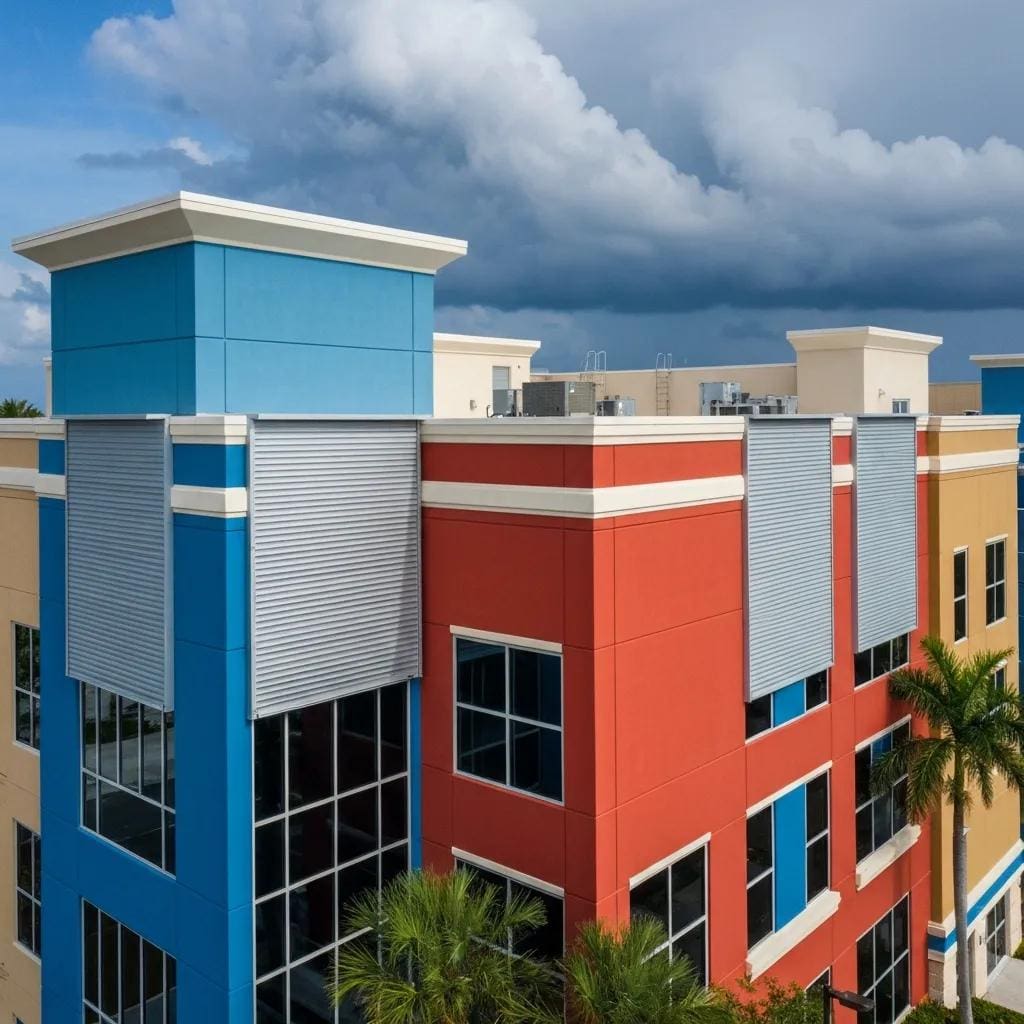
Choosing shutters for commercial properties depends on opening size, security requirements, and whether you want a permanent or seasonal solution. Roll-down shutters offer high wind ratings and come motorized for large storefronts, garages, and loading docks; their continuous aluminum slats and reinforced guides reduce deflection under load. Accordion shutters stow at the jamb and save headroom, making them a good fit for retail facades and office entries where manual deployment is acceptable. Storm panels—clear polycarbonate (Lexan) or aluminum—are a budget-friendly seasonal option for smaller windows and doorways. For owners who want daily aesthetics and permanent protection, impact-resistant windows with discrete shutters or screens deliver protection without changing the storefront look. Deciding between motorized and manual systems depends on staffing, deployment time, and storm frequency; larger operations often favor motorized roll-downs to reduce manual error and speed readiness.
How Do Impact-Resistant Windows Strengthen Commercial Storm Protection?
Impact-resistant windows provide a permanent first line of defense by combining laminated glass with reinforced framing that resists penetration and stays in place during debris impact. These systems help prevent envelope breaches that lead to interior pressurization and roof or door failures, and they reduce dependence on temporary coverings during daily operations. Impact glazing works best when paired with reinforced frames and proper anchorage, creating a continuous wind-resistant assembly that complements shutters and panels and lowers long-term mitigation costs. Maintenance is straightforward—inspect seals and frame anchors regularly—so impact windows are often the right choice for hotels, offices, and retail locations that need continuous protection without seasonal storage of panels. Understanding how impact glazing and shutters work together helps owners choose balanced solutions that meet both visual and resilience goals.
How Do You Prepare a Commercial Building for Hurricane Season?
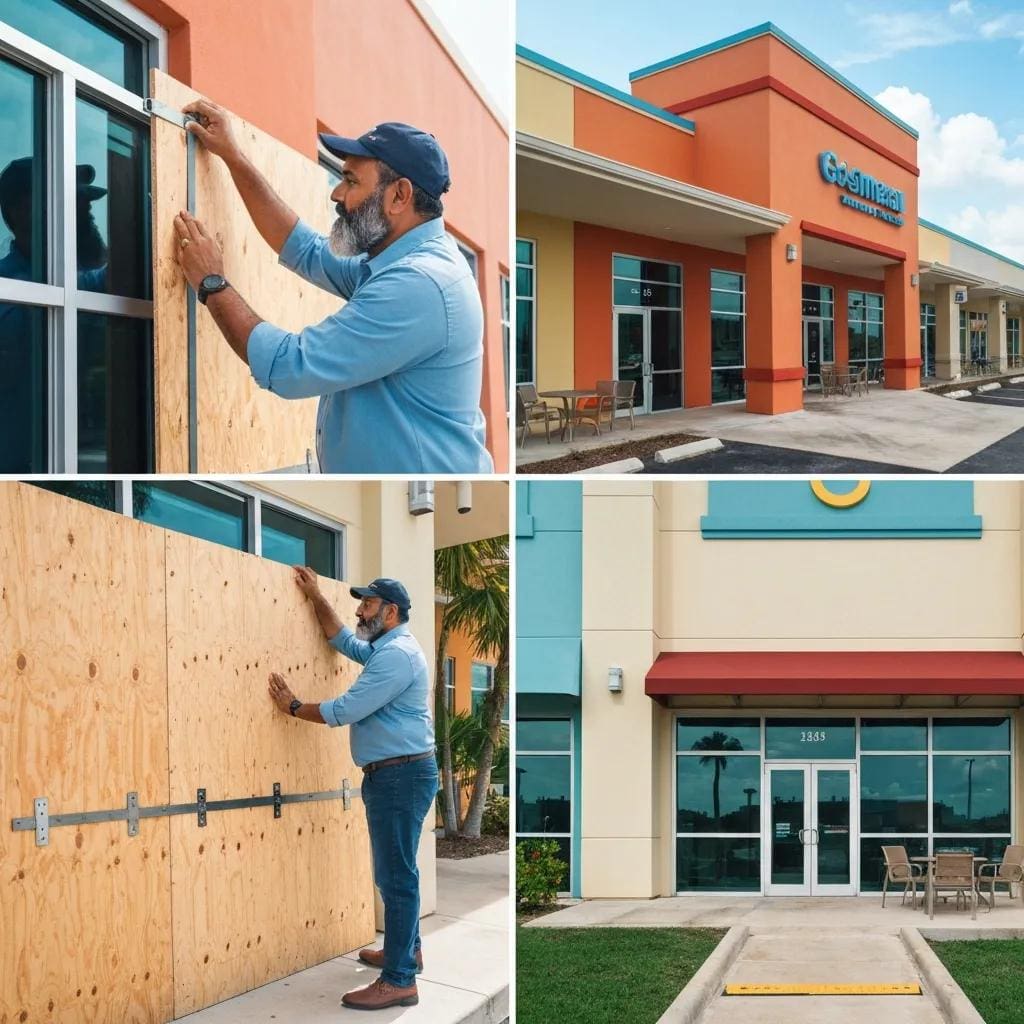
Preparing a commercial building for hurricane season means identifying vulnerabilities, securing openings and equipment, and putting clear operational procedures in place to reduce damage and downtime. Preparation addresses common failure modes—window and door breaches, unsecured rooftop units, and clogged drainage—before a storm hits. The payoff is measurable: fewer emergency repairs, faster reopening, and safer staff and customers. Below are prioritized steps to take in the pre-season window, with responsibilities and timelines for resilience upgrades and temporary protections.
Use this prioritized readiness checklist before hurricane season:
- Inspect and Repair Openings: Examine windows, doors, and frames for damage; schedule permanent upgrades or temporary protections.
- Secure Roof and Equipment: Anchor rooftop units, inspect flashing and roof penetrations, and remove loose debris from roof areas.
- Clear Drainage and Pumps: Clean gutters, downspouts, and drains; test backup sumps and dewatering pumps.
- Inventory and Protect Assets: Move critical inventory off low floors, protect electronics, and back up data systems.
- Staff Roles & Emergency Communication: Assign responsibilities, test notification systems, and prepare vendor contact lists.
Schedule these tasks on a seasonal timeline—inspections and repairs about three months out, ordering shutters or panels two months out, and final staging one week before forecasted storms—to keep readiness predictable. The next subsection explains essential plan elements that minimize downtime and support orderly recovery.
What Steps Should a Commercial Hurricane Preparedness Plan Include?
Start with a documented facility inspection to spot weak points in glazing, doors, rooftop equipment, and flood-prone areas. Build a remediation schedule that prioritizes high-risk items and tracks repairs so permanent measures (impact glazing, roll-down shutters) and temporary solutions (storm panels, sandbag staging) are available when needed. Test emergency power—generators and fuel chains—so refrigeration, security, and critical systems stay online. Prearranged vendor agreements speed post-storm recovery. Regular staff drills and a clear chain of command reduce confusion during deployment and protect life safety. Keep records—photos, receipts, inspection reports—to support insurance mitigation claims. These steps move your business from reactive to proactive and cut operational losses when a storm approaches.
How Does a Hurricane Emergency Plan Improve Property Resilience?
A formal hurricane emergency plan clarifies who does what, when, and how—reducing decision delays during high-stress events. Core elements include an up-to-date contact roster, evacuation and shelter procedures, asset protection protocols, data backup strategies, and a prioritized restoration checklist for reopening. Regular testing and tabletop exercises reveal communication and logistics gaps so you can refine the plan and build staff confidence. The plan should also define triggers—wind-speed forecasts, evacuation orders, or official warnings—that prompt shutter deployment, generator startup, or facility closure for consistent execution. Linking the plan to insurance documentation and vendor contracts strengthens claims and speeds repairs after the storm.
What Should You Look for in Commercial Hurricane Shutters?
Commercial hurricane shutters combine material strength, certified wind and debris ratings, and secure fastening systems to protect openings during storms. They form a continuous barrier—aluminum slats, reinforced tracks, polycarbonate panels, or heavy-duty screens—that resists impact and prevents pressure-driven failures, reducing interior damage and repair costs. Benefits include safer tenants and staff, improved security outside storm events, possible insurance credits, and faster recovery when installations are documented correctly. Below we compare common shutter systems by material, protection level, deployment ease, and suitability to help owners prioritize by function and budget.
Commercial shutters provide several core benefits:
- High Wind & Debris Protection: Rated systems stop projectiles and limit envelope breach.
- Improved Security: Shutters deter break-ins and protect assets when businesses are closed.
- Faster Recovery: Preventing damage reduces repair time and business interruption.
- Insurance & Mitigation Value: Documented installations can support wind-mitigation credits.
These benefits are most reliable when shutters use corrosion-resistant materials and are installed with industry-standard fasteners and anchors; the table below compares typical shutter types and attributes.
Roll-down systems and impact glazing offer the strongest continuous protection for commercial façades, while panels and screens are useful as seasonal or supplemental measures. The next subsection contrasts roll-down and accordion systems for common commercial needs.
Roll-Down vs. Accordion Shutters: Which Fits Your Facility?
Both systems protect openings but differ in deployment, footprint, and lifecycle cost. Roll-down shutters use continuous aluminum slats on tracks and are frequently motorized, enabling quick, single-operator deployment for large storefronts, loading docks, and garage openings; their seals and automated drives provide high reliability at a higher upfront cost. Accordion shutters fold away at the jamb and are typically manual or semi-automatic, offering a lower-cost option with minimal head-box requirements—ideal for older façades and narrow storefronts. Accordion systems are easier to maintain but require more manual labor, whereas motorized roll-downs reduce human error and speed readiness. For sites where speed and wide coverage matter—warehouses, grocery stores, and hotel service entrances—motorized roll-downs often deliver the best balance of protection and efficiency.
Which Materials and Security Features Improve Shutter Durability?
Material choice and fastening systems drive shutter longevity, especially in coastal settings where corrosion and cyclic loading accelerate wear. Aluminum alloys for slats and panels offer a strong strength-to-weight balance; polycarbonate (Lexan) panels give transparent impact resistance with good UV stability. Use corrosion-resistant fasteners and hardware—316 stainless steel is recommended near saltwater—to preserve anchorage strength. Security features such as reinforced guides, multi-point locks, motor drives with fail-safe brakes, and tamper-resistant hardware boost resistance to forced entry and operational failure. Routine inspection, lubrication of moving parts, and scheduled maintenance extend service life and help ensure systems perform to their ratings when storms arrive.
Installation quality and correct hardware choices are as important as visible materials. Proper installation with recommended fasteners preserves rated wind performance and cuts long-term maintenance needs.
How Does Hurricane-Resistant Commercial Construction Protect Your Property?
Hurricane-resistant commercial construction pairs resilient materials and assemblies—impact glazing, reinforced concrete, engineered steel frames, and elevated slabs—to reduce structural failure from high winds and storm surge. These choices increase a building’s capacity to resist lateral loads, avoid envelope breach, and prevent progressive collapse, which together limit repair scope and speed re-occupancy. Long-term gains include stronger asset protection, lower lifecycle repair costs, and clearer insurance treatment when engineered solutions are documented. Below is a comparison of common materials and assemblies so owners can weigh performance, installation complexity, and typical commercial uses.
Key construction strategies for hurricane resistance include:
- Reinforced concrete and engineered steel framing to resist lateral wind loads.
- Impact glazing and reinforced frames to protect openings without external panels.
- Elevated ground-floor design and flood-resistant materials in surge-prone zones.
Understanding these options helps owners plan upgrades that align with operational goals and permitting requirements; the table below maps materials to wind resistance and suitable applications.
Combining impact glazing with reinforced framing and correct anchorage produces robust assemblies for coastal commercial properties. Next we cover how building codes affect product selection and installation.
Which Building Materials Best Support Commercial Hurricane Resistance?
Select materials by balancing wind resistance, cost, and constructability. Impact glazing preserves storefront aesthetics while delivering high performance; reinforced concrete provides mass and ductility for foundations and lower structural systems; steel framing offers engineered connections and predictable lateral performance for taller buildings. Polycarbonate panels are lightweight, highly impact-resistant options for temporary coverage. Each material fits certain applications—concrete for ground-bearing and flood resilience, steel for taller engineered structures, and impact glazing for permanent storefront protection. Choose materials based on wind loads, exposure category, and a continuous load-path approach so assemblies act together under storm forces.
How Do Local Codes and the Florida Building Code Affect Storm Protection Choices?
Local building codes and the Florida Building Code set performance requirements for testing, wind ratings, and installation methods and require documentation to verify compliance. They shape which shutters, glazing, and anchorage are acceptable by specifying design pressures, testing standards, and product certification—so confirm systems are tested to the applicable code criteria. Compliance affects permitting, insurability, and liability because certified installations show a building meets recognized safety standards. Work with design professionals and installers who understand local NC/SC code adoption to ensure products are specified and installed to meet performance expectations and permitting needs.
Can Storm Protection Lower Insurance Costs and Business Risk?
Yes—commercial storm protection can improve insurance outcomes and reduce business risk by lowering the likelihood and severity of losses. Verified measures like impact glazing, permanent shutters, and roof anchorage can qualify properties for wind-mitigation credits or more favorable underwriting. The business benefits include lower expected annual loss, faster reopening after events, and greater continuity. The table below maps common measures to likely insurance and downtime outcomes so owners can prioritize investments.
Practical mapping of mitigation measures to insurance and continuity outcomes:
What Insurance Benefits Can Businesses Expect from Storm Protection?
Insurers commonly reward verifiable mitigation steps—certified impact glazing, documented shutter installs, and roof uplift reinforcements—with underwriting credits or premium adjustments, though exact benefits vary by carrier and region. To capture savings, keep product certifications, installation records, and inspection reports that show code and testing compliance. Present a clear mitigation portfolio to underwriters—photos, installation dates, and maintenance logs—to improve the chance of favorable treatment. A documented preventive maintenance program and installation by qualified professionals also strengthens mitigation claims and smooths renewal inspections.
How Does Storm Protection Help Business Continuity?
Storm protection helps continuity by preventing envelope breach and limiting the water and debris damage that cause the longest interruptions. Properties with permanent impact glazing and roll-down shutters usually reopen faster because structural and interior systems remain intact, while window failures often lead to extensive water damage and longer remediation. Complement physical protections with backup power, offsite data backups, and prearranged recovery vendors to keep critical systems running after a storm. Combining physical mitigation with continuity planning reduces the total expected cost of an event and speeds recovery.
Where Do You Find Professional Installation and Maintenance for Commercial Systems?
Professional installation and ongoing maintenance ensure rated products perform as tested. Correct fasteners, anchorage patterns, and sealing details are essential to meet wind and debris ratings. Experienced installers follow manufacturer specs, use corrosion-resistant hardware like 316 stainless steel when appropriate, and provide documentation that supports permitting and insurance. When vetting installers, look for commercial project experience, references, warranty paperwork, and familiarity with local permitting and testing requirements. The checklist below helps owners select qualified partners and protect long-term system performance.
Installer vetting checklist:
- Confirm commercial project experience and documented installations.
- Verify installers follow manufacturer details and use appropriate fasteners and anchors.
- Request inspection reports, written warranties, and scheduled maintenance plans.
Why Is Professional Installation Essential for Commercial Shutters?
Even top-quality shutters fail if anchorage or fasteners are wrong or if seals and tracks are misaligned—creating weak points under wind load. Proper installation verifies substrate strength, uses recommended fasteners and anchors, maintains continuous load paths, and integrates waterproofing at penetrations—tasks that require structural knowledge and product-specific expertise. Installers should document work with photos, torque records, and part numbers so owners can provide proof to permitting authorities and insurers. Quality installation lowers operational failure risk and preserves the system’s life-cycle value.
How Does Regional Experience in Coastal NC and SC Improve Outcomes?
Regional knowledge matters because coastal North and South Carolina have distinct wind patterns, surge zones, and permitting practices that affect product choice and installation details. Local installers familiar with exposure categories, seasonal surge behavior, and salt-corrosion impacts will specify corrosion-resistant fasteners, protective coatings, and elevation choices suited to your site. Working with providers who know the regional permitting environment speeds approvals and ensures installations meet local code expectations. For commercial owners in coastal NC/SC, choosing a regional installer reduces uncertainty and aligns protection measures with both weather risk and administrative requirements.
American Hurricane Shutters offers engineered hurricane protection solutions for commercial and residential properties across coastal North and South Carolina. We provide free estimates and a cost calculator to help owners compare options. Our regional service area includes Wilmington, Myrtle Beach, Oak Island, Topsail, New Bern, and Pawleys Island, and we emphasize professional installation with materials and hardware suited to coastal conditions. When you’re ready to evaluate solutions, request a free estimate and use the cost calculator to clarify budget and timelines for storefronts, warehouses, or hospitality upgrades.
- Request a free estimate to define scope and documented installation plans.
- Use a cost calculator to compare options and budget investments against mitigation benefits.
- Confirm regional experience so installation and permits align with local codes.
These steps connect technical choices with procurement and help owners capture insurance and resilience benefits efficiently.
Frequently Asked Questions
Why is regular maintenance important for hurricane protection systems?
Routine maintenance keeps systems reliable. Weather exposure, corrosion, and mechanical wear can degrade components over time—misaligned tracks, worn seals, and rusted fasteners all reduce performance. Regular inspections catch issues early so you can repair or replace parts before a storm, extending system life, lowering repair costs, and ensuring the protection works when you need it most.
How can businesses assess their hurricane risk?
Assess risk by looking at location, historical storm activity, and building characteristics. Coastal proximity and flood-prone areas increase exposure. Review local weather records, consult meteorological services, and perform a building vulnerability assessment to identify weak points in materials and layout. That assessment informs which protective measures to prioritize.
What role do insurance policies play in hurricane preparedness?
Insurance provides financial protection but varies in wind and flood coverage, limits, and deductibles. Review policies to understand exclusions and consider mitigation measures that insurers recognize—like impact windows and shutters—to improve underwriting terms. Documenting installations and maintenance helps support mitigation credits and smooth claims after an event.
What are the advantages of impact-resistant materials in construction?
Impact-resistant materials—reinforced concrete, impact glazing, and durable framing—improve structural integrity and lower damage from flying debris and high winds. They help keep the building envelope intact during storms, reducing water intrusion and interior damage. Over time, these materials can cut repair costs, improve insurance treatment, and boost tenant confidence in the property’s resilience.
How can businesses ensure compliance with local hurricane codes?
Learn the local code requirements—such as adopted sections of the Florida Building Code or regional equivalents—and work with licensed architects, engineers, and installers experienced in hurricane-resistant design. Verify that products are code-certified and keep documentation of tests, permits, and inspections to show compliance for permitting and insurance needs.
What should a business include in its hurricane emergency response plan?
A complete plan should cover evacuation procedures and safe areas, asset protection steps (securing inventory and equipment), emergency contacts for services and vendors, and communication protocols for staff and customers. Include data backup procedures, generator plans, and a prioritized restoration checklist. Regular training and drills ensure everyone understands their role and reduces disruption during an event.
Conclusion
Effective hurricane protection protects people, preserves assets, and speeds recovery for commercial properties. By combining the right shutters, impact-resistant glazing, construction choices, and preparedness processes—and by working with experienced local professionals—you can reduce repair costs, limit downtime, and improve insurance outcomes. Ready to secure your property? Explore our premium hurricane protection options and get started with a free estimate today.