

Roll‑Down Hurricane Shutters — Real Customer Reviews and Practical Insights for Homeowners & Businesses
Roll‑down hurricane shutters are retractable systems that unroll from a housing box above a window or door to protect openings from wind, rain, and flying debris. This page gathers real customer feedback on installation, durability, cost versus value, and day‑to‑day use so homeowners and business owners can make smarter choices based on lived experience. Coastal residents especially look to roll‑down shutters for reliable storm protection, added security, and energy benefits. Here you’ll learn how these systems work, what to expect during installation, how they perform in actual storms, routine maintenance needs, and how customers judge long‑term value and insurance impacts. We also compare motorized and manual options and highlight extra perks like noise reduction and energy savings. Relevant search phrases — roll down shutters installation guide, customer experiences with hurricane shutters, roll down shutter cost and value reviews — appear naturally to help you find the right information.
What Are Roll‑Down Hurricane Shutters and Why Do Customers Choose Them?
Roll‑down shutters use interlocking aluminum slats that travel vertically in guide rails from a protective box, forming a continuous barrier that resists impact and wind pressure. People pick them for storm protection, quick operation, and extra security—especially when a motorized option lets you deploy the system in seconds. The design combines sturdy slat profiles, secure locking, and dependable mounting to close off vulnerable openings quickly when weather threatens.
Below are the top reasons customers tell us they choose roll‑down shutters.
- Storm protection: creates an impact‑resistant shield that reduces broken glass and interior water intrusion.
- Security and privacy: acts as a visible deterrent to break‑ins and blocks sightlines when closed.
- Energy efficiency and comfort: lowers solar heat gain and drafts, helping stabilize indoor temperatures.
Most customers say the mix of protection and convenience is decisive. Understanding how shutters work helps you choose the right features. If you’re budgeting, a local installer or our cost calculator can clarify options and estimates; American Hurricane Shutters serves coastal NC and SC and offers product pages and free estimate tools to guide your decision. This quick overview sets the stage for a closer look at how shutters protect buildings.
How Do Roll‑Down Shutters Protect Homes and Businesses?
Roll‑down shutters form a reinforced surface over glazed openings that absorbs and spreads wind loads and impact forces into the frame and surrounding wall. The slats, guide rails, housing box, and locking hardware work together so loads transfer to the building structure rather than the glass. Customers report that installations tied into framing and compliant with code dramatically reduce storm damage, and many choose certified products and careful installation for that reason. Knowing these mechanics explains why homeowners in hurricane zones prioritize tested products and quality installation.
Reviewers frequently say protection depends on correct sizing, mounting, and anchoring, which makes installation quality a recurring topic in feedback. That naturally leads to how product choices—manual versus motorized—shape everyday use and risk management.
What Types of Roll‑Down Shutters Are Available: Motorized vs. Manual?
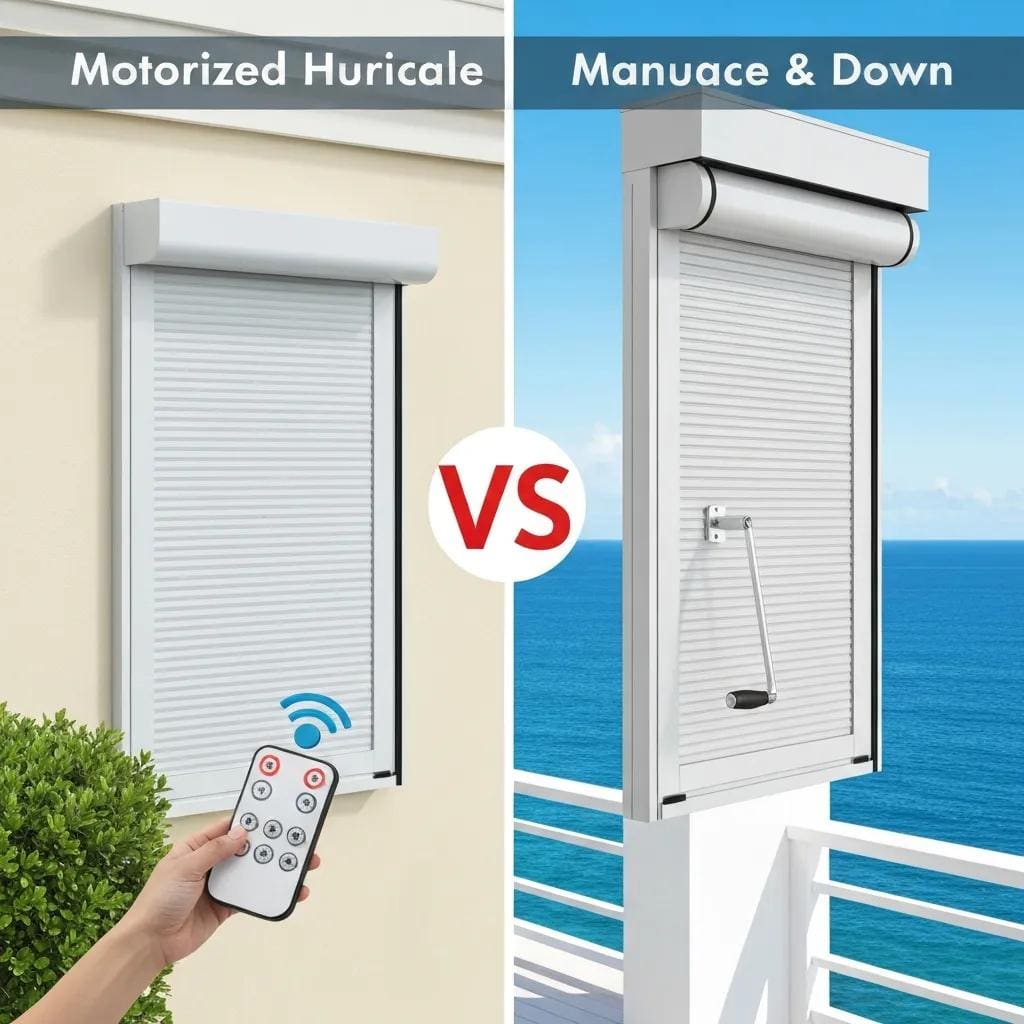
Roll‑down shutters are available in motorized and manual (pull‑down or hand‑crank) versions, each with trade‑offs customers often mention. Motorized systems give fast, one‑button deployment and can tie into home automation—useful for people with accessibility needs or frequent storm alerts. Manual shutters are simpler and less expensive, with fewer electronic parts to service, so many buyers pick them for secondary buildings or tighter budgets. Customers note motorized units need occasional motor checks but offer unmatched convenience, while manual units are valued for rugged reliability when properly used.
When choosing, weigh how often you’ll use the shutters, whether you want automation, and how comfortable you are with maintenance. Many customers also recommend confirming motor type, backup power, and ease of manual override before you buy. That comparison sets expectations for installation and long‑term satisfaction.
What Do Customers Say About Roll‑Down Shutter Installation Experiences?

Customers judge installations by timeliness, workmanship, and how well crews communicate about fit, finish, and warranties. Reviews show higher satisfaction when projects start with a clear scope, accurate measurements, and a reliable schedule. Homeowners appreciate crews that protect landscaping, leave the site clean, and hand over thorough maintenance documentation. The balance between efficient work and careful quality checks is a common thread in customer comments.
Installation impressions affect perceived value and confidence in ongoing performance, and they shape expectations around how long installation takes and how the crew communicates during the job.
How Professional and Efficient Is the Installation Process?
A typical install includes site measurement, product selection, prepping mounting surfaces, attaching guides and housing, and final testing. Customers say the process feels predictable when communication is clear. Smaller single‑family jobs can often finish in a day or two, while larger projects may be staged over several days. Installers who provide an operation walkthrough, maintenance tips, and warranty details leave customers feeling informed and confident. Clear pre‑install instructions about access, disruptions, and schedule updates greatly improve customer satisfaction.
Customers stress that responsive aftercare—fast follow‑up, quick adjustments, and transparent warranty handling—matters as much as hardware quality for long‑term happiness.
What Are Common Customer Impressions of Installation Support?
Post‑install service comments fall into three patterns: clarity of warranty and care instructions, responsiveness to service requests, and availability of routine maintenance guidance. Buyers appreciate installers who explain lubrication schedules, motor check routines, and basic troubleshooting at handover because those details reduce uncertainty later. When installers answer follow‑up questions quickly, customers are likelier to recommend them. Slow or unclear support can leave a negative impression even after a clean installation.
These observations reinforce a simple tip: ask installers about typical response times and the documentation you’ll receive before you sign a contract.
How Do Customers Rate the Durability and Storm Performance of Roll‑Down Shutters?
When installed correctly, aluminum roll‑down shutters protect openings during named storms and block debris and wind‑driven rain—this is what customers report most often. Long‑term durability depends on routine maintenance, correct installation, and choosing slat thickness and profiles that match local wind loads. Owners who follow a regular care routine—cleaning slats, checking guides, and inspecting motors—tend to see fewer mechanical problems and longer service life. That link between upkeep and longevity appears repeatedly in reviews.
Customer stories about storm performance often motivate maintenance habits: after hearing how a neighbor’s shutters held up, many owners adopt recommended care to keep their systems ready.
What Real‑World Storm Protection Feedback Do Customers Provide?
Customers share examples where roll‑down shutters prevented window breaches and reduced interior water intrusion during severe weather, citing cases where shutters took impacts that would have shattered glass. Many describe the peace of mind that comes from surviving a storm without interior damage. A smaller number of reports note limits—such as localized frame deformation in extreme cases—reminding buyers that shutters reduce risk but don’t guarantee zero damage in every scenario. These real‑world accounts help set reasonable expectations for performance.
Those positive storm stories often lead owners to schedule regular checks and occasional professional servicing to keep protection reliable.
How Do Customers Describe Maintenance and Longevity of Their Shutters?
Typical maintenance includes periodic cleaning of slats and guides, lubricating moving parts, and checking motor health on powered units—usually annually or after major storms. Owners who keep a simple maintenance routine report fewer sticking issues and smoother operation; neglected systems sometimes need guide realignment or motor work. Reviewers commonly estimate that aluminum roll‑down shutters can work well for 20 years or more with proper care, and they point out wear points like seals, guide edges, and motor brushes that benefit from inspection. These proactive maintenance stories encourage new buyers to budget routine checks to protect longevity.
Regular upkeep also supports warranty terms and ensures consistent performance when storms arrive.
What Benefits Do Customers Highlight Beyond Storm Protection?
Beyond storm safety, customers frequently mention energy savings, reduced noise, better privacy, and a stronger sense of security. Coastal homeowners often report lower cooling loads in summer when shutters block direct sun, and some note noticeably quieter interiors when shutters are closed during storms or at night. Security stories focus on shutters as both a visible deterrent and a physical barrier. These extra benefits often tip the balance for buyers who want a multi‑purpose upgrade that improves daily comfort as well as storm readiness.
Customer descriptions of these secondary benefits typically include practical examples that help others picture everyday advantages of installing roll‑down shutters.
How Do Roll‑Down Shutters Improve Energy Efficiency and Noise Reduction?
Shutters cut heat gain by shading windows and reducing convective drafts around frames, which can lower AC runtime and stabilize indoor temperatures in hot climates. Customers report anecdotal HVAC improvements and steadier inside temps when shutters stay closed during peak sun hours, contributing to perceived energy savings. Noise reduction comes from the added mass and air gap the shutters create, which helps muffle exterior sounds and improve sleep or daytime quiet. These benefits align with customer observations, though exact savings vary by home construction and shutter setup.
To summarize customer reports, the table below compares common energy and noise outcomes observed after installation.
These comparisons show consistent qualitative gains reported by buyers and encourage considering comfort and efficiency alongside storm protection.
What Security and Privacy Advantages Do Users Experience?
Customers describe roll‑down shutters as both passive and active security: passive because a closed shutter visibly blocks access, and active when locking hardware prevents forced entry attempts. Many value the overnight privacy shutters provide and appreciate being able to fully block views into living spaces. Some owners say the added sense of security reduces anxiety about break‑ins, especially when shutters are paired with solid locks and robust mountings. These security and privacy observations often influence choices around materials and locking hardware during purchase.
These reported advantages frequently guide material and locking selections, which leads naturally into cost and value considerations.
How Do Customers Evaluate the Cost and Overall Value of Roll‑Down Hurricane Shutters?
Customers weigh upfront purchase and installation, ongoing maintenance, insurance premium changes, and resale value when judging overall worth. Many see shutters as an investment in risk reduction and home resilience, often pointing to insurance savings and better marketability as long‑term benefits. Homeowners who used vendor cost tools or calculators found them helpful for comparing scenarios and estimating payback timelines. A clear cost‑benefit view helps buyers decide if roll‑down shutters fit their risk profile and budget.
The table below highlights common cost elements customers consider when evaluating value.
Customers often cite insurance savings and avoided repair costs as central to the value proposition and recommend checking with your insurer for exact discounts.
Are Roll‑Down Shutters Worth the Cost According to Customers?
Many customers say “yes,” especially in coastal areas with frequent storm risk or for properties with high‑value windows. Positive reviews typically come from owners who avoided damage during storms or who received insurance discounts that lowered net cost. People in lower‑risk areas or on tight budgets sometimes consider cheaper options until risk justifies the investment. Overall sentiment favors shutters when storm frequency and potential repair costs make the upfront spend reasonable.
If you’re weighing worth, run personalized estimates and scenario planning to see if insurance savings and avoided repairs line up with your financial goals.
How Do Customers Benefit from Insurance Savings and Increased Home Value?
Customers report insurers may offer premium reductions for documented hurricane protection upgrades like roll‑down shutters, which can help offset ownership costs. Some buyers also say permanent, certified shutters are attractive to buyers in hurricane markets and can support resale value. Customers recommend getting written documentation of installation and product specs for insurers and appraisers. Exact savings vary by policy and region, but insurance incentives and resale advantages often form an important part of the value story.
Before you buy, confirm expected insurance treatment and keep thorough installation records to capture potential savings and appraisal benefits.
What Should Buyers Know When Choosing Roll‑Down Hurricane Shutters?
Evaluate operational mode (motorized vs. manual), slat profile and material, guide and locking systems, local code compliance, and installer reputation. Key factors include how often you’ll use the shutters, desired automation, budget, and local wind‑load severity. Many buyers use checklists to compare options and ask installers specific questions about warranties, maintenance, and code documentation. Addressing these items up front helps match product choice to performance expectations and long‑term satisfaction.
Use this short checklist to guide conversations with providers and installers before you commit.
- Decide operational mode: motorized for convenience, manual for simplicity and lower cost.
- Confirm material and slat profile: verify aluminum grade and slat thickness meet local wind‑load needs.
- Verify installer credentials and post‑install support: ask about documentation, maintenance guidance, and expected response times.
How Do Customers Compare Motorized and Manual Options?
Customers balance convenience against simplicity when choosing motorized or manual shutters. Motorized units offer rapid deployment and smart‑home integration, while manual units are usually less expensive and simpler to maintain. Those with mobility concerns or frequent storm alerts often prefer motorized systems; others favor manual shutters for durability and lower service needs. Customers also stress confirming backup power and easy manual override for motorized systems to ensure operation during outages. These trade‑offs help buyers pick a solution that fits daily routines and maintenance comfort.
Knowing these differences helps you ask installers for motor specs, backup options, and straightforward maintenance plans.
What Customization and Material Choices Do Customers Recommend?
Customers suggest prioritizing corrosion‑resistant aluminum finishes, color‑matching options, and slat profiles sized for local wind loads—custom fit and finish both improve function and curb appeal. Many reviews highlight that insulation choices and tighter seals boost energy performance, and reliable motor brands reduce service incidents in powered systems. Ask installers about paint warranties, powder‑coat longevity, and available slat profiles to match both appearance and performance goals. When you’re ready, request written specs, maintenance guidance, and formal estimates so you can compare options clearly and set expectations.
Requesting written specifications and a maintenance plan helps lock in the performance you expect.
Call to Action and Next Steps
If you’d like a personalized estimate or want to compare roll‑down shutter configurations for your coastal property, American Hurricane Shutters offers free estimates and a cost calculator to help homeowners and businesses evaluate options and projected savings. Contact info for Wilmington, Morehead City, and Myrtle Beach is available through our local channels—call or email to schedule an estimate. Using a cost calculator and consulting a local installer turns the customer insights here into a concrete plan tailored to your property, budget, and local code. Take the next step to assess risk, expected performance, and long‑term value for your location.
Frequently Asked Questions
What factors should I consider when choosing the right roll‑down hurricane shutters for my home?
Consider whether you want motorized or manual operation, the quality of materials, the slat profile, and local building codes. Think about your budget, how often you’ll use the shutters, and local wind severity. Also check installer reputation and post‑install support. A careful review of these items will help ensure the shutters meet your expectations for protection and longevity.
How do roll‑down hurricane shutters affect home insurance premiums?
Many homeowners report lower insurance premiums after installing roll‑down shutters. Insurers often offer discounts for documented hurricane protection upgrades because the shutters reduce storm damage risk. To capture possible savings, get written documentation of the installation and product specs for your insurer. Savings vary by policy and region, so check with your provider for specifics.
What maintenance is required for roll‑down hurricane shutters?
Maintenance usually includes cleaning slats and guides, lubricating moving parts, and checking motors on powered units—typically annually or after major storms. Homeowners who stick to a simple maintenance schedule report smoother operation and fewer service calls, so regular care is an important part of preserving performance and warranty coverage.
Can roll‑down hurricane shutters provide benefits beyond storm protection?
Yes. Customers often see improved energy efficiency, reduced noise, and greater privacy and security. Shutters can reduce solar heat gain and lower cooling demands, help muffle outside noise, and act as a physical deterrent to intruders—making them a versatile home upgrade.
What are the typical installation timelines for roll‑down hurricane shutters?
Timelines depend on the number of openings and system complexity. Smaller single‑family installs commonly finish in a day or two; larger jobs may take several days. Clear communication from the installer about schedule and disruptions greatly improves customer satisfaction, so discuss timelines up front.
How do customers perceive the long‑term value of roll‑down hurricane shutters?
Many customers see shutters as a worthwhile investment in storm prone areas—citing protection during storms, insurance savings, and added marketability. Owners who avoided interior damage after storms often report the highest satisfaction. In lower‑risk areas, some buyers delay due to upfront cost, so assessing personal risk and potential long‑term savings is key to deciding if shutters are right for you.
Conclusion
Roll‑down hurricane shutters offer dependable storm protection plus added security and energy benefits when installed and maintained correctly. Customer reviews underscore the value of quality installation and routine care for long‑term performance. If you’re considering this upgrade, talk with a local installer to tailor options to your needs and budget—and request a personalized estimate to move forward with confidence.