

What to do when your roll‑down hurricane shutters jam during a storm: a clear, safety‑first troubleshooting and repair guide
When a roll‑down shutter sticks in the middle of a storm, quick, safe choices can stop minor problems from becoming major damage. This guide walks you through why shutters bind, what to do immediately while weather is still active, and a practical troubleshooting sequence covering power checks, track cleaning, manual override, and basic motor diagnosis. You’ll get prioritized, easy‑to‑follow actions to try from inside your home, plus the warning signs that mean you should stop and call a pro to avoid electric shock or structural harm. We also outline manual‑override steps, the emergency repair options available in coastal North and South Carolina, and simple maintenance steps to reduce future jams. Throughout, you’ll find targeted troubleshooting lists, quick comparison tables for fast reference, and local service context to help you decide when to call American Hurricane Shutters.
Why do roll‑down hurricane shutters jam during storms?
Shutters stop working when mechanical, electrical, or environmental issues prevent the slatted curtain from sliding freely in its guides. Mechanically, bent slats, damaged guides, or a tired gearbox increase friction and block movement. Electrically, a power outage or a failed motor keeps the drive from responding. Environmental factors — wind‑blown debris, sand, and salt spray — speed corrosion and load the tracks with grit, which raises resistance and saps motor torque. Knowing these root causes helps you prioritize safe checks during a storm and shows which fixes are reasonable to attempt and which should wait for a technician. The sections that follow break down the most common causes and how coastal conditions in North and South Carolina make them worse.
What commonly causes roll‑down shutters to seize?
Shutters usually jam for a few predictable reasons that line up with clear symptoms and quick checks. A tripped breaker or outage means the motor won’t run even if controls seem fine, so checking the panel and remote batteries is a fast first step. Tracks clogged with leaves, sand, or debris often cause snagging or uneven travel and can often be cleared safely from inside. Motor or gearbox failure shows up as humming without rotation, grinding, or total silence — signs that normally require professional service. Matching symptoms to likely causes helps homeowners know what to inspect and when to stop DIY work to avoid injury or further damage.
This section overviews common problems and practical fixes, including electrical issues that can appear during storms.
Troubleshooting stuck hurricane shutters: common issues and fixes
A practical troubleshooting reference that describes typical shutter failures and how to address them safely. The piece focuses on identifying root causes—mechanical, electrical, or environmental—and advises when to attempt a repair versus when to call a technician.
How do coastal conditions affect shutter performance in NC and SC?
Coastal exposure — from Wilmington to Myrtle Beach, Oak Island to Pawleys Island — accelerates wear on tracks and hardware, which makes in‑storm failures more likely. Salt air speeds corrosion on metal parts and shortens gearbox life. Wind‑blown sand and debris act like an abrasive inside the guides, creating granular blockages that snag the slats. Higher humidity and frequent storm exposure mean shorter maintenance intervals, so local climate should shape your inspection schedule and pre‑season service to lower the odds of a jam during a storm.
What immediate safety steps should you take if a shutter gets stuck?

Safety comes first when a shutter jams in active weather. Don’t create new hazards while trying to fix it. Make sure everyone is away from windows and doors that could fail, stay inside, and avoid going outside or climbing ladders in high winds. From indoors, run safe, noninvasive checks: listen for motor noise, try the wall switch or remote, and look at the visible sections of the track for obvious debris or bent slats without exposing yourself to wind or flying objects. If you see exposed wiring, smoke, sparks, structural damage, or can’t reach the manual override safely, stop and call emergency repair. These steps keep people safe and preserve repair options when conditions improve.
How can you safely assess a stuck shutter during a storm?
Start every assessment from inside and avoid any exterior exposure while the storm is active. First, stand clear of windows and operate the wall switch or remote while listening for grinding or a motor hum — those are signs of mechanical resistance. Second, use a flashlight to check visible track openings and the sill for lodged debris, bent slats, or standing water; don’t try to remove anything that requires you to go outside. Third, see whether other shutters or circuits are affected to tell if the issue is local to one unit or part of a wider power problem. These steps give useful diagnostic clues without making the situation more dangerous.
Knowing how roll‑down shutters perform in hurricane conditions is key to planning and preparedness.
Homeowner’s handbook: roll‑down shutters for hurricane preparedness
A homeowner guide that explains how roll‑down shutters protect openings from high winds and debris, and outlines practical steps for preparing shutter systems in storm‑prone areas.
When should you stop DIY work and call a professional?
Know the red flags that mean you should stop and get professional help to avoid electrocution, structural harm, or equipment damage. Don’t attempt repairs if you see exposed or sparking wires, smell burning, or see smoke from the motor housing. Avoid work if the shutters are taking uneven structural loads or if accessing the manual override would require going outside in dangerous conditions. Tasks like exterior track clearance and ladder work in high winds belong to trained emergency technicians with PPE. If the motor hums with no motion, manual override access is blocked, or electrical faults persist after resets, contact emergency repair to prevent further damage to the roller tube, gearbox, or slats.
Step‑by‑step troubleshooting for a stuck roll‑down shutter
A calm, methodical workflow reduces guesswork and helps you isolate whether the issue is electrical, mechanical, or environmental so you don’t make the problem worse. Start with power checks: inspect the breaker panel for tripped circuits, test the wall switch, and replace remote batteries. If power is present but the shutter still resists, look for debris or bent slats in the tracks and clear what you can from inside with a soft brush or vacuum — never force the curtain. If the shutter still won’t move, prepare for manual override with the right crank and safety gear, or document symptoms for the technician if emergency repair is required. These steps favor safe, reversible actions that either resolve the issue or create a clear handoff to a pro.
Quick reference table: symptom → likely cause → immediate action to prioritize checks before any mechanical intervention.
This symptom‑to‑action table helps you choose the right quick checks and avoid risky trial‑and‑error during a storm.
How do you check and restore power to electric shutters?
Only check electrical systems from inside and only if conditions are safe; never open panels during flooding or if water may be inside. First, look for a tripped breaker and reset any dedicated shutter circuit after confirming the area is dry. Second, test the wall switch and change remote batteries to rule out control issues before assuming a motor failure. Third, do a controlled power reset: switch the circuit off for a minute, then back on to let the motor controller reboot, and listen for motor response when you try the shutter. If there’s still no power or breakers keep tripping, contact a licensed electrician and stop further DIY electrical troubleshooting.
How do you inspect and clear debris from tracks and slats?
Clearing track obstructions can often restore travel if you work carefully from a protected interior position and never force the curtain. First, operate the shutter slowly to locate the snag. Where safe, open interior access covers to see into the guide path. Use a soft‑bristle brush, a handheld vacuum, and a flashlight to remove loose debris — avoid metal tools that can dent slats or gouge guides. Apply a light, manufacturer‑approved lubricant only to clean, dry tracks; never lubricate slat faces that rely on friction to lock, since wrong lubes attract grit and worsen jamming. If slats are bent or the guide is deformed, stop and document the damage for professional repair.
How do you perform a manual override on a roll‑down shutter?
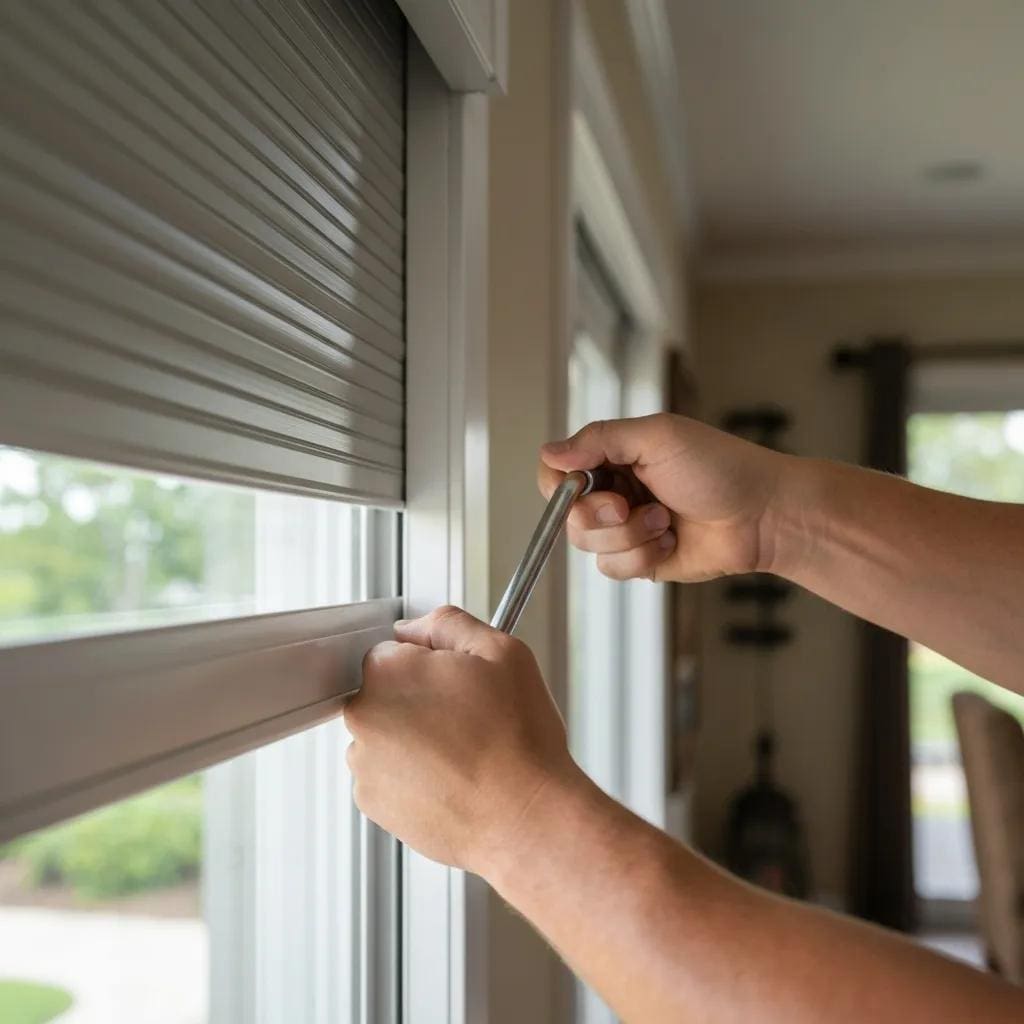
Manual override converts the powered drive to a manual crank so you can safely raise or lower the curtain when the motor won’t. First, locate and remove the override access cover — usually near the motor or in an access panel — keeping the area dry and secure. Insert the correct manual crank and engage the drive coupling per the manufacturer’s instructions. Turn slowly and steadily while one person watches shutter travel for smooth movement and another checks interior alignment. Stop immediately if resistance spikes or grinding starts; forcing the mechanism can strip gears or cause the curtain to fall. This overview prepares you for the more detailed step‑by‑step override instructions below.
How do you diagnose and address common motor problems?
Motor diagnosis separates electrical faults from gearbox seizure or worn bearings so you can decide if a reset, repair, or replacement is needed. A humming motor that won’t turn usually signals a mechanical blockage or gearbox failure; a silent motor with power present often points to an electrical or controller fault. Useful quick tests include a controlled power reset and checking for motor vibration while powered — both provide clues without disassembly. If internal gearbox or bearing damage is suspected, a professional motor replacement is normally the safest option because field repairs can compromise weather seals and reliability.
When and how to use manual override for stuck roll‑down shutters
Manual override is a controlled, last‑resort method to secure openings when power recovery isn’t possible and conditions are safe for inside‑only manual operation. The override bypasses the motor so human force moves the curtain; it reduces the risk of an uncontrolled drop but needs the correct tool and a steady operator. Before attempting override, confirm the weather allows safe indoor access, make sure the curtain isn’t under an uneven load, and have a helper watching alignment and ready to stop. Use the override to raise for ventilation or lower fully for protection, turning slowly and stopping at the first sign of binding. The next sections list required tools and give a step‑by‑step override sequence.
If you need professional help after trying manual override, get a quick estimate and schedule service through our cost calculator: Get a free estimate.
What tools do you need for a manual override?
Using the right tools and PPE lowers the chance of damage or injury during manual override. Essentials include the manufacturer‑specified manual crank or override key, a reliable flashlight for visibility, leather or cut‑resistant gloves, and safety glasses. Have a soft, non‑marring strap or padding ready to support the curtain if you need to pause mid‑operation, and a helper to watch alignment. Don’t improvise with mismatched tools — the wrong size can strip the coupling and cause permanent damage.
Step‑by‑step: how to manually open or close your shutter
Follow a slow, controlled sequence to protect people and hardware. First, secure the area, notify occupants, and position a helper to watch the shutter. Second, remove the override access cover and insert the correct crank, confirming it’s fully engaged without forcing. Third, turn the crank slowly in the manufacturer‑specified direction, watching the curtain travel and pausing frequently to check resistance and track alignment. Fourth, stop immediately if resistance rises, slats misalign, or unusual noises start; document what you see and call a professional for inspection and repair.
What emergency services are available for stuck roll‑down shutters in coastal NC and SC?
During storms, emergency repair teams handle urgent mechanical and electrical failures that homeowners shouldn’t tackle. Typical emergency work includes on‑site motor replacement for failed drives, track realignment and debris removal to restore travel, slat repair or replacement for bent sections, and help with manual override when homeowners can’t operate the system safely. Technicians can temporarily secure partially open shutters to stop wind entry and provide short‑term fixes until full repairs are possible after the storm. Response times depend on conditions, but emergency service aims to restore protection and prevent secondary damage.
How American Hurricane Shutters supports emergency repairs during storms
American Hurricane Shutters offers repair and maintenance for roll‑down systems and prioritizes engineered solutions during emergency response. Our team uses Design Pressure Analysis and recommends corrosion‑resistant hardware (including 316 stainless steel where appropriate) to improve durability. We provide free estimates, a maintenance guide, and an FAQ to help customers understand repair choices after an event. If you need emergency service, start with our cost calculator to speed triage and scheduling.
Which coastal communities do we cover for emergency repair?
We provide regional support across several coastal towns in North and South Carolina, including Wilmington, Myrtle Beach, Oak Island, Topsail, New Bern, and Pawleys Island. Same‑day availability depends on weather and demand, so confirm current response times when you call. Before technicians arrive, document the shutter model, symptoms, and take photos if it’s safe — this information helps us triage the job and advise interim measures.
This table shows common emergency repairs, what they fix, and when to call for professional help. If you need assistance, use our cost calculator to request a free estimate and fast triage.
How preventative maintenance reduces the chance of stuck shutters
Routine maintenance catches wear and corrosion before they cause binding or motor overload. Regular visual checks, track cleaning, manufacturer‑approved lubrication, and periodic motor tests keep systems running smoothly and extend component life. Professional inspections reveal gearbox wear, moisture intrusion, and hidden corrosion so repairs can be scheduled rather than performed in an emergency. Combining a homeowner checklist with yearly professional servicing gives the best protection and reduces the likelihood of in‑storm failures.
Which maintenance tasks prevent jamming and motor failure?
Divide maintenance between homeowner tasks and professional work to keep shutters reliable. Homeowners can do monthly visual checks, vacuum or brush tracks, test manual override, and replace remote batteries. Professionals should perform annual motor diagnostics, lubricant or gearbox service, corrosion control on fasteners and rails, and review Design Pressure Analysis after structural changes. Following these role‑specific tasks keeps tolerances within spec and stops small issues from turning into emergency repairs.
- Homeowner tasks: cleaning, visual inspections, and basic functional tests.
- Professional tasks: motor diagnostics, torque and gearbox service, and corrosion mitigation.
- Together: these steps lower emergency risk and lengthen shutter lifespan.
Routine care reduces emergency repairs and speeds post‑storm recovery by addressing root causes before they escalate.
How often should you schedule professional inspections?
We recommend a professional inspection at least once a year, plus a pre‑season check before hurricane season. Properties with heavy salt exposure or frequent storm activity should consider twice‑yearly professional checks to manage accelerated corrosion and wear. Technicians can also advise on hardware upgrades, like 316 stainless steel components, and provide documentation useful for insurance or long‑term planning. Regularly scheduled service reduces the chance of stuck shutters during storms and keeps your protection ready when you need it most.
Principles of coastal resilience and sound construction practices are relevant when planning and maintaining hurricane protection.
Coastal Construction Manual: building resilience in coastal areas
A technical resource on designing and maintaining buildings in coastal zones. While it doesn’t focus on individual shutter repairs, it offers useful context on coastal hazards and resilience measures that inform shutter selection and maintenance.
If you’re evaluating protection options or need a repair, our online cost calculator makes it fast to request a free estimate and get service scheduled.
Frequently asked questions
What should I do if my roll‑down hurricane shutters get stuck during a storm?
Put safety first. Move people away from windows and doors, stay inside, and avoid going outside in high winds. From indoors, listen for motor noise, try the wall switch or remote, and look for visible debris in the track with a flashlight. Don’t attempt exterior work or ladder access during active weather. If you see exposed wiring, smoke, or sparks, or if you can’t safely access the manual override, call a professional emergency service.
How can I prevent my roll‑down shutters from getting stuck?
Preventative maintenance is the best defense. Regularly clean guide tracks, test manual override, replace remote batteries, and use only manufacturer‑approved lubricants. Schedule professional inspections at least once a year and before hurricane season, and consider twice‑yearly checks for properties with heavy salt exposure. Small, routine tasks prevent many in‑storm failures.
What signs mean I should call a professional?
Call a technician if you see exposed or sparking wiring, hear unusual grinding, or smell burning or see smoke from the motor. Also call if the shutters are under uneven structural load, if the motor hums without movement, or if you can’t safely access the manual override. These issues carry safety or structural risks that need a trained response.
Can I use any lubricant on my shutters?
No. Use only lubricants recommended by the shutter manufacturer. The wrong product can attract dirt and grit, making jams worse. Apply lubricant sparingly to clean, dry tracks only — avoid slat faces that rely on friction to lock.
What tools do I need for manual override?
For manual override you’ll need the manufacturer‑specified crank or key, a reliable flashlight, and protective gear like gloves and safety glasses. A soft support strap helps hold the curtain if you pause mid‑operation. Never use improvised tools that don’t match the coupling size.
How often should I inspect my shutters?
Inspect monthly during storm season for debris, wear, and proper operation of the manual override. Arrange a professional inspection at least once a year, plus one before the hurricane season. Coastal properties should consider biannual professional checks to manage accelerated corrosion.
What should I document before calling emergency repair?
Before you call, note the shutter model, describe the symptoms, and take photos of visible damage if it’s safe to do so. Tell technicians about any recent maintenance or repairs. This information speeds triage and helps us prepare the right equipment for the job.
Conclusion
Knowing how to assess and respond to a stuck roll‑down shutter keeps your home safer in a storm. Follow the safety‑first checklist, try the simple indoor troubleshooting steps, and call professionals when red flags appear. Regular maintenance and scheduled inspections keep your system ready for the next storm. For expert help, fast estimates, and reliable emergency service, visit our site and request a free estimate.