

Accordion Shutters — Real Homeowner Reviews, What They Reveal, and What Coastal Property Owners Should Know
Accordion shutters are permanently mounted storm panels that fold neatly beside windows and doors and lock into place to shield glass during hurricanes. This page pulls together real user reviews and explains how accordion shutters protect your home, plus practical guidance on buying, costs, installation, and upkeep so coastal homeowners can make confident decisions. Many people search for “accordion shutters reviews” or “accordion shutters pros and cons” when weighing protection, cost, and everyday use; this guide combines customer feedback, material specifications, and side-by-side comparisons so you can judge durability, convenience, and value. You’ll read what homeowners in coastal North and South Carolina say about ease of use and longevity, common concerns raised in reviews, how pricing typically breaks down, how accordion shutters compare to roll-down shutters and storm panels, and which maintenance steps will extend service life. Where helpful we reference product-level details — like Bertha HV Accordions, material specs such as 6063-T6 marine-grade aluminum and 18-8 stainless steel fasteners — and provide checklists so you can evaluate options and request a precise local estimate when you’re ready.
What Are Accordion Shutters and Why Homeowners Choose Them
Accordion shutters are hinged vertical panels that slide along a track and lock across an opening to resist wind pressure and flying debris. They protect windows by transferring wind and impact loads from the glass to the shutter assembly and into properly designed anchors, giving immediate physical protection when deployed. Homeowners like them for quick deployment, permanent installation with no seasonal storage, and a useful balance of durability and cost compared with motorized systems. Knowing these basics helps buyers compare material quality and installation standards when choosing a hurricane-protection solution for coastal residences.
Below are the most common homeowner benefits reflected in reviews across the region.
- Fast deployment: Panels unfold and lock quickly, reducing prep time before a storm.
- No seasonal storage: Permanently mounted tracks mean no off-site storage or heavy lifting each storm season.
- Robust protection: When anchored correctly, shutters transfer wind and impact loads away from glazing.
Those practical advantages explain why many coastal homeowners favor accordion shutters for everyday readiness. The next section digs into how the system works and which materials boost coastal performance.
How Accordion Shutters Protect During Hurricanes
Accordion shutters form a continuous barrier over windows and doors and anchor into the surrounding structure so wind pressure is redistributed and debris is stopped. The track system and interlocking vertical blades create a rigid face that resists both suction and direct impact; once locked, the shutters prevent glazing from absorbing the worst of strong gusts or flying objects. Deployment is straightforward: unfold panels from their stowed position, seat them into the top and bottom tracks, then engage the locks. Reviewers commonly praise the speed and reassurance of that solid barrier when storms approach — which is exactly how these systems are designed to perform.
That protection depends heavily on materials and construction quality, which determine how well shutters hold up in coastal conditions and after repeated deployments.
Materials and Features That Improve Durability

Long life for accordion shutters comes from corrosion-resistant materials, reinforced blade designs, and quality fasteners that keep anchors secure under load. Top-tier units use 6063-T6 marine-grade aluminum for blades and extrusions and 18-8 stainless steel fasteners at critical connections to reduce galvanic corrosion in salty air. Powder coating or durable finishes add UV and salt-spray resistance, while reinforced vertical blades and reliable locking mechanisms improve impact performance over time. When evaluating specs, consider the main components — track system, vertical blades, locking mechanism, and fasteners — because each plays a part in overall protection and longevity.
These material choices set realistic expectations for lifespan and maintenance, which we cover later alongside homeowner feedback on long-term performance.
What Real Customers Say in the Coastal Carolinas
Reviews from coastal North and South Carolina repeatedly emphasize peace of mind, quick deployment, and durability — especially when shutters are built from marine-grade materials. Many homeowners praise the way shutters protect glazing during strong winds and note the convenience of not having to store panels. A smaller group raises concerns about appearance or manual operation. Overall, perceived value tends to track with installation quality and materials — reviews mentioning marine-grade aluminum and stainless fasteners often rate satisfaction higher. Those patterns show which features and installer practices matter most to local buyers.
Common positive notes from local reviewers include:
- Easy, fast setup noted by homeowners who needed quick protection before storms.
- Durability and salt-air resistance praised when installers used high-grade aluminum and stainless fasteners.
- Improved security and peace of mind reported by those who keep shutters in place year-round.
Reviewers also flag some tradeoffs, which the next section addresses so you can weigh pros and cons.
As a regional installer serving coastal NC and SC, American Hurricane Shutters (AHS Carolinas) hears the same feedback: customers want fast deployment, corrosion-resistant materials, and help with permitting and code compliance. To support local homeowners seeking accurate, site-specific pricing and compliant designs, AHS Carolinas provides free, no-obligation estimates and manages permitting and custom design pressure analysis.
Top Benefits Homeowners Mention Most
Reviewers frequently say accordion shutters strike a good balance between protection and convenience. Permanently mounted tracks remove seasonal labor and storage hassles, and a fully locked shutter gives homeowners confidence that glass and interiors are better protected during storms. Satisfaction spikes when product construction and installation meet local code and environmental demands — phrases like “marine-grade,” “stainless fasteners,” and “powder coating” tend to show up in the most positive reviews. Those patterns point to practical buying priorities: corrosion-resistant materials, verified anchoring, and installers who perform custom pressure analysis for code compliance.
Common Concerns and Tradeoffs Reported by Customers
Less-positive reviews often focus on aesthetics, bulk, or the manual effort required for larger openings. Accordion shutters are visible when stowed beside openings and can change sightlines or curb appeal. For two-story homes or very large openings, manual deployment can be strenuous, and some homeowners choose motorized options — at a higher cost — for ease. Peak-season lead times are another common complaint, so planning ahead is important. Many of these concerns can be reduced with compact stow profiles, color matching, optional motorization, or by selecting an installer who handles permitting and brings trained crews to speed installation.
Knowing these tradeoffs helps buyers weigh convenience and appearance against protective performance.
Accordion Shutter Costs — What Affects Price
Pricing for accordion shutters typically breaks down into material costs, installation labor, custom design and permitting, and optional upgrades like motorization or specialty finishes. Per-square-foot ranges vary by region, profile complexity, and installation difficulty. The consistent cost drivers are material grade (marine-grade aluminum vs. standard), custom design pressure analysis for code compliance, anchoring complexity, and permitting or inspection fees. Customers searching “accordion shutter installation cost Wilmington NC” or “accordion shutter installation cost Myrtle Beach” should expect estimates that reflect these factors and should request a local, site-specific quote to capture window sizes, wall construction, and required anchors.
Below is a concise cost comparison to help homeowners benchmark quotes and identify where price differences come from.
The table lists primary cost factors and representative ranges so you can compare bids more effectively.
This breakdown explains why site inspection and custom pressure analysis often change final pricing. In Wilmington and Myrtle Beach, local permitting and coastal building codes can add measurable cost, so a precise on-site estimate is essential.
When comparing bids, insist that each quote uses the same material specs, anchoring standards, and includes design pressure analysis — that way you get apples-to-apples comparisons and fewer surprises after installation.
Typical Installation Costs in Wilmington and Myrtle Beach
Local project costs depend on labor rates, permitting complexity, and travel logistics. Small single-window installs tend to land at the lower end of the per-square-foot range, while full-home packages can improve per-opening efficiency but require a larger upfront spend. Projects that need scaffolding, aerial lifts, or specialized anchors can increase labor charges. Permit processing and custom design pressure analysis for wind loads are common contributors to the final invoice in these areas. The best route is a site visit and a written estimate that itemizes materials, labor, permitting, and any motorization options.
Tip: only compare estimates that list the same materials and anchoring standards — otherwise you’re not comparing the same scope of work.
How Customers Rate Value for Money
Across reviews, perceived value closely follows installation quality and material choices. Homeowners report stronger satisfaction when shutters use marine-grade aluminum and stainless fasteners and when installers perform custom pressure analysis and code-compliant anchoring. Many say the upfront price is offset by reduced storm damage risk and possible wind-mitigation insurance benefits, calling shutters a long-term investment in protection. Cheaper installs that skip proper anchoring or use lower-grade materials tend to produce complaints about corrosion or performance. Overall, aggregated sentiment favors properly specified and installed accordion shutters as delivering good value in coastal settings.
For best value, ask for material specs and compliance documentation in writing before you choose an installer.
Accordion Shutters vs. Other Hurricane Protection Options
Accordion shutters sit between removable storm panels and motorized roll-down shutters on the spectrum of cost, convenience, and automation. The main differences are deployment speed, storage needs, visual impact, and long-term durability: accordion shutters are permanently attached and need no storage, roll-down shutters offer motorized convenience at a higher cost, and storm panels are less expensive up front but require storage and manual handling. Evaluate these tradeoffs against your priorities — permanent readiness, budget, or curb appeal — to pick the best solution for your home.
Use the comparison below to quickly contrast accordion shutters, roll-down shutters, and storm panels on core attributes.
This comparison shows why accordion shutters are often chosen by year-round coastal residents who want constant readiness without the cost of motorization.
Accordion Shutters vs. Roll-Down Shutters — Pros and Cons
Accordion shutters are usually less expensive than motorized roll-down systems and require minimal electrical work, but they can demand manual effort on large openings. Roll-down shutters offer one-touch deployment and integrated storage but come with higher initial cost and added maintenance complexity. Both can be specified to meet high wind loads; roll-down systems sometimes use heavier gauges and different locking methods that appeal to buyers prioritizing automation. From a retrofit standpoint, accordion shutters often fit many window types more easily, while roll-down systems may need added head-box integration or structural support. Choose based on whether convenience (motorized operation), initial budget, or minimal visible hardware is most important to you.
Bottom line: pick accordion shutters for reliable, always-present protection and lower capital cost; pick roll-down shutters for the fastest deployment and automation when budget allows.
Accordion Shutters vs. Storm Panels
Compared with storm panels, accordion shutters offer instant readiness and no storage needs; storm panels cost less up front but must be stored and installed each storm. Storm panels can work well for seasonal dwellers or occasional users; accordion shutters suit year-round residents who prefer continuous preparedness without seasonal labor. Aesthetically, storm panels disappear when not in use, while accordion shutters remain visible and can affect curb appeal. For long-term convenience and rapid response in hurricane-prone regions, many homeowners and reviewers prefer permanently mounted solutions despite higher initial investment.
Matching protection to lifestyle — seasonal vs. year-round occupancy — helps pick the right option for your needs and budget.
Installation Process and Customer Feedback
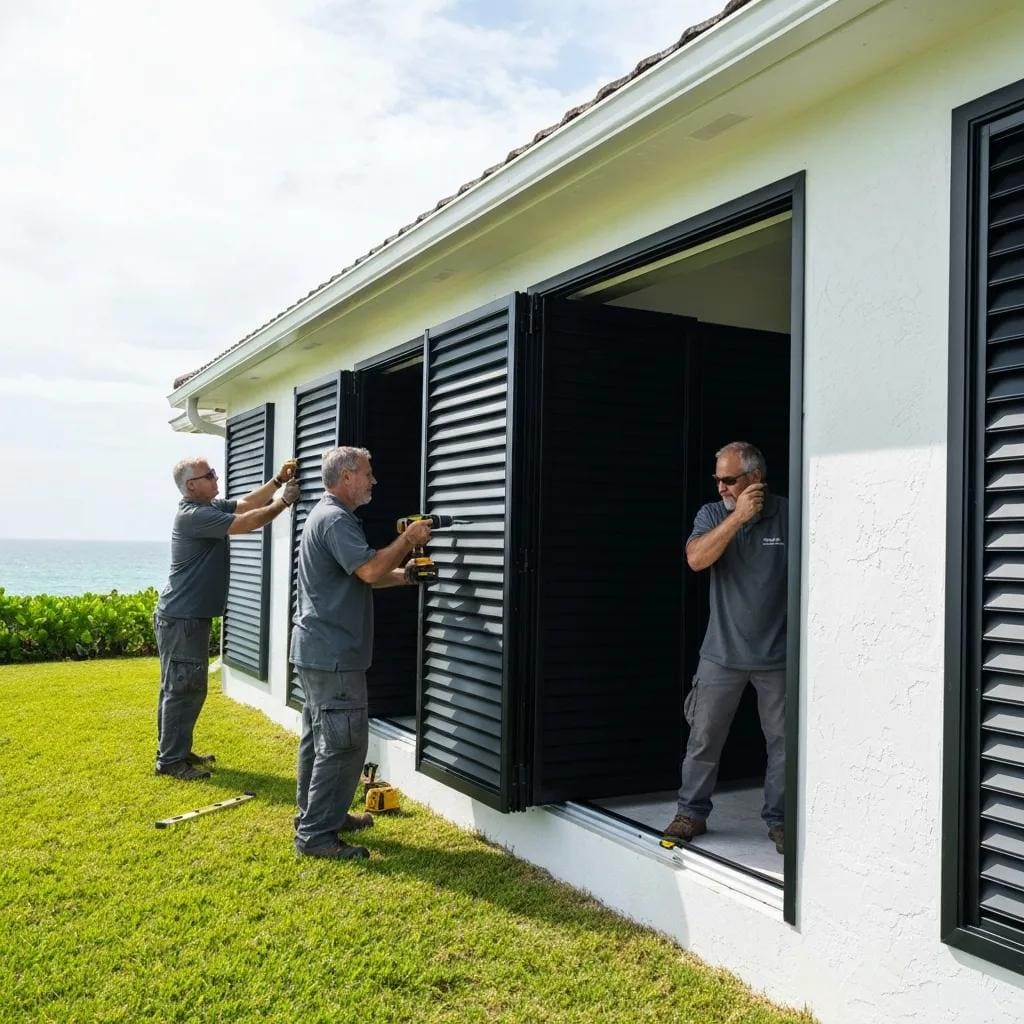
Professional installation starts with a site survey and measurements, moves into custom design pressure analysis to confirm anchoring and wind-load requirements, and includes permitting, installation, and inspections as needed. Proper installation secures the track system to structural framing or masonry anchors, aligns vertical blades for smooth operation, and verifies locking hardware — all to ensure shutters perform under the design wind loads. Homeowners tend to rate installations highly when installers document code compliance, perform required anchoring, and handle permitting. By contrast, poor anchoring or rushed installations show up in negative reviews and can affect warranties and performance.
Because installation affects both safety and warranty coverage, the next section explains why trained installers matter for long-term reliability.
Why Professional Installation Matters
Professional installation is critical because code compliance, accurate load calculations, and correct anchoring reduce the risk of failure during storms and are often conditions of valid warranties. Licensed installers who perform custom design pressure analysis make sure anchoring patterns and fastener selections meet local wind-load requirements and that the shutter system integrates with the home’s structural capacity. Trained technicians minimize installation errors — proper track alignment and the right fastener choice (for example, 18-8 stainless steel in coastal settings) help prevent early corrosion and operational problems. If you value long-term performance and insurance documentation, professional installation is essential.
These professional practices often appear in positive reviews and higher customer satisfaction scores.
What Customers Say About Installation Speed and Service Quality
Reviewers praise installers who communicate timelines, arrive prepared, and finish work within quoted windows. Trained technicians and efficient scheduling are common reasons for high service ratings. Peak-season demand can stretch lead times — a frequent frustration — but attentive permitting assistance and fast responses usually ease the concern. When companies provide crews with safety certifications and aerial lift training, customers feel more confident about elevated or hard-to-access installs. Overall, choosing a provider that handles permitting, staffs trained installers, and communicates clearly tends to produce the best installation experiences.
Positive installation experiences translate directly into higher perceived value and long-term satisfaction with accordion shutter investments.
Keeping Accordion Shutters Working — Maintenance Tips
Regular maintenance preserves operation and corrosion resistance. Typical tasks include cleaning, inspecting tracks and fasteners, lubricating moving parts, and checking locking mechanisms and finishes. Quick seasonal checks before hurricane season help you spot loose fasteners, worn seals, or surface corrosion before they become problems; addressing small issues early reduces the chance of expensive repairs later. Homeowner maintenance usually targets the system’s key parts — track system, vertical blades, locking mechanism, and fasteners — because these affect deployment smoothness and anchor integrity. Together with proper finishes and occasional professional inspections, these tasks support the expected lifespan of well-built units.
Use this practical maintenance checklist, drawn from user recommendations and material guidance, to schedule care tasks.
- Inspect tracks and vertical blades seasonally for debris and corrosion; clear any obstructions.
- Lubricate moving parts and locking mechanisms annually with a dry lubricant suitable for metal hardware.
- Check fasteners (especially stainless steel) for tightness and corrosion each spring and fall.
- Clean powder-coated surfaces with mild detergent and rinse to remove coastal salt buildup.
- Schedule a professional inspection every 2–3 years or after any significant storm event.
Following this checklist helps keep shutters operating smoothly and prevents small issues from becoming structural problems.
User-Recommended Maintenance Practices
Users often recommend seasonal cleaning to remove salt and airborne contaminants that speed corrosion, followed by a close look at fasteners and locking hardware. Lubricating tracks and locks keeps operation smooth and prevents sticking; reviewers suggest lubricants that don’t attract dust or harm finishes. For long openings or motorized systems, occasional operational tests make sure motors and limit switches work and highlight alignment issues early. When parts show significant wear or corrosion, users advise calling a professional to replace components or re-anchor tracks rather than attempting DIY fixes that could void warranties or reduce protection.
These practical tips align with the recommended materials — marine-grade aluminum, stainless fasteners, and powder coatings — and stress preventive care.
Expected Lifespan According to Customer Reviews
Customers and material specs indicate that accordion shutters can last for decades when properly maintained and built from high-quality materials. A common lifetime expectation for marine-grade aluminum systems is 20–30 years with regular care. Lifespan depends on environmental exposure, upkeep, and initial material and fastening quality; coastal salt air and UV shorten life if proper finishes and stainless fasteners aren’t used. Reviews that report long service life usually mention installers who used 6063-T6 aluminum, 18-8 stainless steel fasteners, and powder coatings and who provided clear anchoring and maintenance guidance. Consider replacement when primary anchors show persistent corrosion, operational failures recur, or mounting walls suffer structural damage.
These lifespan expectations help homeowners plan budgets for maintenance, repairs, and eventual replacement.
If you want local, code-compliant designs and an accurate quote, American Hurricane Shutters (AHS Carolinas) emphasizes high-quality materials (Bertha HV Accordions with 6063-T6 marine-grade aluminum and 18-8 stainless steel fasteners), custom design pressure analysis, permitting assistance, and trained technicians. AHS Carolinas offers free, no-obligation estimates to deliver realistic costs and compliance documentation.
Proper assembly and adherence to installation guidelines are essential to ensure accordion shutters function as intended and maintain structural integrity.
Accordion Shutter Installation Guide: Assembly and Guidelines
When installing the module, the top module’s mass will rest on the shutter. Follow the provided assembly plan so the shutter is installed per the guidelines. A finite element model (FEM) supports the design recommendations.
Design of a shutter module
Understanding how different building types behave in hurricanes helps you select the right protection. Research shows certain building materials and systems offer better resilience during extreme weather events, and knowing those differences guides better choices for shutter design and anchoring.
Coastal Residential Building Performance During Hurricanes
Some construction types perform better in strong hurricanes. Regardless of materials, systems follow predictable damage sequences under hurricane wind loads, and lessons learned inform resilient design and flood mitigation.
Review of literature on performance of coastal residential buildings under hurricane conditions and lessons learned, M Amini, 2020
Frequently Asked Questions
What maintenance tasks are essential for accordion shutters?
Keep shutters working by cleaning off salt and debris, inspecting tracks and fasteners for wear or corrosion, lubricating moving parts, and testing locks. Do seasonal checks before hurricane season and schedule a professional inspection every few years or after a major storm to catch issues early.
How do accordion shutters compare to removable storm panels in convenience?
Accordion shutters are permanently mounted and ready to deploy, so they eliminate storage and the time needed to install panels before a storm. Storm panels cost less initially but require storage and manual installation each event, which can be time-consuming and physically demanding.
What factors should homeowners consider when evaluating the cost of accordion shutters?
Look at material quality, installation complexity, and any custom design or permitting fees. Marine-grade materials, structural anchoring needs, and site accessibility all affect price. Ask for detailed quotes that spell out materials, anchoring, and permit work so you can compare offers accurately.
Can accordion shutters be used in non-coastal areas?
Yes. While they’re designed for hurricane protection in coastal zones, accordion shutters also provide strong protection against high winds and flying debris elsewhere. Check local codes and wind-load requirements to confirm suitability for your area.
What aesthetic options are available for accordion shutters?
Many manufacturers offer a range of colors and powder-coated finishes to match your home’s exterior. You can often color-match stowed panels and choose finishes that resist UV and salt spray, helping shutters blend with your curb appeal.
How do accordion shutters affect home resale value?
Accordion shutters can boost resale value by adding a tangible safety feature that appeals to buyers in hurricane-prone markets. Reliable storm protection can attract more interest and may reduce insurance costs, making the property more marketable.
What should homeowners do if they experience issues with their accordion shutters?
Start with a visual inspection to look for misaligned tracks, loose fasteners, or corrosion. For mechanical issues or structural concerns, contact a professional installer — DIY repairs can void warranties or leave the system less protective.
Conclusion
Accordion shutters deliver dependable protection for coastal homeowners, combining durability, convenience, and the benefit of no seasonal storage. By using insights from real users and material specifications, buyers can choose shutters that match their budget and protection goals. If you’re ready to explore options, request a local estimate so you get a site-specific design and price. Learn how our premium accordion shutters can secure your home with the right materials and professional installation.