

Innovative Hurricane Shutter Designs for Coastal Living — Modern Protection That Preserves Style
Living on the coast means balancing two things: protecting your home from powerful storms and keeping the light, views, and architectural details that make seaside houses special. This guide lays out modern hurricane shutter options that deliver certified storm protection without sacrificing curb appeal, energy performance, or everyday function for coastal homes in North and South Carolina. You’ll learn how shutter styles differ in operation and look, which materials stand up to salt air, how smart systems speed deployment, and the steps to estimate costs and get professional installation. We also map choices to common local house types — with examples for Wilmington and Myrtle Beach — and provide a straightforward maintenance calendar to help extend service life. Each section combines clear technical points with practical homeowner recommendations so you can pick shutters that protect against wind and impact while adding to your home’s style and resale value.
What Are the Best Modern Hurricane Shutter Styles for Coastal Homes?
Different shutter styles trade off protection, convenience, and appearance depending on exposure and design goals. Accordion shutters fold away on tracks and cover irregular openings quickly. Rolldown shutters tuck neatly when not needed and offer high wind ratings. Bahama shutters double as sun control and storm barriers with top-hinged louvers that provide year-round shade, while colonial shutters keep a traditional look and can act as permanent protection when reinforced. Hurricane screens and flat panels (clear or aluminum) are ideal for large openings where sightlines and ventilation matter. Knowing each style’s pros and cons—deployment speed, permanence, view preservation, and certification—helps match protection to your property and local microclimate.
The quick comparison below ties shutter types to common homeowner priorities like privacy, view preservation, year-round use, and maximum impact resistance. If you want concrete pricing or an installation plan after reviewing styles, request a free estimate from American Hurricane Shutters to see how options translate into real costs for your home.
Introductory comparison of popular shutter styles and best-use scenarios:
This table makes it easier to see how style, operation, and architectural fit interact and leads into the next section on material choices that shape durability and performance.
How Do Bahama Shutters Combine Tropical Charm with Storm Protection?
Bahama shutters are top-hinged louvers that swing out to create shaded porches and soft, filtered light, yet they can be closed to form a protective barrier during storms. They offer passive cooling and solar control in summer and convert to storm protection when winds pick up — a true dual-purpose solution for many coastal homes. Their look complements beach cottages and Lowcountry architecture, keeping that relaxed, tropical feel while adding real resilience. Material choice — commonly aluminum with corrosion-resistant finishes or, in some designs, polycarbonate — affects maintenance and impact performance. For homeowners who want daily utility and certified storm defense, Bahama shutters often strike the best balance.
Why Choose Colonial Shutters for Classic Coastal Elegance and Security?
Colonial shutters are paired panels that frame windows and add a symmetrical, historic look to coastal facades. When engineered to meet wind and impact codes, they serve as a permanent protective system as well as an architectural feature. Because they read as part of the home rather than removable storm gear, Colonial shutters boost curb appeal and can raise perceived value. Their permanence calls for precise sizing and professional installation to meet code and warranty requirements. Homeowners who want consistent style with minimal seasonal handling often select Colonial shutters for bungalows, historic districts, and elevated cottages where architectural integrity matters.
How Do Advanced Materials Enhance the Durability of Innovative Hurricane Shutters?

Material choices determine how well shutters resist corrosion, withstand impact, and keep operating in salty coastal air. Aluminum offers an excellent strength-to-weight ratio and, with a marine-grade powder coat, resists corrosion and lasts for years. Polycarbonate delivers clear, impact-resistant panels that preserve views. Fabric hurricane screens prioritize flexibility and easy retraction but need UV stabilization and marine-grade hardware to last near the ocean. Picking the right material lowers long-term maintenance costs and extends service life — making material selection central to total cost of ownership and homeowner peace of mind.
Below is a focused materials comparison to help homeowners choose durable options for oceanfront and near-coast properties.
This comparison links common homeowner priorities — strength, view preservation, low upkeep — to material choices so you can weigh upfront cost against lifespan before moving to budgeting and installation.
What Are the Benefits of Aluminum and Polycarbonate in Coastal Shutter Designs?
Aluminum combines light weight with structural rigidity and, when finished with a marine-grade powder coat, resists pitting and corrosion in salty air. That makes it ideal for rolldown systems, accordion shutters, and Bahama frames that see frequent use. Polycarbonate offers transparent impact protection that keeps ocean views and daylight intact — especially useful for decks and sunrooms. When using polycarbonate, confirm UV stabilization and protected edges to avoid yellowing over time; aluminum systems benefit from periodic rinsing and occasional recoating. Pairing aluminum frames with polycarbonate panels often gives the best mix of durability and aesthetics.
The performance of hurricane shutters under impact by roof tiles is a critical factor in determining the overall effectiveness of a building’s protection against hurricane-force winds and debris.
Hurricane Shutter Performance: Impact Resistance to Roof Tiles
This study examines how various shutter systems perform when struck by simulated roof tile impacts — a common form of hurricane debris. The results highlight differences in impact sensitivity among window protection systems and offer data useful for developing more robust shutter designs.
Performance of hurricane shutters under impact by roof tiles, KR Gurley, 2010
How Do Hurricane Screens Offer Flexible and Stylish Storm Protection?
Hurricane screens are fabric or mesh systems designed to stop wind-borne debris while keeping ventilation and views. They usually work on retractable tracks or with magnetic attachments and integrate well into lanais, porches, and large sliding openings to make outdoor living areas seasonally protected. Screens are a good fit for homeowners who want year-round shade, insect protection, and easy deployment for mild-to-moderate storms. Their longevity depends on fabric grade and coatings, and in high-exposure oceanfront sites, hard panels may still be the safer choice. For many coastal properties, hurricane screens strike a stylish balance between daily comfort and supplemental storm defense.
How Are Smart Hurricane Shutter Systems Revolutionizing Coastal Home Protection?
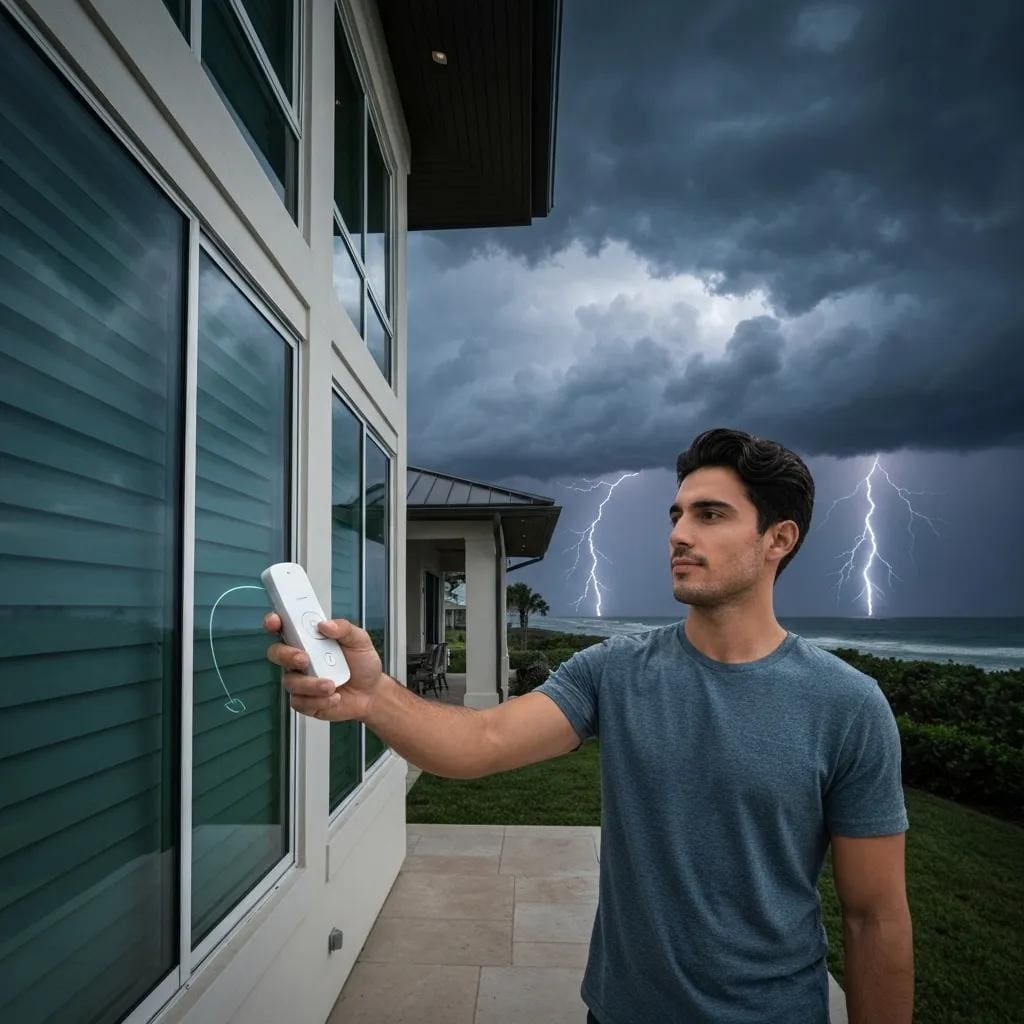
Smart shutter systems use motorization, sensors, and automation to cut deployment time and reduce human risk when storms approach. Remote control lets you secure the house from a distance; storm modes, weather-triggered automation, and battery backup speed protection when conditions worsen. These systems also include safety features like manual override and obstruction detection to prevent damage. Smart shutters are especially valuable for second-home owners, frequent travelers, or anyone who wants a faster, more reliable response than manual systems allow.
Key smart features include remote control, automation, and built-in safety integrations:
- Remote control: Deploy shutters from anywhere with handheld remotes or a central controller.
- Automation: Schedule or trigger closing based on weather alerts and forecasts.
- Safety integrations: Battery backup, manual override, and sensors to detect obstructions.
These practical features improve readiness; the next section explains how they connect to common home automation platforms so you can plan compatibility and installer requirements.
What Features Do Remote-Controlled and Automated Shutters Provide?
Remote-controlled and automated shutters deliver fast, repeatable deployment and reduce risk for people preparing for storms. Common features include handheld or wall remotes, timed schedules, storm-mode presets that close all zones at once, and battery backup for power outages. Safety systems — manual override and motor current sensing — help prevent entrapment and damage, and professional setup normally includes calibration and load testing. For coastal homeowners who may be away during storm warnings, automation offers both convenience and a measurable boost in preparedness.
How Can Smart Shutters Integrate with Home Automation Systems?
Smart shutters can connect to mainstream home hubs using Wi‑Fi, Z‑Wave, Zigbee, or manufacturer-specific controllers. Integration lets you create “storm sequences” that lower shutters, turn off pool equipment, and shut HVAC dampers with a single command. When planning integration, confirm protocol compatibility, know fallback behaviors (manual override and battery backup), and ask your installer for network documentation. Professional installers can test the full setup and provide a simple checklist for homeowners to keep connectivity and firmware current so automation remains reliable when it matters.
Which Hurricane Shutter Designs Best Match Coastal Home Architectural Styles?
Choosing a shutter design that fits your home’s architecture preserves character while meeting exposure and code needs. Beach cottages and bungalows often pair well with Bahama or Colonial shutters for a relaxed, historic look. Contemporary oceanfront homes typically favor sleek rolldown systems or clear polycarbonate panels to keep views open. Lowcountry homes with stacked porches benefit from retractable hurricane screens to maintain airflow and outdoor living; elevated oceanfront houses may require heavy-duty rolldown or accordion systems to meet high wind ratings. Balancing aesthetics and exposure leads to protection that looks intentional rather than tacked on.
The list below links common regional house types to recommended shutter approaches to help homeowners in Wilmington and Myrtle Beach visualize options.
- Beach cottages and bungalows: Bahama or Colonial shutters keep charm and provide solid protection.
- Contemporary oceanfront homes: Sleek rolldown shutters or clear polycarbonate panels preserve unobstructed views.
- Lowcountry homes with porches: Hurricane screens or removable panels protect large porches while maintaining airflow.
This architectural mapping supports informed selection and leads into code and permit items that influence final choices and installation details.
What Shutter Styles Suit Wilmington and Myrtle Beach Coastal Properties?
In Wilmington, historic neighborhoods and cottages often benefit from Colonial and Bahama shutters that respect streetscapes while offering protection suited to moderate exposure. Myrtle Beach properties — especially oceanfront homes and condos — commonly require high-performance rolldown or accordion systems because of stronger wind exposure and larger, commercial-style openings. For inland coastal lots with lower exposure, retractable hurricane screens are often a good way to preserve outdoor living. Local microclimates — salt spray, beach sand, and prevailing winds — should guide material choices and mounting methods. Consulting with a local expert familiar with NC/SC coastal conditions helps match the right style and materials to your site’s exposure.
How Do Shutter Designs Comply with North and South Carolina Building Codes?
Compliance in North and South Carolina depends on documented wind ratings, product certifications, and proper installation paperwork required by local permitting authorities. Ask manufacturers for certification of impact resistance and wind load performance, and make sure installers provide signed installation reports and permit-ready documentation. While Florida standards (for example, Miami‑Dade approvals) are often referenced, NC/SC jurisdictions have their own permit processes and interpretations, so always verify with your local building department. Hiring a professional installer helps ensure mounting details, fastening schedules, and paperwork meet local rules and smooth the permitting process.
How Can Homeowners Estimate Costs and Ensure Professional Installation of Hurricane Shutters?
Estimating cost means accounting for materials, professional labor, permit fees, custom sizing, and optional motorization. Start by measuring openings, choosing material and style, deciding on motorization, and running those inputs through an estimator to see a realistic range. If you want a quick planning step, try the online Hurricane Shutter Cost Calculator for an initial projection; after that, schedule a professional site visit for a free on-site estimate to refine numbers and confirm permits.
The next table clarifies installation options and the cost drivers homeowners should plan for when budgeting for shutters and labor.
This table helps homeowners understand where money goes and why professional installation often becomes the most cost-effective choice over a system’s lifetime.
How Does the Hurricane Shutter Cost Calculator Help Plan Your Budget?
The Hurricane Shutter Cost Calculator takes opening measurements, shutter style, material choices, and optional motorization to produce a budgetary estimate based on regional pricing patterns. Run scenarios — for example, aluminum rolldown versus polycarbonate panels — to see how aesthetics and features affect price and long-term maintenance. Calculator results provide ranges rather than final bids; a professional site visit and free estimate will refine those numbers to include permits and any custom labor. After using the calculator, schedule a free estimate to confirm the solution fits local permitting and your home’s structural needs.
What Are the Benefits of Professional Installation Versus DIY?
Professional installation delivers compliance, warranty protection, certified anchoring, and the documentation many building departments and insurers require — especially for permanent and motorized systems. Installers use tested fastening schedules, load calculations, and experience with coastal substrates to reduce failure risk and long-term maintenance. DIY may be acceptable for temporary or removable panels on low-exposure properties, but it usually lacks permit support and can void manufacturer warranties if not installed to spec. For most coastal homeowners — particularly oceanfront properties — professional installation reduces liability and provides documented protection insurers and permitting agencies recognize.
How Should Homeowners Maintain Innovative Hurricane Shutters for Long-Term Performance?
Long-term performance depends on routine inspection, corrosion prevention, and timely repairs according to material and system type. Annual inspections before hurricane season should include checking fasteners, testing motorized systems and backups, rinsing salt residue from aluminum and tracks, and inspecting seals on polycarbonate panels. A simple maintenance calendar that schedules pre-season checks, post-storm assessments, and mid-season lubrication catches wear before it becomes a problem. When you see structural distress, motor failure, or coating breakdown, professional maintenance preserves warranty coverage and restores certified performance.
Below is a concise maintenance checklist homeowners can follow to keep shutters functioning and safe.
- Rinse and inspect: Rinse salt deposits from frames and tracks monthly during high-salt months.
- Exercise moving parts: Operate motorized systems quarterly and test battery backups annually.
- Check fasteners and seals: Tighten loose fasteners and replace degraded seals during pre-season checks.
Following this checklist reduces corrosion and mechanical issues and leads into the next section about material-specific care and when to call professionals.
What Are the Best Practices for Maintaining Aluminum and Polycarbonate Shutters?
For aluminum shutters, rinse with fresh water regularly to remove salt buildup, clean with a mild detergent, and reapply protective coatings as the manufacturer recommends. Polycarbonate panels need gentle, non-abrasive cleaning, UV-protective maintenance where specified, and careful inspection for edge delamination or scratches that can weaken impact performance. Inspect fasteners and tracks for galvanic corrosion and replace sacrificial components before they fail to avoid larger system damage.
Understanding how aluminum interacts with cementitious materials in coastal settings is key to ensuring the longevity and effectiveness of hurricane shutters.
Coastal Corrosion: Aluminum Interaction with Cementitious Materials for Hurricane Protection
This paper explores how aluminum structures interact with cementitious materials in coastal environments and how protective coatings influence corrosion resistance. Its findings are important for selecting finishes and detailing that keep shutters and related components durable under coastal conditions.
Aluminum Interaction with Cementitious Materials in a Coastal Environment, A De Luca, 2022
Keeping a log of maintenance activities and service records supports warranty claims and gives installers the history they need to recommend refurbishment or replacement at the right time.
When Should You Schedule Professional Maintenance for Storm Protection?
Arrange professional maintenance at least once a year and always before hurricane season to verify calibration, anchor integrity, and motor diagnostics. Call for service immediately after any significant storm, visible impact, persistent motor problems, or if inspections reveal structural cracks, loose anchors, or corrosion that threatens anchorage. Professional service usually includes lubrication, hardware replacement, system calibration, and an inspection report you can keep for insurance and permit records. Making professional maintenance part of annual property upkeep keeps shutters ready when storms approach.
For tailored estimates, material consultations, and professional installation or maintenance in coastal North and South Carolina, contact American Hurricane Shutters for a free estimate or to discuss materials and warranties. We serve coastal NC/SC homeowners and businesses with accordion, rolldown, colonial, and Bahama shutters, hurricane screens, and clear or aluminum panels. Our online cost calculator and free estimate help turn design preferences into accurate project scopes, and local experience streamlines permit documentation and code-compliant installation.
Frequently Asked Questions
What factors should I consider when choosing hurricane shutters for my coastal home?
Consider your home’s architectural style, how much protection you need, and the look you want to maintain. Evaluate materials for durability in salt air, decide between manual or motorized operation, and think about how quickly shutters must deploy. Local building codes and insurance requirements may affect your options, so consult a professional to ensure compliance and the best protection for your property.
How do I know if my hurricane shutters are compliant with local building codes?
Check manufacturer certifications for wind load and impact resistance, and get installation documentation from your contractor that confirms proper installation. Contact your local building department for specific permit and code requirements in your area. Professionals can provide the paperwork and signed reports typically required for permits and insurance.
What maintenance is required for hurricane shutters to ensure their longevity?
Regular inspections and cleaning prevent corrosion and mechanical problems. Rinse aluminum shutters monthly in high-salt months, check fasteners and seals, and use non-abrasive cleaners on polycarbonate panels. Schedule professional maintenance at least once a year before hurricane season, and keep records to support warranties and future service decisions.
Can I install hurricane shutters myself, or should I hire a professional?
Some temporary or removable panels may be suitable for DIY installation, but professional installation is recommended for permanent and motorized systems. Pros ensure code compliance, proper anchoring, and warranty protection. Incorrect installation can cause failures during storms and may void manufacturer warranties, so weigh the risks before attempting DIY.
What are the advantages of smart hurricane shutter systems?
Smart systems offer remote operation, automated storm modes, and safety features like battery backup and obstruction detection. They let you secure your home from afar, schedule protection during forecasts, and reduce risk during preparations — a big advantage for second-home owners or anyone frequently away.
How do I estimate the cost of hurricane shutters for my home?
Estimate costs by measuring openings, choosing a shutter style and material, and adding installation, permit, and optional motorization fees. Use online cost calculators for a preliminary estimate, then book a professional site visit for a detailed, permit-ready quote that reflects custom labor and local requirements.
Conclusion
Modern hurricane shutter designs give coastal homeowners protection without sacrificing style. By understanding available styles, materials, and installation considerations, you can choose a solution that improves resilience and adds value to your property. For personalized estimates and expert installation, reach out to a professional installer who knows local conditions and permitting. Explore our options today to find the right fit for your coastal home.