Understanding Local Regulations for Hurricane Shutter Compliance in North and South Carolina
Hurricane shutters and other storm-protection systems sit at the intersection of state codes, local ordinances, and industry standards. Those overlapping rules decide when shutters are required, which products meet impact and wind-load criteria, and what paperwork inspectors expect at permit review. This guide walks coastal homeowners, installers, and insurance-conscious property owners through the regulatory landscape in North and South Carolina. You’ll get the key building-code drivers, common county and city permit triggers, how safety standards relate to approval, and a step-by-step permitting workflow. We also compare common shutter types and explain how certified, permitted installations can qualify for wind-mitigation credits. Along the way we reference standards like ASTM E1996 and ASCE 7, explain Design Pressure Analysis (DPA), and offer practical checklists to simplify permit submittals. By the end, you’ll have a clear compliance checklist for Wilmington, Myrtle Beach, and nearby coastal towns — plus actionable tips for working with contractors and insurers.
What Are the Key Hurricane Shutter Building Codes in North Carolina?

North Carolina’s approach combines the state building code with local enforcement that targets windborne-debris regions and coastal wind loads. Approved products, tested impact resistance, and permits for certain installations are common requirements. Officials use wind-speed maps and ASCE 7 design pressures to size shutters and anchors, and inspectors expect product certifications (ASTM test references), product data sheets, installation details, and any Design Pressure Analysis. Many coastal jurisdictions layer in their own interpretations or amendments, so confirm whether your property sits in a windborne-debris region or a mapped flood zone before buying. Clear, documented compliance protects your home and speeds both permitting and insurance outcomes by showing code-conforming materials and fastening.
This section highlights the code elements most often enforced in North Carolina:
- Permits are usually required when shutters make structural connections or enclose openings within windborne-debris regions.
- Products must meet recognized impact and performance standards (for example, ASTM E1996) and be installed to satisfy ASCE 7–based design pressures.
- Typical submittal documentation: product certification, anchorage details, and any Design Pressure Analysis for the specific opening.
These core points inform homeowner decisions and lead into which coastal areas apply unique local rules.
Which Coastal Areas in North Carolina Have Specific Shutter Regulations?
Certain coastal municipalities and counties adopt localized interpretations of the state code, focusing enforcement where risk is highest — barrier islands and primary coastal communities. Wilmington-area homeowners should consult New Hanover County and city guidance; properties in New Bern, Topsail, and Oak Island often face clarifications about whether a shutter attaches to structural framing or to trim. Local building departments may require product acceptance letters, stamped installation drawings, or evidence of tested impact ratings before issuing a permit. Verify whether your property is inside a windborne-debris zone or mapped flood area, since those designations affect required product ratings and anchorage details.
When a local rule differs from the state code, it usually concerns anchorage schedules, allowed fastener types for coastal exposure, or additional corrosion-resistant hardware. Knowing these local nuances upfront reduces inspection rework and helps you prepare a complete permit packet.
How Do New Hanover County Permits Affect Hurricane Shutter Installation?
New Hanover County and the City of Wilmington commonly require permits for shutter installations that make structural connections or cover openings in windborne-debris areas, and they verify product certification and installation details at plan review. Typical submittals include a product data sheet showing ASTM compliance, an installation drawing that indicates attachment locations and fastener types, and any calculations or a Design Pressure Analysis for openings with higher wind demands. Inspectors will check that the installed anchorage matches the submittal and that labels or certification tags are visible for verification.
To avoid delays, include corrosion-resistant fastener schedules for coastal exposure and note any pre-existing conditions that affect anchorage. Photographs of the opening and surrounding framing taken before installation also help if reviewers request revisions.
What Are the Hurricane Shutter Regulations and Permit Requirements in South Carolina?
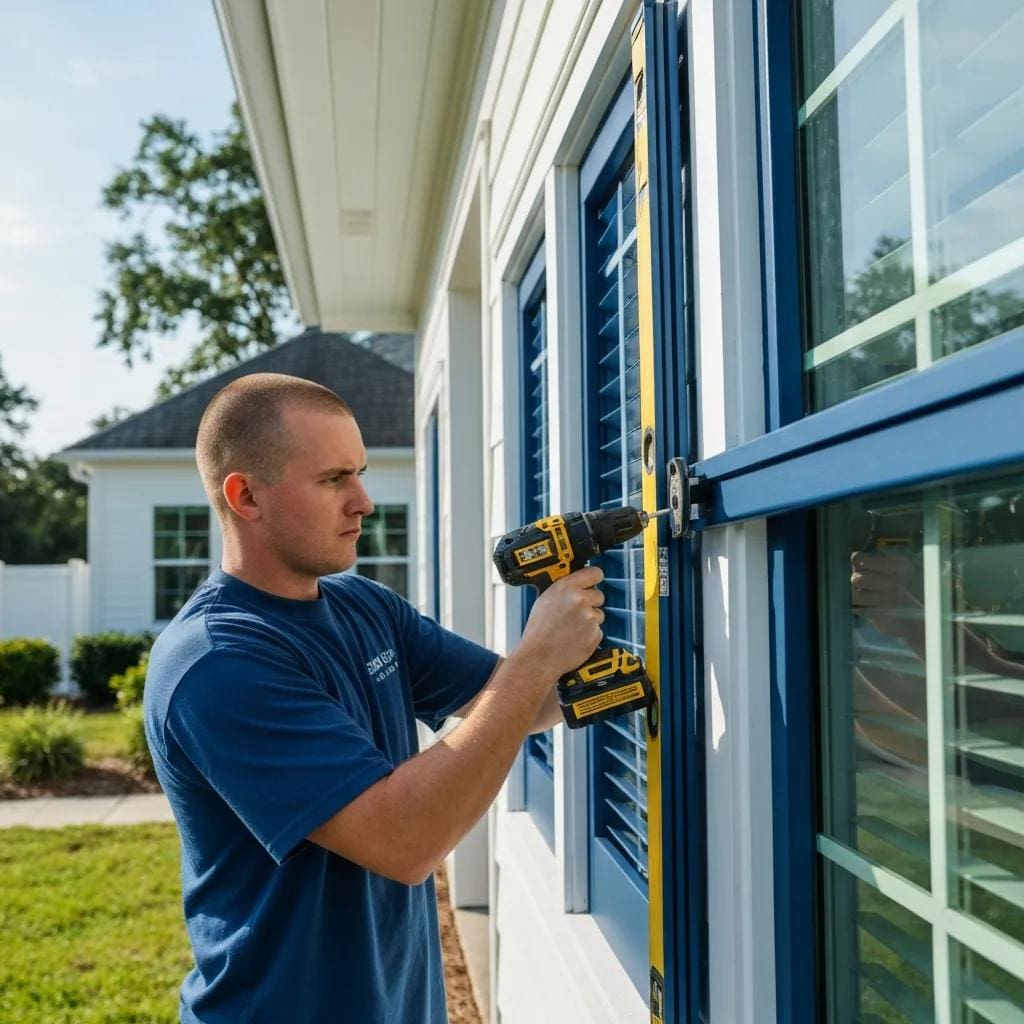
South Carolina enforces state building-code provisions aligned with national standards while many coastal jurisdictions — notably along the Grand Strand — apply local permit processes, product-acceptance practices, and inspection expectations tailored to local wind and flood risk. The state framework requires that windborne-debris protection products conform to recognized standards, and localities like Myrtle Beach or Pawleys Island may ask for extra documentation, stamped drawings, or clarified fastening schedules for saltwater exposures. Permits commonly trigger when shutters attach to framing, include motorized elements, or change an opening’s visibility; inspectors will look for product testing references and installation details to confirm compliance.
South Carolina homeowners should gather product certifications, manufacturer installation instructions, and any site-specific Design Pressure Analysis to support submittals. That preparation reduces back-and-forth with building officials and speeds review to final inspection.
For a South Carolina permit packet, include at minimum:
- Product certification showing applicable ASTM standard compliance and impact rating.
- Installation drawings or manufacturer instructions that match the proposed attachment method.
- Any local forms or affidavits required by the city or county building department.
Providing these items up front improves chances of a smooth review and timely inspection scheduling.
Which Cities in South Carolina Have Unique Building Codes for Shutters?
Several coastal cities maintain local permitting language or product-acceptance lists that reflect their exposure and inspector practices. Myrtle Beach and Pawleys Island are examples where local interpretation can affect allowable attachments and required documentation. Differences often center on motorized systems, anchorage details in older homes, and rules for temporary versus permanent panel storage. Some municipalities require corrosion-resistant hardware closer to the water. Contact your city or county building department early to confirm local submittal forms, expected review items, and whether third-party DPA or stamped calculations are recommended.
Confirming city-specific requirements before ordering materials prevents product substitutions or rework and ensures anchorages are designed to local expectations.
How Does the Horry County Permit Process Work for Hurricane Shutters?
Horry County’s permit workflow typically starts with an application containing owner and site information, followed by submission of product data sheets, installation details, and fee payment. Reviewers then request clarifications or schedule inspections based on project scope. Typical documentation includes the product cut sheet showing ASTM ratings, an installation diagram with fastener schedules and embedment depths, and any DPA calculations for openings with elevated pressures. Inspectors verify installed anchor types, product labeling, and that operational components such as rollers or motors match the submitted specifications.
To avoid delays, use local checklists and consider having a professional installer prepare or review the packet — that reduces the risk of incomplete documentation and holds during plan review.
How Do Hurricane Shutter Safety Standards Ensure Code Compliance?
Standards like ASTM E1996, ASTM E1886, and ASCE 7 turn lab test protocols and wind-load calculations into the product and installation requirements building officials accept as proof of performance. ASTM E1996 sets impact-resistance classifications, ASTM E1886 describes missile-impact and cyclic pressure testing, and ASCE 7 provides the wind-load methodology used to calculate design pressures. Those design pressures guide product selection, anchorage design, and the Design Pressure Analysis required for permitting and inspection.
Showing how a tested product maps to a site-specific design pressure — and that it’s installed correctly — creates the technical narrative inspectors need to approve shutters and helps insurers evaluate wind-mitigation credits.
Below is a quick comparison showing how each standard is used in permitting and product selection.
What Is ASTM E1996 and How Does It Relate to Hurricane Shutters?
ASTM E1996 classifies impact-resistant systems by test category and missile size, indicating which shutters are suitable for windborne-debris regions and which openings they can protect. The standard separates small- and large-missile tests and assigns designations reviewers use to confirm acceptance. Manufacturers typically supply test reports or certification letters referencing ASTM E1996 to show applicability. Using a product with the correct ASTM designation is often a permit prerequisite, and inspectors will expect labels or documentation that reference the standard and classification.
Ask manufacturers for product certification that lists the ASTM E1996 category, and pair that with your project’s design pressure to ensure the selected shutter is both impact-rated and structurally adequate for the site.
Hurricane Shutter Performance: Impact Testing of Aluminum Storm Panels
The performance of shutter systems designed to protect openings from wind-borne debris and wind pressure during hurricanes is evaluated. This study focuses on aluminum storm panel shutters and their response to impact from concrete roof tiles, a representative debris source. Tests follow ASTM E1996 procedures to assess performance under realistic debris loads.
Why Is Design Pressure Analysis Critical for Hurricane Shutter Performance?
Design Pressure Analysis (DPA) converts local wind speed, exposure category, and opening geometry into a design-pressure value that determines the required strength of shutters, tracks, fasteners, and anchorages. DPA is the essential link between ASCE 7 wind calculations and a code-compliant installation. For permit submittals, a documented DPA shows that the chosen shutter system and attachment method meet calculated demands, reducing inspector uncertainty and helping qualify installations for insurance credits.
American Hurricane Shutters performs a DPA for every installation so selected products and fastening systems align with calculated pressures, giving homeowners engineered documentation that supports permitting and inspection acceptance.
Hurricane Shutter Impact Resistance: Testing Against Roof Tile Debris
This evaluation examines shutter performance when struck by roof-tile debris, following ASTM E1996 procedures. The tests illustrate how assemblies react to representative impact events and inform acceptance criteria used by building officials.
What Is the Step-by-Step Process for Obtaining Hurricane Shutter Permits in the Carolinas?
Permitting for hurricane shutters in North and South Carolina generally follows a consistent sequence: evaluate site design pressures, select certified products, prepare documentation (product data, DPA, drawings), submit to the local building department, schedule inspections, and finalize approval after passing final inspection. Individual jurisdictions may add local forms or require stamped calculations for higher-risk projects, but the core steps verify product performance and correct installation. Preparing complete documentation up front — product certifications referencing ASTM standards, an installation plan, and any DPA — reduces review cycles and helps installers coordinate timing with building-department workflows.
Use this concise permit workflow to streamline applications and inspections.
- Site evaluation and wind-load assessment to determine design pressures.
- Product selection using ASTM/impact-rated shutters and obtaining manufacturer certifications.
- Prepare the submittal packet: product datasheets, DPA, installation drawings, and permit application.
- Submit application and pay fees; respond promptly to reviewer comments.
- Schedule rough and final inspections; ensure installed anchorages match the submittal.
- Obtain final approval and retain documentation for insurance and future inspections.
This stepwise path helps homeowners anticipate timeline and documentation needs and prepares them to work with the building department efficiently.
The table below maps permit steps to required documents and typical outcomes so you can plan submittals.
How Can Professional Installers Help With Permits and Inspections?
Professional installers speed permit workflows by preparing accurate submittal packets, submitting documentation on behalf of homeowners when allowed, coordinating with reviewers, and ensuring installations match the documented details. Installers commonly provide manufacturer cut sheets, installation drawings with fastener schedules, and the DPA or stamped calculations needed for review. They also schedule inspections and handle inspector comments or corrective actions. Using an experienced installer reduces the risk of permit rejection from incomplete documentation or improper anchorage and shortens the overall project timeline.
When hiring an installer, confirm they provide detailed documentation suitable for the building department and keep copies of the final inspection sign-off to support insurance claims or resale disclosure.
What Should Homeowners Expect During Hurricane Shutter Inspections?
Inspectors concentrate on anchorage integrity, product labeling, correct fastener types and spacing, and that the installation matches submitted documents. They may check that motorized components have proper electrical permits and that stored panels are secured. Common inspection checkpoints include visible product-certification labels, correct embedment depth for anchors, corrosion-resistant hardware in coastal exposures, and conformity with the documented DPA. If an installation fails inspection, officials usually issue a list of deficiencies and a reinspection timeline; corrective work and photographic evidence are often required.
Photographic documentation of the installation process, combined with retained product cut sheets and the signed inspection report, creates a complete record for insurance mitigation credits and future compliance verification.
Mitigation Devices for Hurricane Wind-Driven Rain Intrusion in Sliding Glass Doors
This review considers mitigation devices for sliding glass doors that reduce wind-driven rain intrusion during hurricanes. It outlines the compliance criteria used to test aftermarket devices and how building officials can evaluate those tests against the code.
Which Types of Hurricane Shutters Meet Local Building Codes and Compliance Standards?
Several shutter types meet local codes when they are properly tested, sized for the calculated design pressures, and installed with correct anchorages. Common compliant options include accordion shutters, rolldown (roll-down) shutters, colonial/Bahama panels, hurricane screens, and aluminum or polycarbonate panels. Choice depends on opening geometry, permanence, aesthetics, and required design pressure. All approved systems should have ASTM-based test evidence and installation instructions that match the site-specific DPA, and coastal installations must account for corrosion resistance in fasteners and hardware.
The table below compares shutter types by code-relevant attributes to help match product selection to compliance needs.
What Are the Features of Code-Compliant Accordion, Rolldown, and Panel Shutters?
Accordion shutters depend on continuous vertical anchorage into jambs and tracks and must be rated to the opening’s design pressure. Code-compliant installations show visible certification, tested anchorage schedules, and corrosion-resistant hardware where needed. Rolldown shutters use integrated tracks and may be motorized; compliant installs include manufacturer testing for cyclic loads, emergency-release considerations for motorized units, and anchorage sized by DPA. Removable or fixed panels (aluminum or polycarbonate) require clear attachment points, approved fastener schedules, and storage plans that meet local acceptance criteria. Follow each system’s installation instructions exactly to preserve test performance claims.
Choosing the right shutter type and ensuring anchorages meet the calculated design pressure lets inspectors verify the installation against the submitted documentation.
How Does Professional Installation Impact Warranty and Code Compliance?
Professional installation affects warranty coverage and code compliance because many manufacturers require certified installation to keep warranties valid, and inspectors expect installations to follow tested attachment methods. Improper fastening, incorrect embedment depth, or use of non-specified hardware can void warranties and cause failed inspections. Professional installers provide documented installation checklists, photos, and final inspection sign-offs. Installer documentation often includes a signed installation compliance statement, copies of product certifications used for the project, and any DPA or fastening schedules submitted with the permit.
Hiring a qualified installer protects warranty coverage, supports permit approval, and helps secure insurance wind-mitigation credits by producing a well-documented, code-compliant installation.
How Can Code-Compliant Hurricane Shutters Lead to Insurance Discounts?
Yes — properly permitted and code-compliant hurricane shutters can lead to insurance discounts because underwriters recognize reduced wind and debris risk when certified products are installed to documented design pressures and inspections are signed off. Insurers typically request the product certification, a copy of the permit, and the final inspection report or a signed installer compliance statement to evaluate mitigation credits. Showing that shutters meet ASTM standards, were installed per the DPA, and are documented through the building department increases the chance of premium reductions on wind coverage.
After final approval, submit a mitigation packet to your insurer to speed their evaluation and clearly document the risk reduction achieved by the approved installation.
What Insurance Requirements Must Shutters Meet for Premium Reductions?
Insurers usually want a concise packet with product certification (including ASTM references), a copy of the issued permit, and the final inspection report or installer-signed compliance documentation. Some underwriters may also request the DPA to confirm anchors and components match the calculated design pressures. Providing labeled product cut sheets, a permit number, and the inspector’s sign-off creates a clear evidence trail insurers use to assess mitigation credits. Contact your insurance agent early to learn specific documentation preferences and ensure your packet meets their checklist.
Preparing the insurer-facing packet in advance prevents delays in receiving credits and aligns expectations for acceptable proof of mitigation.
How Do Homeowners Qualify for Wind Mitigation Credits With Proper Shutters?
To qualify for wind mitigation credits, follow this path: choose certified, ASTM-compliant shutters; obtain a permit and keep a copy of the approved submittal; ensure a professional installation that matches the DPA; obtain the final inspection report; and submit the documentation packet to your insurer. Working with an installer who documents the installation and keeps inspection sign-offs simplifies the process and provides clear evidence insurers require. Review timelines vary, but organized records and complete submissions speed credit decisions and support long-term premium savings.
Keep a dedicated folder with product certifications, permit documents, DPA, photos of installed anchorages, and the inspector’s approval — that creates a durable record for renewals, claims, and resale disclosures.
American Hurricane Shutters offers local permit assistance and free estimates across coastal North and South Carolina. Our team prepares required submittals, performs Design Pressure Analysis for every installation, and assembles the documentation insurers commonly request for wind mitigation credits. If you need help with permit paperwork or an engineered installation that aligns with local codes and insurer expectations, request a free estimate and a DPA-supported plan to simplify compliance and pursue potential premium reductions.
Frequently Asked Questions
What are the benefits of installing hurricane shutters?
Hurricane shutters reduce the risk of windborne-debris damage and can lower repair costs after storms. Many insurers offer discounts for code-compliant installations, because certified shutters reduce risk. Shutters can also add privacy and, in some cases, improve energy performance by reducing heat gain.
How can homeowners ensure their hurricane shutters are compliant?
Choose products that meet local building codes and recognized standards like ASTM E1996, obtain the necessary permits before installation, and work with certified installers who know local rules. Keep thorough documentation — product certifications, installation drawings, and a DPA — to demonstrate compliance at inspection and when applying for insurance credits.
What should homeowners do if their hurricane shutters fail inspection?
Review the inspector’s report to identify deficiencies (common issues include improper anchorage, missing documentation, or non-compliant materials), then correct the items promptly. Consult your installer to make sure fixes align with local codes before scheduling a reinspection. Photographs and signed installer statements help demonstrate corrections.
Are there different types of hurricane shutters, and how do they compare?
Yes. Accordion, rolldown, colonial/Bahama, and hurricane-screen options each have trade-offs. Accordion shutters are fast to deploy and anchor continuously; rolldown shutters offer convenience and can be motorized; colonial and Bahama shutters provide curb appeal but require storage; hurricane screens are lightweight and appropriate in some settings. Match the system to your design pressure, usage preferences, and aesthetic goals.
What role do professional installers play in the permitting process?
Installers prepare and sometimes submit the submittal packet, coordinate with building officials, and ensure installations follow tested attachment methods. Their experience reduces the chance of permit rejection for incomplete or incorrect documentation and ensures a smoother inspection process.
How can homeowners document their hurricane shutter installation for insurance purposes?
Keep a complete folder with product certifications, permit documents, DPA, installation photos, and the final inspection report. Submit that packet to your insurer after final approval to speed mitigation-credit review and clearly document the risk reduction achieved.
What are the common mistakes to avoid when installing hurricane shutters?
Common mistakes include skipping permits, using non-compliant materials, not following manufacturer instructions, and failing to use corrosion-resistant hardware in coastal areas. Poor anchorage or incorrect embedment depth can void warranties and fail inspections. Using a qualified installer helps avoid these issues.
Conclusion
Understanding local regulations for hurricane shutter compliance matters — it protects your home and can yield insurance benefits. Follow the permitting steps, choose code‑compliant products sized to your design pressures, and work with professional installers who document the work. For personalized help and to explore our shutter options, request a free estimate today.