
Hurricane Shutter Cost Comparison
Choosing hurricane protection changes your upfront cost, ongoing upkeep, and the long‑term value of your home along the Carolina coast. This guide puts four common options side‑by‑side — roll‑down, accordion, aluminum/clear storm panels, and colonial‑style shutters — so you can see typical market prices, the main drivers of installation cost, which features push price up or down, and how each option performs over time. We include per‑square‑foot ranges, the effect of professional installation and permits, and practical scenarios where one system is a better fit. If you own a home in coastal North or South Carolina, this comparison helps you balance budget, code compliance, and everyday convenience.
What Are the Average Costs of Roll Down, Accordion, Panel, and Colonial Hurricane Shutters?
Prices vary with material, automation, and installation difficulty, but typical market ranges give a helpful starting point before an on‑site estimate. Roll‑down systems are usually at the top of the range because motors, roll‑box housings, tracks, and automation add cost. Panels are the most budget‑friendly seasonal choice. Accordion and colonial shutters fall between panels and roll‑downs: accordions are permanently mounted and fast to deploy, while colonials prioritize curb appeal with moderate protection. In Coastal Carolina, local factors — labor availability, permit requirements, and wind‑zone anchoring — create regional price differences; expect higher costs when access is difficult, wind zones are more demanding, or installs are complex.
The table below summarizes typical per‑square‑foot ranges and quick installation notes so you can compare options at a glance.
Use this snapshot for early budgeting; final quotes should include framing, anchors, and any motorization you choose.
How Much Do Roll Down Hurricane Shutters Cost Per Square Foot?
Roll‑down systems are usually priced by the square foot because the total reflects panels, tracks, roll‑box housing, and sometimes a motor. Manual roll‑downs sit at the lower end of the roll‑down range; motorized or insulated models push costs to the top. Motors, wall switches or remotes, and heavier alloy slats are the main add‑ons that increase price and installation time. Knowing the per‑square‑foot baseline makes it easier to calculate sample window costs and compare installer bids.
Remember that motorization, insulation inserts, and higher impact ratings raise the per‑square‑foot price but add convenience, security, and — in many cases — insurance advantages that shorten effective payback.
What Is the Price Range for Accordion, Panel, and Colonial Shutters?
Accordion shutters typically fall in the mid range because they’re permanently mounted and designed to pivot into place; they’re a popular choice for sliding doors and large openings. Storm panels — aluminum or clear polycarbonate — are the most economical and are commonly used seasonally; DIY panels lower labor costs. Colonial shutters, which reflect classic architecture, sit in a moderate range because finishes and operability affect both material and labor.
- Accordion shutters suit homeowners who want quick, tool‑free deployment with a mid‑level upfront expense.
- Panel systems fit buyers who prefer the lowest material cost and can handle seasonal storage and manual installation.
- Colonial shutters appeal when curb appeal and a permanent, integrated look justify higher finish costs.
These differences help you match shutter type to your budget, how often you’ll deploy them, and the look you want for your home.
How Do Installation Costs Vary Among Different Hurricane Shutter Types?
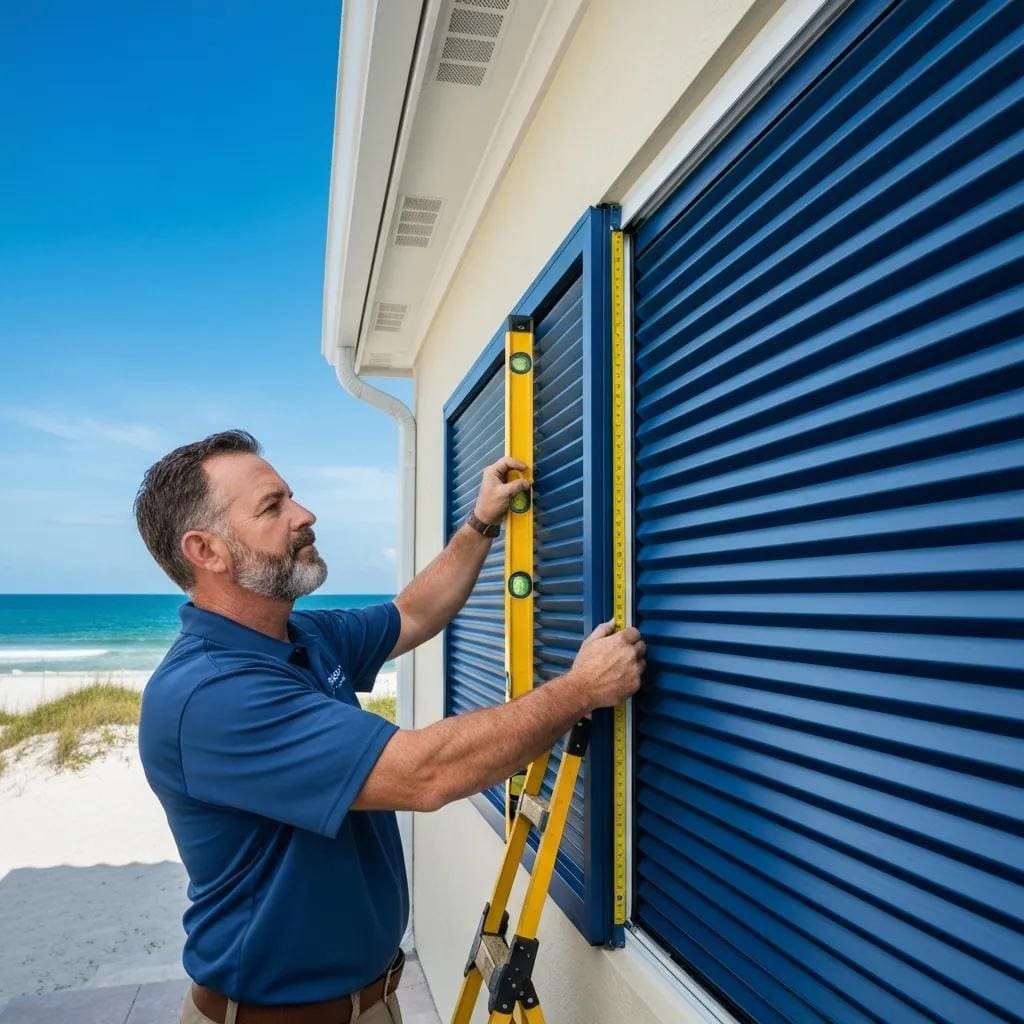
Installation costs reflect labor complexity, site access, structural anchoring, and permitting; for complex systems, installation can equal or exceed material costs. Roll‑downs require precise track alignment, secure anchoring into jambs or headers, and — when motorized — electrical work for switches and sensors. Accordion shutters need accurate permanent mounting and reinforced attachment points. Panels usually involve drilling or standoffs and can be the quickest to install when access is straightforward.
Those factors explain why two estimates can differ: hourly labor rates, the need for scaffolding or lifts on multi‑story homes, and retrofit framing work all change the final invoice. Coastal Carolina homeowners should also plan for permit fees and inspection timing, which affect both schedule and cost.
The table below breaks down common installation cost factors and how they apply locally.
Because these variables matter, an on‑site estimate is the best way to get an accurate total instead of relying only on per‑square‑foot figures.
What Factors Affect Hurricane Shutter Installation Cost Per Square Foot?
Elements that drive installation cost per square foot include roofline or soffit interference, window shape and trim, whether anchors reach solid framing, and whether electrical work is needed for motorized units. Labor rates in Coastal Carolina rise with seasonal demand; projects scheduled in the lead‑up to storm season often carry premiums. Retrofits on older openings frequently reveal the need for new fasteners, anchors, or structural repairs, which raises the per‑square‑foot cost above a straight replacement.
Typical scenarios: a single‑story house with easy access usually has the lowest installation rate per square foot, while a two‑story home in a high wind zone will cost significantly more. Ask installers for line‑item bids so you can compare labor, materials, and permitting across quotes.
Should You Choose Professional Installation or DIY for Panel Shutters?
Panels offer the clearest DIY vs. professional trade‑off. Materials are inexpensive and many homeowners can install aluminum or polycarbonate panels with basic tools, but improper anchoring can leave openings vulnerable during a storm. DIY saves labor dollars but requires precise measurements, the right fasteners, and a storage plan; mistakes can void warranties or fail local codes. Professional installers bring anchoring expertise, permit knowledge, and a workmanship warranty that lowers long‑term risk.
For coastal or multi‑story homes, we generally recommend professional installation to meet code and ensure structural integrity. For straightforward, single‑story openings with solid framing, a confident DIYer with correct fasteners and permit checks can save money — but confirm local permit rules before you begin.
What Are the Key Features and Benefits That Influence Hurricane Shutter Prices?

Product attributes explain most price differences: impact ratings and testing, material grade (aluminum alloy vs. polycarbonate), automation, insulation inserts, and finish options all add cost. Security features — reinforced locks and heavier‑gauge slats — raise durability and price. Colonial finishes or color‑matched coatings increase labor and material expense. Energy upgrades like insulated roll‑box cores or thermal inserts add upfront cost but can reduce heating and cooling loss on sun‑exposed walls.
Match features to your priorities — security, convenience, aesthetics, or budget — because each add‑on raises marginal cost while improving performance or resale value. Laying features next to benefits helps you choose upgrades that deliver real value for your home.
Common price‑increasing features and their benefits:
- Motorization and remote controls: Easier deployment and single‑person operation for frequent use.
- Higher impact rating and tested materials: Stronger storm protection and possible insurance advantages.
- Insulation inserts and thermal upgrades: Improved energy performance and interior comfort.
Weigh these premiums against lifetime benefits and your daily needs to prioritize upgrades that matter most.
How Do Security, Energy Efficiency, and Automation Affect Roll Down Shutter Costs?
Security, thermal performance, and automation are major cost drivers for roll‑down shutters. Adding an electric motor, remotes, and sensors increases parts and labor; heavier slats and tamper‑resistant locks add material cost. Energy options — insulating cores in slats and insulated roll‑boxes — increase manufacturing cost but can lower HVAC load in sun‑exposed rooms. Security upgrades such as heavier‑gauge aluminum and integrated locks improve resistance to forced entry but move the product into a higher price tier.
These investments often pay back through convenience, safety, and perceived property value. Compare the incremental cost against expected lifetime benefits and any insurer incentives to decide which roll‑down upgrades fit your home.
What Are the Aesthetic and Functional Benefits of Colonial and Accordion Shutters?
Colonial shutters add curb appeal with a traditional look; operable blades or premium finishes raise labor and material costs. They can be built as operable units for moderate protection or as fixed decorative guards for lower cost. Accordion shutters are function‑first: permanently mounted, quick to deploy, and built for wide openings, which cuts deployment time compared with seasonal panels.
When choosing between these styles, weigh visual priorities against protection needs — colonial shutters boost resale and curb appeal, while accordion shutters offer a practical mix of permanence, ease of use, and mid‑range cost.
How Do Roll Down Shutters Compare to Accordion, Panel, and Colonial Styles in Cost and Performance?
A side‑by‑side view clarifies trade‑offs: roll‑down shutters are premium for automation and security; accordion shutters are durable and ready‑to‑deploy at mid‑range prices; panels are the least expensive seasonal option; and colonial shutters prioritize looks with moderate protection. Performance differs by deployment speed, impact durability, and maintenance needs: roll‑downs score high for security and convenience but require more specialized maintenance for motors, while panels are simple but slower to install when a storm is imminent. The best choice depends on opening size, homeowner priorities, and long‑term value expectations.
Scenario recommendations to match shutter types to common needs:
- Large expanses and sliding doors: Consider accordion or motorized roll‑down for fast, full coverage.
- Tight budgets and seasonal use: Panel systems deliver protection at the lowest upfront cost.
- Curb appeal and moderate protection: Colonial shutters balance aesthetics with functional shielding.
These comparisons show when a higher upfront spend on roll‑downs can be justified by convenience, security, or potential insurance and energy benefits.
What Are the Pros and Cons of Roll Down vs. Accordion Shutters?
Both roll‑down and accordion shutters offer strong protection but emphasize different priorities. Roll‑downs provide motorized convenience, tighter sealing against wind‑driven debris, and often higher impact ratings; they require a larger initial investment and more specialized installation and maintenance. Accordion shutters are permanently mounted, deploy without motors, and provide reliable protection at lower cost and simpler maintenance; they can be bulkier when stored and lack motorized convenience.
Choose based on whether you prefer motorized ease and a streamlined look (roll‑down) or lower total cost of ownership and straightforward mechanics (accordion). Local installation access and opening sizes often determine the most cost‑effective option.
How Do Panel and Colonial Shutters Stack Up Against Roll Down Shutters?
Panel and colonial shutters usually cost less up front than roll‑down systems but differ in deployment and permanence. Panels are the most economical intermittent protection and work where storage and manual installation are acceptable. Colonial shutters offer permanent aesthetic integration with moderate protection and higher finish costs. Roll‑down shutters win for automated, single‑person deployment and higher overall protection.
In short: panels minimize upfront expense, colonials prioritize looks, and roll‑downs provide the most comprehensive protection and convenience — usually at the highest price.
What Long-Term Savings and Value Can Hurricane Shutters Provide?
Hurricane shutters can deliver long‑term value through insurance premium reductions, lower storm repair bills, modest energy savings on exposed elevations, and improved resale appeal. Properly installed impact‑grade protection may qualify for insurance discounts, and energy features like insulated roll‑boxes can reduce HVAC load on sun‑exposed rooms. Maintenance varies by system — motor service for roll‑downs, hinge and track checks for accordions, and storage upkeep for panels — but these costs are predictable over a product’s life and should be part of payback calculations.
Model total cost of ownership across expected lifespans and likely insurance savings to estimate payback. The table below lists common long‑term benefit categories and conservative estimated ranges to help form a payback hypothesis.
Use local quotes and insurer guidance to convert these conservative ranges into a specific payback estimate for your property.
How Much Can You Save on Homeowners Insurance with Hurricane Shutters?
Insurance savings depend on your carrier, local risk zone, and the product’s certification or impact rating. Many insurers offer discounts when homes have tested, code‑compliant protection; the amount varies by company and region. A reasonable planning range is single‑digit to low‑double‑digit percent reductions, provided you supply the required installation documentation and verification. Give your insurer the installer’s paperwork and product certifications to confirm eligibility.
To estimate payback, combine projected annual savings with the upfront cost and expected lifespan — an insurance discount can meaningfully shorten payback for higher‑cost roll‑down systems.
What Are the Maintenance Costs and Longevity Differences Among Shutter Types?
Maintenance varies by type: panels need seasonal inspection, cleaning, and storage; accordion shutters require periodic lubrication and hinge checks; roll‑downs need motor servicing, track cleaning, and occasional electrical checks. Ongoing maintenance costs differ — panel upkeep is usually least expensive, while motorized roll‑down service costs more but is less frequent. Lifespan depends on material and environment: coastal salt exposure shortens service life without proper coatings and maintenance, so choose corrosion‑resistant finishes and schedule regular inspections.
Planning for maintenance and selecting coastal‑grade materials will preserve function and extend useful life, improving long‑term value.
Where Can Coastal Carolina Homeowners Get Accurate Cost Estimates and Professional Installation?
Accurate estimates require on‑site measurements, a review of access and attachment points, and a discussion of desired features like motorization or insulation. Online calculators give ballpark figures, but an in‑person assessment uncovers structural issues and permit needs that change price. For local expertise, consult installers who know Coastal North and South Carolina code nuances, wind‑zone anchoring practices, and regional permitting steps.
American Hurricane Shutters provides hurricane protection services across coastal North and South Carolina and offers free estimates plus an interactive cost calculator to help homeowners begin planning. Our regional experience covers common installation challenges in Wilmington, Myrtle Beach, Oak Island, Topsail, New Bern, Pawleys Island, and similar communities. Professional installation helps ensure work meets local code standards. To speed quoting, have measurements, window photos, and a list of desired features ready.
How Does American Hurricane Shutters Provide Free Cost Estimates and Local Expertise?
As a regional specialist serving coastal North and South Carolina, American Hurricane Shutters focuses on code‑compliant products and professional installation. We provide free on‑site estimates and an interactive cost tool to build preliminary budgets so homeowners can narrow choices before scheduling a detailed visit. Our local experience helps with permitting norms, wind‑zone anchoring, and product recommendations that balance protection and curb appeal for Coastal Carolina homes.
For the most accurate pricing and permit guidance, request an on‑site visit and share measurements and photos — this reduces follow‑ups and delivers a complete, regionally informed quote.
What Are the Regional Hurricane Shutter Regulations in North and South Carolina?
Regional regulations affect allowable systems, required impact ratings, and permit procedures. While Florida codes are often referenced, North and South Carolina jurisdictions have their own enforcement and permitting rules. Confirm local building department requirements for impact ratings, anchor specifications, and whether certain products need plan submittals or inspections. Installers familiar with local nuances can speed permitting and ensure your chosen system meets enforcement expectations.
- Prepare measurements and photos before requesting a quote to speed the estimate process.
- Ask about permitting and whether the installer will handle filings and inspections.
- Confirm impact ratings and code compliance for the selected product to ensure insurance eligibility.
Following these steps reduces surprises on cost and schedule and aligns expectations between homeowner, installer, and local authorities.
Frequently Asked Questions
What are the long-term financial benefits of installing hurricane shutters?
Hurricane shutters can produce long‑term financial benefits: many homeowners see insurance premium reductions when protection is code‑compliant, and shutters reduce potential storm repair costs by protecting windows and doors. Energy‑efficient options can cut heating and cooling bills, and homes with established storm protection often have stronger resale appeal.
How do I prepare my home for hurricane shutter installation?
Prepare by checking the structural condition of your windows and doors, gathering measurements and photos of openings, and reviewing local building codes and permit requirements. Schedule installation well before hurricane season to avoid rush pricing and ensure all permits and inspections are in place.
What should I expect during the installation process of hurricane shutters?
An installer will measure openings, review options and permits, and secure shutters to the structure with proper anchoring. For motorized systems, expect electrical work for controls and sensors. The installer should demonstrate operation and explain recommended maintenance before they leave.
Can hurricane shutters be customized for specific home designs?
Yes. Many manufacturers offer styles, colors, and materials to match your home’s architecture. Options include different colonial finishes or custom sizes for roll‑down and accordion systems. A professional installer can help ensure the shutters protect your home and complement its curb appeal.
What are the most common mistakes homeowners make when choosing hurricane shutters?
Common mistakes include overlooking local building codes and impact ratings, ignoring long‑term maintenance costs, and choosing based only on initial price. Failing to consider deployment frequency and not consulting local experts can also lead to poor product or installation choices.
How do I find a reputable installer for hurricane shutters?
Ask for referrals from neighbors, check online reviews, and verify licensing and insurance. Request multiple quotes, ask for references and examples of past work, and confirm the installer is familiar with local codes and permit processes. A reliable installer will be transparent and answer your questions fully.
What are the benefits of installing hurricane shutters beyond storm protection?
Beyond storm protection, shutters can improve energy efficiency by reducing summer heat gain and winter heat loss, add a layer of security to deter break‑ins, and increase resale appeal since many buyers value established storm protection.
How do I choose the right type of hurricane shutter for my home?
Choose based on budget, appearance, and how you’ll use them. Consider opening sizes, deployment frequency, and whether you want motorization. Roll‑downs favor convenience and automation; accordions balance cost and ease; panels are the lowest‑cost seasonal option. Always check local codes and insurance rules before deciding.
What should I consider when planning for the installation of hurricane shutters?
Plan ahead and install before hurricane season. Confirm your home can support the chosen system, factor in permit and inspection costs, and get a detailed professional estimate that includes all necessary components for a compliant installation.
Are there any insurance benefits associated with installing hurricane shutters?
Yes. Many insurance carriers offer premium discounts for shutters that meet specific impact ratings and local codes. Discounts vary by carrier and product; check with your insurer to confirm potential savings and required documentation.
What maintenance is required for different types of hurricane shutters?
Maintenance depends on type: panels need seasonal checks, cleaning, and storage; accordion shutters require lubrication and hinge checks; roll‑downs need motor servicing, track cleaning, and electrical checks. Regular upkeep is especially important in coastal areas where salt accelerates wear.
How can I ensure my hurricane shutters comply with local regulations?
Research local building codes and permit rules, and work with an installer who knows local requirements. Verify product impact ratings and installation standards, and keep compliance documentation for insurance or resale.
What are the typical lifespans of different hurricane shutter types?
Lifespans vary with material and environment. Aluminum and clear storm panels typically last 10–20 years; accordion and colonial shutters usually last 15–25 years; roll‑down shutters often exceed 20 years with proper maintenance. Coastal exposure can shorten life without suitable finishes and inspections, so plan regular upkeep.
Conclusion
Your shutter choice affects protection, cost, and curb appeal. Understanding the trade‑offs between roll‑down, accordion, panel, and colonial styles helps Coastal Carolina homeowners make informed decisions. Evaluate your needs, consult local experts, and get an on‑site estimate to ensure the best fit for safety and value. Start planning your hurricane protection now by using our resources and connecting with a trusted local installer.
Conclusion
Your choice of hurricane shutters has a real impact on your home’s safety, budget, and appearance. By understanding the differences between roll‑down, accordion, panel, and colonial styles, Coastal Carolina homeowners can pick the solution that best matches their needs and budget. Work with local specialists and request on‑site estimates to ensure code compliance and long‑term value. Take the next step toward reliable hurricane protection by exploring our tools and contacting a trusted regional installer.