

Hurricane Shutter Satisfaction Ratings Explained: Understanding Performance, Types, and Top Reviews
Hurricane shutter satisfaction ratings combine lab test results, homeowner experience, and real-world performance so you can pick storm protection that fits your priorities — safety, ease, and curb appeal. This guide breaks down common technical labels like design pressure (DP), Miami‑Dade approvals, and ASTM impact tests and then translates them into the homeowner measures that matter: simplicity of use, expected lifespan, and insurance implications. For coastal North and South Carolina homeowners who need clear links between test numbers and actual use, this article offers practical comparisons, patterns pulled from reviews, and a checklist to simplify decisions. You’ll learn how wind resistance is tested, which shutter styles tend to deliver the best protection and satisfaction, and how to balance cost against long-term value. We also summarize top-rated shutter categories based on aggregated customer sentiment, explain how installation and upkeep affect results, and point to reliable sources and local steps for verification.
What Are Hurricane Shutter Performance Ratings and Why Do They Matter?
Performance ratings — like DP (design pressure), ASTM impact classes, and regional approvals such as Miami‑Dade — give objective measures of how shutters resist wind and wind‑borne debris and why that performance matters for code compliance and homeowner protection. These labels translate lab loads into expectations for on-site behavior, affect insurance mitigation credits, and help installers and building officials choose products for specific wind zones. For homeowners, the practical outcomes tied to these ratings include fewer broken windows after storms, lower repair bills, and clearer guidance when choosing shutters for exposed coastal homes. Knowing what those test labels mean helps you prioritize shutters that meet both safety standards and everyday satisfaction factors like low maintenance and simple operation. Below are the core rating systems you’ll encounter and why each one matters when evaluating options.
Hurricane shutter ratings to watch:
- Design Pressure (DP): The static pressure a shutter is rated to resist — useful for estimating wind‑speed performance.
- Miami‑Dade/County Approvals: Regional certifications showing a product passed impact and wind tests for high‑risk coastal areas.
- ASTM/ANSI Tests: Lab procedures that measure impact resistance and cyclic wind loading behavior.
These rating systems set a baseline for comparison. The next section describes how wind resistance is measured and how those test results translate into homeowner expectations.
How Is Wind Resistance Measured in Hurricane Shutters?
Wind resistance is established through a mix of lab static load tests, cyclic pressure testing that simulates gusts, and impact tests that fire specified projectiles to mimic wind‑borne debris. Labs assign a DP value (pounds per square foot) and map that to wind‑speed equivalents so installers and code officials have practical guidance. Tests also repeat cycles to confirm that fasteners, tracks, and operating mechanisms hold up under repeated loads, while impact tests show whether shutter panels and underlying glazing remain intact. For homeowners, the important translation is which DP ranges suit tropical storms versus major hurricanes — and how much installation quality affects real performance in the field.
Testing methods that use projectiles such as 2×4 lumber help show how shutter systems handle the kind of debris they’ll face in a hurricane.
Performance of Hurricane Shutters Under Impact Testing
An investigation into shutter systems used to protect windows from wind‑borne debris. Steel and aluminum storm panels were evaluated with common installation methods to determine how well they resist impacts from objects like roof tiles and 2×4 lumber and whether they protect the window behind them.
Performance of hurricane shutters under impact by roof tiles, KR Gurley, 2010
What Factors Influence Overall Satisfaction Ratings for Storm Shutters?
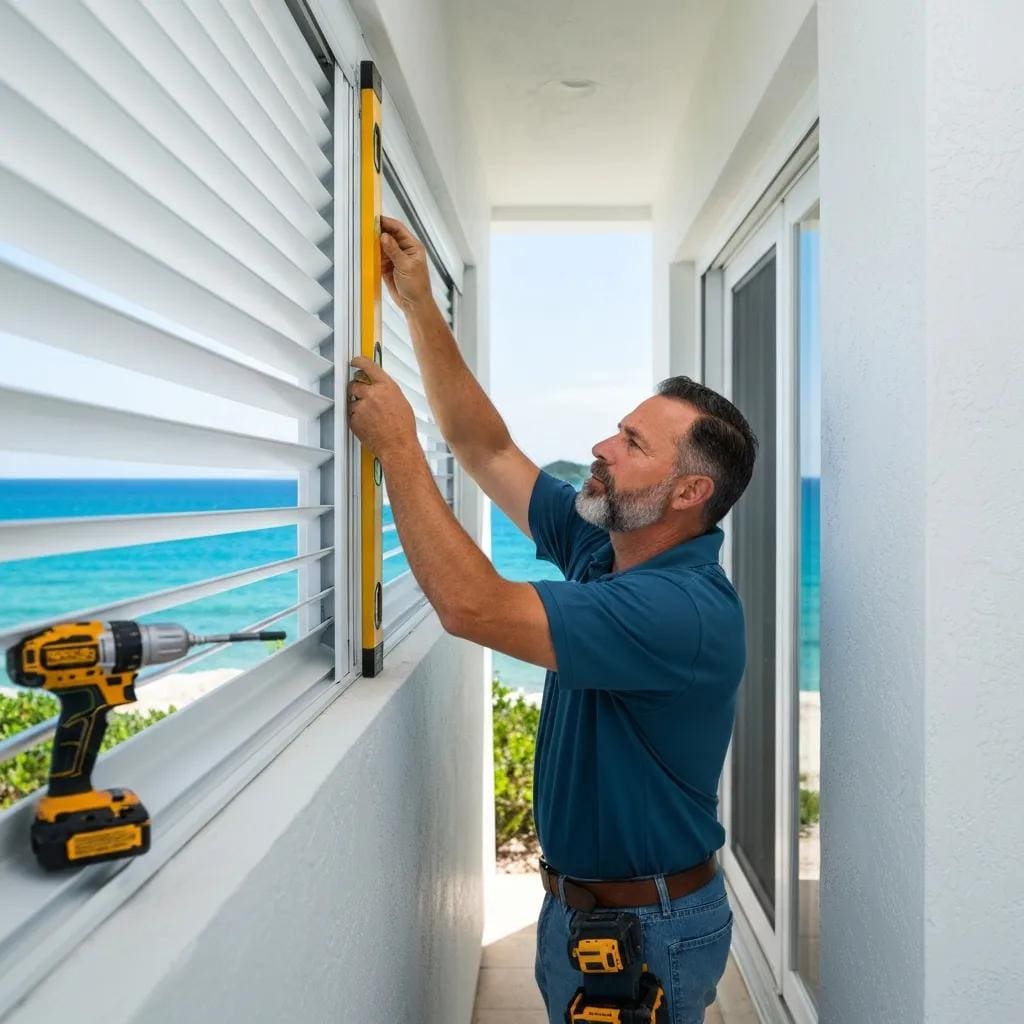
Customer satisfaction depends as much on non‑technical factors — installation quality, looks, noise, and customer service — as on lab scores. Homeowners give higher ratings when crews anchor hardware correctly, provide clear operating instructions, and respond promptly on warranty issues. Conversely, poor fit, rattling, or difficult storage can lower satisfaction even for well‑rated products. Visual impact, the need to store removable panels, and motor reliability for roll‑down systems all shape long‑term contentment. Below are the primary non‑technical drivers buyers should check when reading reviews or comparing options.
Key satisfaction drivers:
- Installation quality: Correct anchoring and alignment determine real protection and quiet operation.
- Ease of use: Manual versus motorized operation affects daily convenience and likelihood of consistent use.
- Aesthetics and sightlines: Hardware and shutter style influence homeowner satisfaction and curb appeal.
- Maintenance and service: The availability of parts and responsive repair support affect long‑term ratings.
Understanding these factors helps you read review patterns and anticipate which trade‑offs will matter for your property and lifestyle.
Which Hurricane Shutter Types Offer the Best Protection and Satisfaction?

Shutter styles — accordion, roll‑down, panel, Bahama, and fabric systems — each offer different mixes of protection, usability, looks, and upkeep. Accordion and roll‑down shutters typically give continuous, high‑wind protection and score well for security and convenience when installed by pros. Panel and metal storm shutters are more budget‑flexible but vary in ease of use and storage. Bahama and decorative shutters emphasize curb appeal and shading while offering moderate protection depending on construction. The table below compares common categories across homeowner‑relevant attributes and highlights typical satisfaction trade‑offs.
This comparison clarifies which types match common homeowner priorities: roll‑down and accordion for continuous, high‑wind protection; panels and fabric for seasonal or budget use; Bahama for looks with moderate protection. The next subsection maps these performance ranges to expected wind thresholds.
How Do Different Hurricane Shutter Types Compare in Performance?
Accordion and roll‑down shutters usually give the highest continuous protection because they form an uninterrupted barrier and are often tested to high DP values and Miami‑Dade approvals, making them suitable for the most exposed coastal sites. Panel and metal storm systems work well within lower to moderate DP ranges and are common for retrofit projects where cost and storage matter. Bahama shutters add shading and curb appeal and can offer moderate impact resistance depending on material and anchoring. Fabric and soft‑panel solutions are lightweight and easy to store but aren’t substitutes for rigid, high‑rated systems in high‑wind zones. Always consider the combined effect of product rating and installation quality when estimating real‑world performance.
Understanding design pressures (DP) and performance grades (PG) is important when choosing windows, doors, and shutters for hurricane zones.
Design and Field Testing of Hurricane Zone Windows and Doors
A review of design and field testing for windows and doors in hurricane areas, covering guidelines, installation case studies, and field results. The paper discusses performance grades (PG), design pressures (DP), and standard structural test pressures (STP) — key metrics when assessing resilience against hurricane forces.
Design and Field Testing of Windows/Doors in Hurricane Zones, 2012
What Are the Pros and Cons of Popular Storm Shutter Types?
Below are homeowner‑focused pros and cons for each major shutter type to help match choices to lifestyle and local wind risk.
- Accordion shutters:
Pros: Quick to deploy, continuous coverage, available in high ratings.Cons: Visible when closed, track maintenance required, higher initial cost.Summary: Best for full‑time coastal residents who want immediate readiness and strong protection. - Roll‑down shutters:
Pros: Top continuous protection, motorized convenience, low profile when retracted.Cons: Higher upfront and maintenance costs, potential noise if not installed correctly, more complex repairs.Summary: Ideal for homeowners who want automated, robust protection and are willing to invest. - Panel (metal/plastic) shutters:
Pros: Lower initial cost, flexible for seasonal use, easy replacement.Cons: Manual handling and storage, protection varies with material and anchors.Summary: Good option for rentals or seasonal properties where budget and storage are priorities. - Bahama and decorative shutters:
Pros: Strong curb appeal, passive shading, modest hardware footprint.Cons: Limited protection unless engineered for impact, hinge maintenance needed, less effective versus debris.Summary: Suited to homeowners prioritizing appearance with some storm protection.
These pros and cons help you match shutter styles to homeowner priorities and lead into which options show up most favorably in customer reviews.
What Are the Top-Rated Hurricane Shutters According to Customer Reviews?
Aggregated reviews favor shutters that pair verified performance ratings with professional installation, responsive service, and low ongoing maintenance. Systems that balance strong wind resistance with easy operation — motor‑assisted roll‑downs and well‑installed accordion shutters — often get the most consistent praise. Budget panel systems show mixed long‑term reviews: attractive up front, but scores can drop if storage or anchoring issues cause post‑storm damage. Review trends also make clear that warranty responsiveness and local installer skill heavily influence overall ratings. After reviewing trends, homeowners ready to act should request an on‑site estimate to get property‑specific pricing and installation guidance.
As a regional information hub and local resource, we recommend homeowners who are ready to move from research to action schedule a free, on‑site estimate to confirm approvals and scope based on local codes and wind zones. A site visit helps match aggregated review signals to your property’s specific needs and provides accurate pricing and installation planning.
Which Hurricane Shutters Receive the Highest Satisfaction Scores?
Satisfaction is highest where product performance and installation quality come together: professionally installed roll‑down and accordion systems with verified approvals tend to score best for protection and ease of use. Top systems commonly feature robust fasteners, clear operation instructions, and accessible service that minimize downtime and repair costs. Long‑term positive reviews often highlight quiet operation, low maintenance, and preserved sightlines and curb appeal. In short, satisfaction clusters around the full ownership experience — product, installation, and post‑sale support.
How Do Customer Reviews Reflect Real-World Wind Resistance and Durability?
Reviews often confirm lab durability when installations are done correctly, but they also reveal common real‑world failure modes: loose anchors, track deformation, or motor issues from insufficient maintenance. Reviews that contradict lab expectations usually involve poor retrofit work or storms that exceed a product’s tested DP. To reconcile differences, ask for manufacturer approvals, request proof of tested ratings from installers, and check warranty coverage. Cross‑checking anecdotal reports with documented approvals and local installer references reduces the risk of relying on isolated experiences.
Proper installation quality often determines whether a shutter system performs for its expected lifetime or fails prematurely.
Quality and Installation of Hurricane Shutters
Research shows that commercially installed shutters and panels typically have higher quality than non‑commercial installations, reinforcing the value of professional workmanship when shuttering is required to reduce hurricane damage.
Hurricane mitigation status and factors influencing mitigation status among Florida’s single‑family homeowners, WG Peacock, 2003
How Does Wind Resistance Impact Hurricane Shutter Satisfaction Ratings?
Measured wind resistance has a direct effect on homeowner satisfaction by lowering damage risk, reducing repair frequency, and boosting perceived safety — but installation quality and usability trade‑offs moderate that effect. Higher wind‑resistance ratings generally mean fewer post‑storm repairs and higher long‑term satisfaction, though very high‑rated systems can bring higher upfront costs or motorized components that require occasional maintenance. There are diminishing returns when added rating raises cost or complexity beyond what a homeowner needs; for many properties, the best choice balances a rating appropriate to local wind exposure with solid installation and manageable upkeep. The table below maps wind‑resistance bands to typical homeowner outcomes for coastal NC/SC conditions.
This mapping helps homeowners pick shutters that match local risk and personal expectations. The next subsection explains typical wind‑speed thresholds by type.
What Wind Speeds Can Different Shutter Types Withstand?
Approximate wind‑speed capabilities depend on type and certification: basic panel systems typically protect to around 120 mph when anchored correctly; reinforced panels and heavy Bahama styles can reach 120–150 mph; certified roll‑down and heavy‑duty accordion systems often cover 150+ mph when backed by Miami‑Dade or DP approvals. Cross‑reference these thresholds with local building codes and insurance requirements for coastal North and South Carolina, since some areas require minimum ratings for wind‑borne debris zones. Matching DP values to expected wind speeds ensures lab results align with your property’s exposure.
How Does Wind Resistance Affect Long-Term User Satisfaction?
Higher wind‑resistance ratings usually reduce repair frequency and replacement costs over a 10–20 year horizon, improving owner satisfaction — but operational complexity (motors, tracks) can increase maintenance needs and temper satisfaction if service is poor. Homeowners who want minimal upkeep may prefer simple, high‑strength passive systems; those who value convenience may accept motorized roll‑downs and the occasional motor service. In many cases, an initial investment in higher‑rated shutters pays off through fewer post‑storm claims and better resale appeal when paired with reliable installation and a clear maintenance plan.
What Should You Consider When Choosing Hurricane Shutters Based on Satisfaction Ratings?
Choose shutters using a multi‑attribute framework that balances protection needs, budget, appearance, maintenance burden, and installer reputation. Start by confirming your local wind zone and any insurance or code requirements, then match shutter types and DP ratings to those needs. Factor lifecycle costs — purchase, installation, routine upkeep, and replacement timelines — so short‑term savings don’t sacrifice long‑term satisfaction. The table below compares cost tiers against performance and maintenance expectations to help evaluate value over a 10–20 year span.
Cost vs. performance comparison for decision-making:
This matrix clarifies when higher upfront spending pays off through fewer repairs and replacements over time. The following sections break down installation and cost trade‑offs in more detail.
How Do Installation and Maintenance Influence Satisfaction?
Professional installation and routine maintenance are often the top drivers of satisfaction — a top‑rated shutter can underperform if anchors, tracks, or motors are poorly installed. Best practices include verifying anchor torque, checking track alignment, running motor cycles during commissioning, and registering warranties with manufacturers. Routine care usually means lubricating tracks, inspecting fasteners, and exercising motors annually. Many negative reviews point to poor installation (rattling, leaks, or detachment) rather than product failure. Investing in qualified installers and a straightforward maintenance plan typically raises satisfaction more than choosing a slightly higher‑rated product without the same installation care.
What Are the Cost vs. Performance Trade-Offs in Top-Rated Shutters?
Upfront cost, installation complexity, and long‑term maintenance together determine value: premium roll‑down systems deliver the strongest continuous protection but come with higher purchase and upkeep costs, while panel systems reduce initial expense but increase labor and storage hassles down the road. When weighing trade‑offs, consider storm frequency, insurance mitigation incentives, and resale impact — a professionally installed mid‑range system often offers the best cost‑adjusted satisfaction for many coastal homeowners. Prioritize certified performance for high‑exposure properties and good installer support where convenience and reliability matter most.
Where Can You Find Reliable Hurricane Shutter Reviews and Ratings?
Trustworthy information combines official test data, manufacturer approvals, independent lab reports, and local installer references. Start with recognized testing standards (DP values, ASTM impact reports) and regional approval lists from building authorities, then cross‑check those documents against independent lab results and installer certifications. Customer reviews can be useful sentiment signals but need context — filter for verified installs in similar wind zones and look for reports that include installation specifics and follow‑up after storms. Below are the primary places to check and how to vet their reports.
Primary sources and verification steps:
- Standards and certification documents: Confirm product DP ratings and test reports to verify lab performance.
- Independent testing labs and approvals: Prefer Miami‑Dade or equivalent third‑party approvals for high‑wind zones.
- Installer references and local galleries: Ask for local references and photos to verify workmanship.
- Customer reviews with installation context: Use reviews that detail installation quality and post‑storm outcomes for comparable homes.
Using these sources together helps separate marketing claims from verified performance. After collecting documentation, the next step is a localized assessment for precise, property‑specific recommendations.
As a regional resource for coastal North and South Carolina homeowners, we recommend scheduling a free, on‑site estimate to confirm product approvals, inspect anchoring conditions, and get a tailored recommendation for shutter type and rating. A local assessment ties together certification data, review signals, and your home’s conditions to produce a satisfaction‑focused plan.
Which Sources Provide the Most Accurate Hurricane Shutter Performance Data?
The most reliable data comes from certified test reports (design pressure tables and impact test documentation), third‑party approvals that list specific tests, and installation records from certified contractors showing how products were anchored and integrated. Manufacturer materials can identify models but should be checked against independent lab reports and building department approvals. Ask for documentation that lists explicit DP numbers and test conditions, and request installers to show proof of manufacturer approvals for the exact product being installed.
How to Interpret and Use Satisfaction Ratings for Your Storm Shutter Choice?
Read satisfaction ratings by triangulating three things: verified product performance (DP, impact tests, approvals), local installer reputation and documented workmanship, and the warranty/service provisions. When ratings conflict, prioritize documented approvals and verified installations over single anecdotal complaints, and favor warranties and accessible service if local repair capacity is limited. Follow this checklist: confirm local wind and code requirements, review product DP/approval documents, request local references and photos, get a written estimate showing anchors and fasteners, and choose the solution that balances protection, usability, and lifecycle cost.
- Confirm local wind and code requirements: Match DP ratings to local obligations.
- Verify product approvals: Request lab reports and third‑party certifications.
- Check installer documentation: Ask for examples of similar local installs and maintenance plans.
Following these steps turns ratings and reviews into a verifiable purchasing decision and prepares homeowners to secure shutters that meet both safety and satisfaction goals.
Frequently Asked Questions
What are the key differences between manual and motorized hurricane shutters?
Manual shutters require physical effort to deploy and secure; they’re often cheaper but can be cumbersome during an emergency. Motorized shutters operate at the push of a button for quick deployment and are easier for frequent use, but they come with higher upfront costs and occasional motor maintenance. If convenience and fast response matter, motorized systems are worth considering; if budget and simplicity are priorities, manual options may be the better fit.
How can I ensure my hurricane shutters are installed correctly?
Hire a contractor experienced in storm‑protection systems and ask for local references. During installation, verify anchors are tight, tracks are aligned, and all parts operate smoothly. Request a walkthrough so you understand operation and maintenance, and keep documentation and warranty registration. Regular inspections will help catch issues before a storm.
What maintenance is required for hurricane shutters?
Maintenance varies by type but generally includes periodic inspections and cleaning. For manual shutters, check hinges and tracks for rust or wear and ensure smooth operation. Motorized systems need motor checks and occasional lubrication of moving parts. Inspect seals and fasteners to prevent leaks or detachment. Follow manufacturer guidelines and schedule annual checks to extend service life.
Are there insurance benefits for installing hurricane shutters?
Yes. Many insurers offer discounts or credits for properly installed and certified hurricane shutters because they reduce storm damage risk. Discounts vary by type of shutter, rating, and local risk factors. Check with your insurance agent about required documentation and whether certified installations and approvals qualify for mitigation credits.
How do I choose the right hurricane shutter type for my home?
Consider your wind zone, budget, ease of use, aesthetic preferences, and maintenance tolerance. For high‑wind areas, roll‑down and accordion shutters are often recommended. If cost is a primary concern, panel systems may work for seasonal protection. Talk with local installers to learn which systems have worked well in your neighborhood and which match your home’s style.
What should I do if my hurricane shutters are damaged during a storm?
First, ensure everyone is safe. Once it’s safe to inspect, document damage with photos for insurance. Contact your installer or a qualified repair service to assess repairs or replacement. Check warranty terms to see what’s covered. Regular maintenance and proper installation reduce the likelihood of severe damage in future storms.
Conclusion
Knowing how hurricane shutter satisfaction ratings relate to real performance helps you choose protection that balances safety, convenience, and curb appeal. By combining test metrics with homeowner experience, this guide shows how to pick the right shutter for your needs. For tailored recommendations and a clear next step, schedule a free, on‑site estimate to confirm approvals and installation scope for your property. Protect your home with shutters that meet both your safety requirements and everyday satisfaction goals.